Apa Itu Jet Stream Mixer? Prinsip Kerja dan Aplikasinya
- Mesin Jet Stream Mixer - Mesin Mixer Viskositas Tinggi - Teknologi Mixing Industri - Mesin Pengaduk Material Kental - Industrial Mixing Equipment - Mesin Mixing Glucose - Cylindrical Mixing Head

What Is a Jet Stream Mixer? Working Principle, Technology, and Applications in High-Viscosity Mixing
In industrial manufacturing, achieving consistent mixing results becomes increasingly challenging when processing materials with high viscosity, concentrated formulations, or complex flow characteristics.
Conventional mixing systems may require longer processing times, additional heating, or specialized agitator configurations to achieve the desired material consistency.
One alternative technology is the Jet Stream Mixer, a specialized industrial mixing system designed to generate intensive material movement through a uniquely engineered cylindrical mixing head.
Developed for demanding mixing applications, Jet Stream Mixer technology offers an alternative approach to processing liquid and high-viscosity materials across various industrial sectors.
In this article, we explore what a Jet Stream Mixer is, how it works, its main components, advantages, and potential applications in modern manufacturing.
1. What Is a Jet Stream Mixer?
A Jet Stream Mixer is a specialized mechanical mixing machine that uses a rotating, perforated cylindrical mixing head to generate intensive material movement and mixing action inside a vessel.
Unlike conventional agitators that primarily rely on propellers, paddles, or turbine impellers, a Jet Stream Mixer features a specially designed mixing head with multiple openings along its cylindrical surface.
The mixing head rotates at a controlled speed while immersed in the material. Its geometry and rotation generate localized fluid movement, turbulence, and interaction between different regions of the material.
This mixing mechanism provides an alternative solution for processing materials that require intensive mixing, including certain high-viscosity products.
Jet Stream Mixer technology can be considered for applications where conventional mixing arrangements may face limitations in achieving the required mixing performance.
2. How Does a Jet Stream Mixer Work?
The working principle of a Jet Stream Mixer is based on the interaction between a rotating cylindrical mixing head and the surrounding material.
The specially engineered mixing head is positioned directly inside the mixing vessel. When the motor drives the shaft, the mixing head rotates within the material and generates fluid movement through its perforated structure.
The resulting movement promotes material circulation and interaction within the mixing zone.
Main Operating Stages
Step 1 – Material Loading
The raw material is loaded into the mixing vessel according to the required batch size and formulation.
Step 2 – Mixing Head Positioning
The cylindrical mixing head is lowered into the material using the adjustable lifting mechanism.
Step 3 – Motor Activation
The electric motor drives the vertical shaft, causing the mixing head to rotate at the selected operating speed.
Step 4 – Jet Stream Mixing Action
The rotating mixing head interacts with the surrounding material through its specially designed perforations. This generates localized flow, turbulence, and intensive material movement.
Step 5 – Material Homogenization
Continuous mixing promotes interaction between different regions of the material, helping achieve the desired consistency and uniformity.
The actual flow pattern and mixing performance depend on the mixing head geometry, rotational speed, material properties, and operating conditions.
3. Main Components of a Jet Stream Mixer
A Jet Stream Mixer consists of several integrated mechanical and electrical components.
A. Electric Motor
The electric motor provides the mechanical power required to rotate the mixing head.
Motor power is selected based on the material characteristics, batch volume, and required mixing performance.
B. Vertical Drive Shaft
The shaft transfers rotational power from the motor to the mixing head.
Its mechanical strength and dimensional configuration must be suitable for the operating torque and material resistance.
C. Cylindrical Mixing Head
The mixing head is the key component of Jet Stream Mixer technology.
It features a cylindrical construction with specially arranged openings along its surface. Its geometry is designed to generate material movement and mixing action during rotation.
The design of the mixing head plays an important role in determining mixing effectiveness.
D. Adjustable Lifting System
The lifting mechanism allows the mixing head to move vertically inside the vessel.
This arrangement helps position the mixing head according to the material level and mixing requirements.
E. Variable Speed Control
A Variable Frequency Drive (VFD) can be used to adjust the motor speed according to process requirements.
Variable speed operation provides greater flexibility when processing materials with different flow characteristics.
4. Can a Jet Stream Mixer Handle High-Viscosity Materials?
Yes. Jet Stream Mixer technology can be applied to selected high-viscosity materials.
This is one of the interesting applications of this mixing technology.
High-viscosity materials are generally more difficult to process because their resistance to flow can limit material circulation and mixing efficiency.
Traditional mixing systems may require specialized impellers, higher torque, or additional heating to improve material flow.
A Jet Stream Mixer provides an alternative mixing approach through its specially engineered cylindrical mixing head.
Example: Mixing Glucose 85° Brix Without Heating
One practical demonstration of Jet Stream Mixer technology involves mixing concentrated glucose syrup at 85° Brix without heating.
This example illustrates the potential of specialized mixing technology to process concentrated materials without relying on conventional heating methods.
For manufacturers, reducing the need for heating may provide several potential benefits:
Reduced thermal energy requirements.
Simplified processing operations.
Less dependence on additional heating equipment.
Potential protection of temperature-sensitive product characteristics.
Greater flexibility in processing concentrated formulations.
It is important to note that 85° Brix represents the concentration of dissolved solids, not a direct measurement of viscosity.
Actual processing capability depends on the material's viscosity, temperature, batch size, mixing speed, and machine configuration.
5. Industrial Applications of Jet Stream Mixer
Jet Stream Mixer technology can be evaluated for various manufacturing processes involving liquid and viscous materials.
Food and Beverage Industry
Potential applications include:
Glucose syrup mixing.
Concentrated liquid ingredients.
Syrup blending.
Viscous food formulations.
Selected liquid food processing applications.
For food-grade applications, contact materials, hygienic construction, and cleaning requirements must be considered.
Adhesive Industry
Certain adhesive formulations require consistent material blending and controlled mixing conditions.
Jet Stream Mixer technology can be evaluated for suitable adhesive materials depending on viscosity, formulation, and required mixing performance.
Paint and Coating Industry
Paint and coating manufacturing involves various liquid and viscous formulations.
Jet Stream Mixer systems may be considered for selected blending and material-processing applications.
For pigment dispersion and applications requiring defined high-shear performance, the appropriate mixing technology must be evaluated separately.
Chemical Industry
Chemical manufacturers process a wide range of materials with different viscosities and flow characteristics.
Jet Stream Mixer technology can be considered for selected chemical blending and homogenization applications.
Other Industrial Applications
Other potential applications include concentrated liquid products, specialty formulations, and manufacturing processes that require intensive material movement.
Final equipment selection should always be based on material testing and process evaluation.
6. Jet Stream Mixer vs. Conventional Agitator vs. High Speed Disperser
Different mixing technologies are designed to address different process requirements.
Understanding their operating principles helps manufacturers select the right equipment.
| Parameter | Jet Stream Mixer | Conventional Agitator | High Speed Disperser |
|---|---|---|---|
| Mixing element | Perforated cylindrical head | Impeller | Dispersion disc |
| Drive system | Motor and shaft | Motor and shaft | Motor and shaft |
| Main mechanism | Specialized rotating-head mixing action | Mechanical agitation | High-speed shear |
| Main objective | Intensive material movement | Bulk mixing and circulation | Particle dispersion |
| High-viscosity application | Suitable for selected materials | Depends on impeller design | Depends on configuration and viscosity |
| Typical application | Specialized liquid and viscous mixing | Blending and agitation | Pigment and powder dispersion |
When Should You Choose a Jet Stream Mixer?
A Jet Stream Mixer should be considered when:
The material requires intensive mixing action.
Conventional mixing configurations are not delivering the desired process results.
The application involves concentrated or high-viscosity materials.
The process requires evaluation of mixing without additional heating.
A specialized mixing head configuration may offer operational advantages.
The final selection should be supported by engineering evaluation and, where necessary, material trials.
7. Important Factors in Jet Stream Mixer Design
Selecting the right Jet Stream Mixer requires more than simply matching motor power to tank capacity.
Several technical parameters influence its performance.
1. Material Viscosity
Viscosity directly affects the resistance encountered by the mixing head during operation.
2. Batch Volume
The working volume and tank geometry determine the required mixing configuration.
3. Motor Power and Torque
The motor must provide sufficient power and torque to handle the material under operating conditions.
4. Mixing Head Geometry
The diameter, height, opening arrangement, and overall construction of the cylindrical mixing head are important design considerations.
5. Rotational Speed
Operating speed influences the intensity of material movement and the mechanical load on the system.
6. Mixing Head Position
The vertical position of the mixing head affects its interaction with the material inside the vessel.
7. Temperature Requirements
Some materials require temperature control during processing. The feasibility of mixing without heating must be evaluated based on the material's characteristics and process requirements.
8. Jet Stream Mixer by PT Rho Sigma Trijaya (RST)
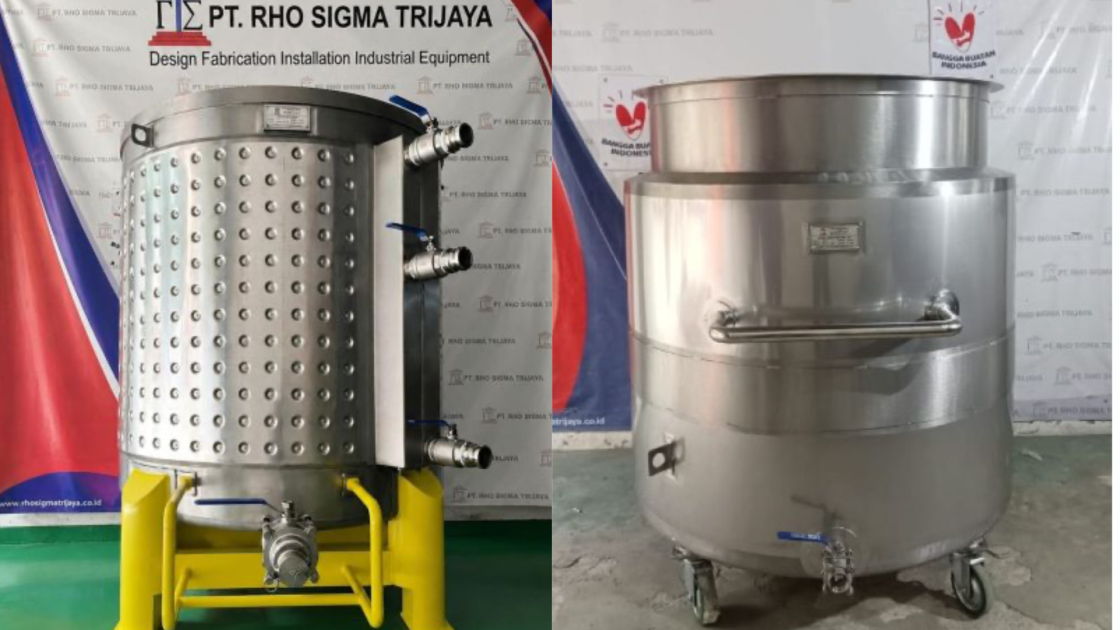
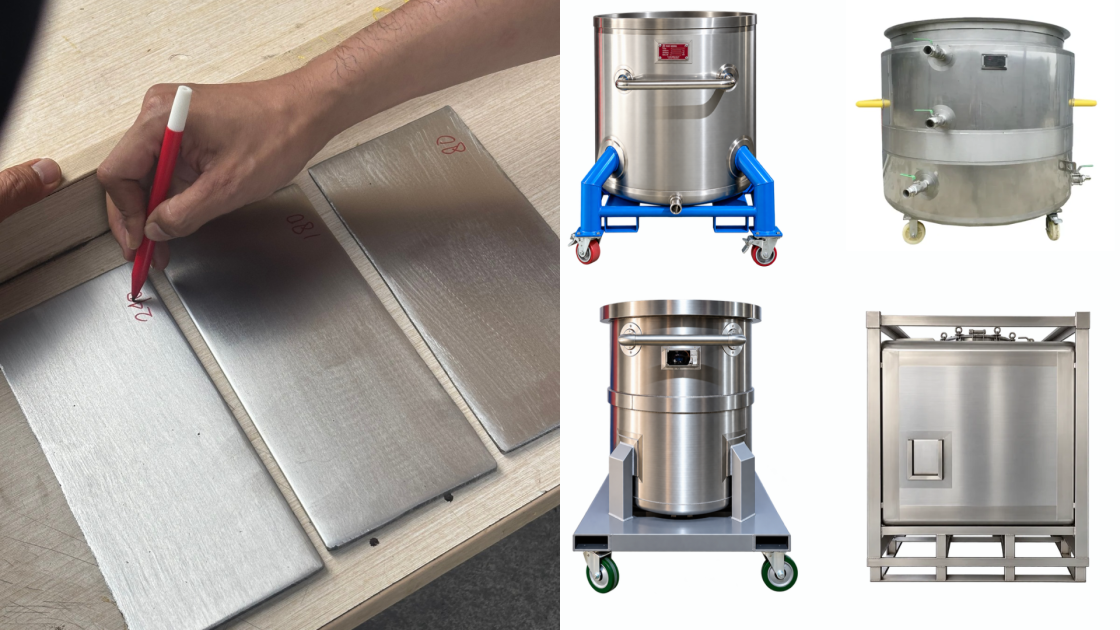
PT Rho Sigma Trijaya (RST) is an Indonesian engineering and custom manufacturing company specializing in industrial mixing equipment and stainless steel tanks.
RST develops mixing solutions for manufacturers across the paint, ink, chemical, adhesive, coating, and other industrial sectors.
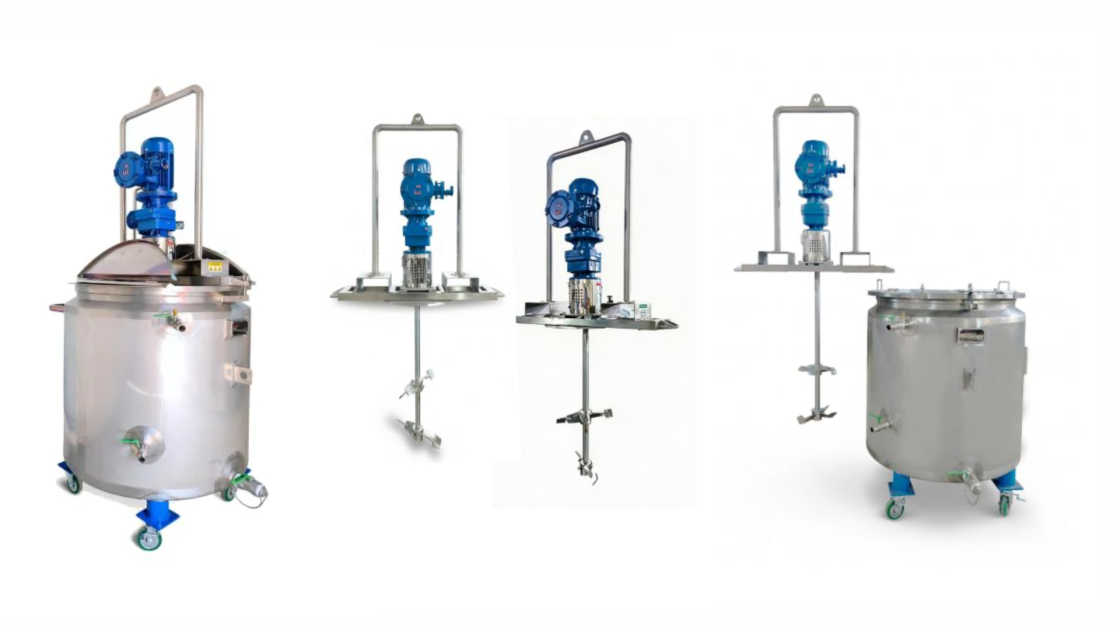
The Jet Stream Mixer is part of RST's mixing technology portfolio, featuring a specialized cylindrical mixing head, vertical drive system, and adjustable lifting mechanism.
RST focuses on matching equipment design with actual manufacturing requirements rather than applying a one-size-fits-all mixing solution.
Our engineering approach considers:
Material characteristics and viscosity.
Batch capacity and production requirements.
Required mixing consistency.
Motor power and operating speed.
Mixing head configuration.
Equipment construction and operating conditions.
Looking for a Mixing Solution for High-Viscosity Materials?
Every material has different mixing requirements. Selecting the right mixing technology is essential for achieving consistent product quality and efficient manufacturing operations.
Contact PT Rho Sigma Trijaya to discuss your industrial mixing requirements and explore suitable Jet Stream Mixer configurations.
PT Rho Sigma Trijaya
Website: https://www.rhosigmatrijaya.co.id
Email: sales1@rhosigmatrijaya.co.id
9. Frequently Asked Questions (FAQ)
What is a Jet Stream Mixer?
A Jet Stream Mixer is a specialized mechanical mixing machine that uses a rotating cylindrical mixing head with multiple openings to generate intensive material movement inside a mixing vessel.
How does a Jet Stream Mixer work?
A motor drives a vertical shaft connected to a specially designed cylindrical mixing head. As the head rotates inside the material, it generates localized flow, turbulence, and material interaction that promote mixing.
Can a Jet Stream Mixer handle high-viscosity materials?
Yes. Jet Stream Mixer technology can be applied to selected high-viscosity materials. Actual capability depends on viscosity, motor torque, mixing head design, operating speed, and batch volume.
Can a Jet Stream Mixer mix glucose syrup without heating?
A practical demonstration has shown glucose syrup at 85° Brix being mixed without heating. This illustrates the potential of the technology for concentrated material processing.
What is the difference between a Jet Stream Mixer and a High Speed Disperser?
A Jet Stream Mixer uses a specialized perforated cylindrical mixing head to generate material movement, whereas a High Speed Disperser uses a rotating dispersion disc to create high-shear conditions for particle dispersion and powder wetting.
Is a Jet Stream Mixer suitable for the chemical industry?
It can be considered for selected chemical blending and viscous material processing applications. Equipment suitability depends on chemical compatibility, viscosity, and the required mixing performance.
Does a Jet Stream Mixer require an external circulation pump?
The RST Laboratory Jet Stream Mixer shown in the product demonstration uses a motor-driven vertical shaft and an internal cylindrical mixing head. It is not the conventional external recirculation pump configuration.
How do you select the right Jet Stream Mixer?
Selection should consider material viscosity, batch volume, motor power, torque requirements, mixing head geometry, rotational speed, and the desired processing result.
Conclusion
Jet Stream Mixer technology offers an alternative approach to industrial mixing through a specially engineered rotating cylindrical mixing head.
Its application in concentrated and selected high-viscosity materials, including the demonstration of glucose syrup at 85° Brix without heating, highlights its potential in specialized manufacturing processes.
For manufacturers looking for alternative mixing solutions, understanding the material characteristics and selecting the appropriate mixing configuration are essential steps toward achieving consistent production results.
PT Rho Sigma Trijaya (RST) provides industrial mixing and custom engineering solutions designed around real manufacturing requirements.