Cara Menentukan Kapasitas Motor HSD Mixer
Pelajari cara menentukan kapasitas motor HSD Mixer (High Speed Disperser), pemilihan motor berdasarkan viskositas, volume batch, RPM, tip speed, dan diameter dispersing disc untuk kebutuhan mixing industri.
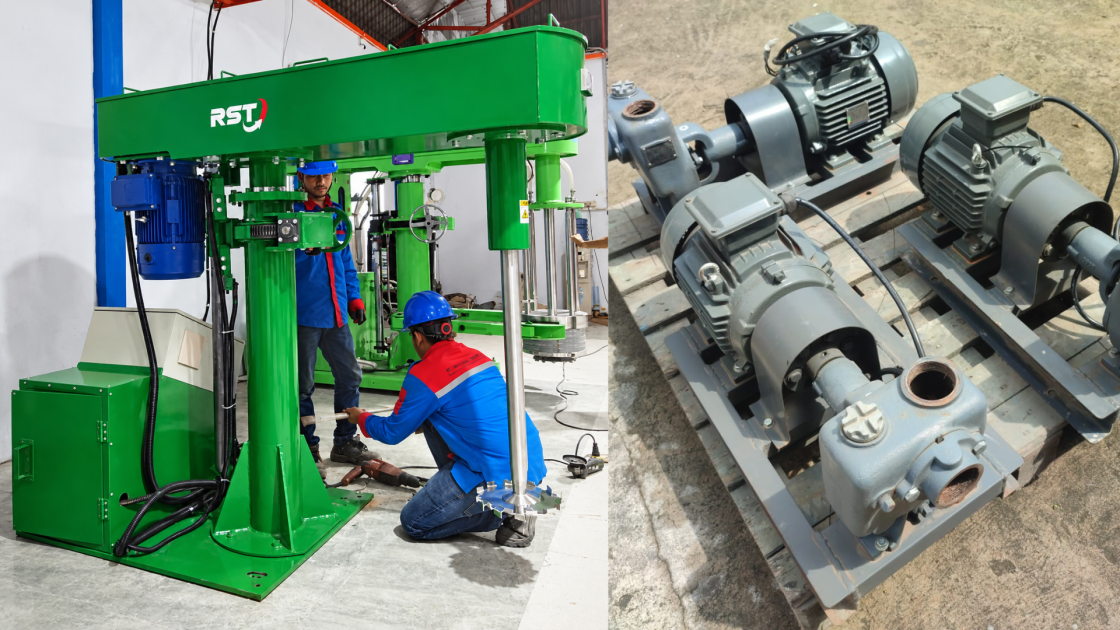
How to Determine HSD Mixer Motor Power Based on Viscosity, Batch Volume, and Dispersion Requirements
Determining the correct motor power for a High Speed Disperser (HSD Mixer) is one of the most important aspects of industrial mixing equipment design, particularly for paint, ink, coating, adhesive, and chemical manufacturing applications.
Selecting the right motor capacity requires more than simply considering tank volume or production capacity. Engineers must evaluate several operating parameters, including material viscosity, working batch volume, dispersing disc diameter, rotational speed (RPM), tip speed, material density, and the required dispersion performance.
An undersized motor may experience frequent overloads, speed reduction, or difficulty maintaining the required operating conditions. On the other hand, an oversized motor may increase equipment investment and electrical consumption without necessarily improving dispersion quality.
So, how do you determine the correct motor power for an HSD Mixer?
HSD Mixer motor power should be determined based on the power and torque requirements under the relevant worst-case operating conditions. The calculation must consider material characteristics, dispersing disc geometry, operating speed, and process requirements.
This article explains the fundamental principles of HSD Mixer motor selection and provides a practical engineering guide for Engineering, Production, and Procurement teams before purchasing industrial mixing equipment.
1. What Is an HSD Mixer Motor and How Does It Work?
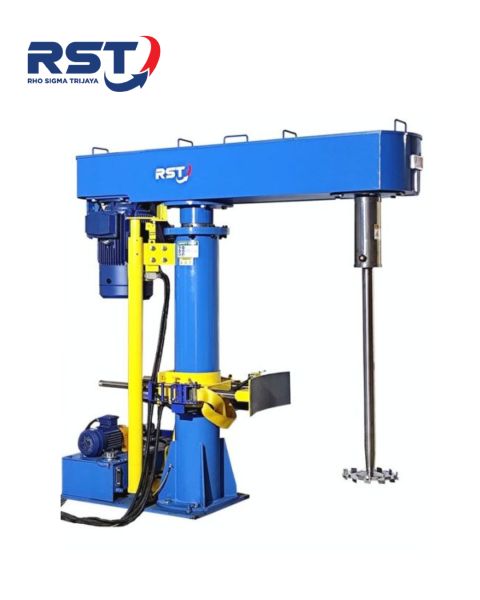
A High Speed Disperser (HSD) is an industrial mixing machine designed for powder wetting, mixing, and particle dispersion in liquid-based formulations.
The motor provides the mechanical power required to rotate the shaft and dispersing disc inside the mixing tank.
As the dispersing disc rotates at high speed, it generates material circulation and localized shear forces around the disc. These mechanisms help achieve:
Powder wetting and incorporation into liquid media.
Breaking down particle agglomerates.
Pigment and filler dispersion.
More uniform particle distribution.
Improved material circulation during processing.
The motor must provide sufficient power and torque to maintain the required disc operating speed under actual material loading conditions.
The main factors influencing HSD Mixer motor power requirements include:
Working batch volume.
Material viscosity during processing.
Material density and solids content.
Dispersing disc diameter.
Rotational speed (RPM).
Tank geometry and mixing configuration.
Dispersion quality and processing time requirements.
2. Factors That Determine HSD Mixer Motor Power
A. Working Batch Volume
Working volume refers to the actual amount of material processed in one batch, not necessarily the total geometric capacity of the tank.
For example, a tank with a geometric capacity of 1,000 liters may not necessarily operate with a full 1,000-liter batch.
The working volume must consider:
Required headspace.
Material depth.
Dispersing disc position.
Disc immersion depth.
Vortex formation.
Material circulation requirements.
In general, a larger working volume requires greater material circulation capability.
However, the relationship between tank volume and motor power is not always linear. Two HSD Mixers with the same working volume may require different motor capacities depending on material viscosity, density, solids content, and process characteristics.
B. Material Viscosity
Viscosity is one of the most important parameters when determining HSD Mixer motor power requirements.
It describes a material's resistance to flow.
In general, low-viscosity materials circulate more easily than high-viscosity materials. As viscosity increases, the resistance experienced by the dispersing disc and the required drive torque may also increase.
Examples of materials with different viscosity characteristics include:
Low-viscosity water-based liquids.
Medium-viscosity paint formulations.
High-solids pigment dispersions.
Viscous adhesive formulations.
Coatings with viscosity changes during processing.
Non-Newtonian materials whose viscosity changes with shear rate.
When selecting an HSD Mixer motor, consider the maximum viscosity encountered during the production process, not only the initial or final product viscosity.
This is particularly important during powder addition, when material viscosity may increase significantly.
For non-Newtonian materials, additional information about viscosity measurement methods, operating temperature, and shear-thinning or shear-thickening behavior should be provided to the equipment manufacturer.
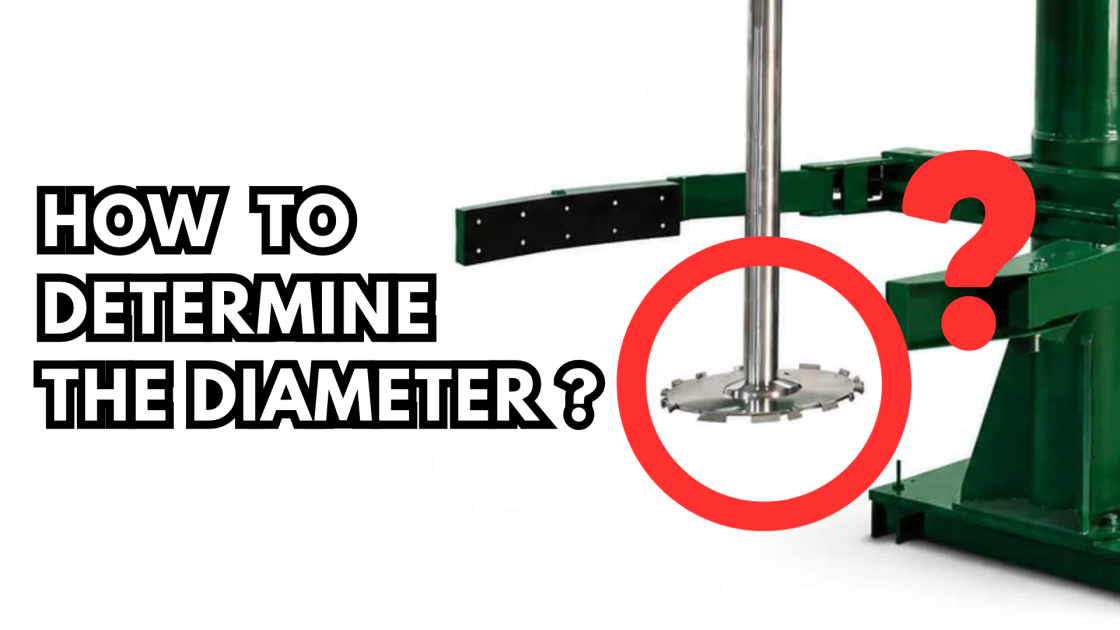
C. Dispersing Disc Diameter
The dispersing disc diameter affects material flow patterns, shear distribution, and the mechanical load on the drive system.
A larger disc can interact with a greater volume of material, but it may also significantly increase power requirements.
Several parameters must be evaluated together:
Internal tank diameter.
Dispersing disc diameter.
Disc clearance from the tank bottom.
Disc immersion depth.
Working volume.
Required RPM range.
As an initial design guideline, the dispersing disc diameter in many HSD configurations may be approximately one-third of the tank's internal diameter.
However, this ratio is not a universal design rule. The actual configuration must be verified based on material characteristics and process requirements.
Increasing disc diameter without evaluating motor capacity, shaft strength, and material circulation may result in excessive mechanical loading.
D. Rotational Speed (RPM) and Tip Speed
RPM indicates the number of shaft revolutions per minute.
However, RPM alone does not fully describe dispersion performance because the disc diameter also determines the linear velocity at the outer edge of the disc, known as tip speed.
The tip speed formula is:
v = (π × D × N) / 60
Where:
v = Tip speed (m/s).
D = Dispersing disc diameter (m).
N = Rotational speed (RPM).
π = Mathematical constant (3.1416).
Example of HSD Mixer tip speed calculation:
Assume a dispersing disc has a diameter of 200 mm and operates at 1,500 RPM.
v = (3.1416 × 0.2 × 1,500) / 60
v = 15.7 m/s.
This means the linear velocity at the outer edge of the disc is approximately 15.7 meters per second.
This value is a kinematic calculation, not a recommended operating speed for every material.
The appropriate tip speed must be determined according to formulation characteristics, dispersion requirements, material circulation, and machine operating limits.
Higher tip speed does not always produce better dispersion quality. Excessive speed may increase vortex formation, air entrainment, and material temperature.
E. Material Density and Solids Content
Density represents the mass of a material per unit volume.
High-density materials may create different operating loads compared with lower-density materials, particularly when combined with high solids content.
Powder and solid content also influence material behavior during mixing and dispersion.
Examples include paint, ink, pigment dispersion, and coating formulations with different solid concentrations.
Therefore, material density and solids content should be included in the technical data provided before selecting motor capacity.
F. Dispersion Requirements and Production Time
Motor power requirements should also be evaluated in relation to production targets.
Two manufacturers may process the same formulation but have different production time requirements.
These differences may influence the selection of:
Motor power.
Dispersing disc diameter.
Operating RPM.
Tip speed.
Tank configuration.
Speed control system.
However, increasing motor power does not automatically reduce dispersion time.
Process efficiency still depends on the machine's ability to generate suitable material circulation and shear conditions for the specific formulation.
3. Relationship Between Motor Power (kW/HP), Torque, and RPM
In addition to motor power, engineers should understand the relationship between power, torque, and rotational speed.
These three parameters are interconnected and determine the drive system's ability to operate the dispersing disc.
The relationship between mechanical power and torque is:
P = (2 × π × N × T) / 60
Where:
P = Mechanical power (W).
N = Rotational speed (RPM).
T = Torque (Nm).
This equation demonstrates that torque requirements increase when the same power must be maintained at a lower rotational speed.
This is particularly important in HSD applications because material viscosity may change during production.
For example, as powder is gradually added to a liquid formulation, the load on the dispersing disc may increase. The drive system must be capable of handling these changes without experiencing overload.
It is important to understand that the motor's rated power is not necessarily equal to the mechanical power delivered to the shaft. Motor efficiency, gearbox efficiency, belt transmission, and other mechanical components must also be considered.
Therefore, motor selection should be evaluated as part of the complete drive system.
4. Can HSD Mixer Motor Power Be Determined Based on Tank Volume?
One approach sometimes used during preliminary equipment selection is to relate motor power to tank volume.
However, this method should not be used as the only basis for equipment design.
For example, two HSD Mixers with a working volume of 500 liters may require different motor capacities.
The first machine may be used for mixing relatively low-viscosity liquids, while the second may be designed for high-solids pigment paste dispersion.
Although both machines have the same working volume, their power and torque requirements may differ.
The following parameters should be considered:
Maximum material viscosity.
Material density.
Solids content.
Dispersing disc diameter.
Tip speed.
Dispersion quality requirements.
Maximum operating conditions.
In conclusion, tank volume is only one of the design parameters. HSD Mixer motor power must be selected based on the overall process characteristics.
5. How to Select the Correct HSD Mixer Motor Capacity
The following steps can be used by engineering teams and equipment manufacturers when determining the appropriate motor capacity for a High Speed Disperser.
Step 1 — Determine the working volume
Identify the minimum and maximum batch volumes to be processed.
Step 2 — Identify material characteristics
Collect information about viscosity, density, solids content, temperature, and material behavior during processing.
Step 3 — Define process requirements
Determine whether the machine will be used for powder wetting, pigment dispersion, or further mixing operations.
Step 4 — Determine disc and tank configuration
Evaluate the dispersing disc diameter, tank diameter, disc immersion depth, and material circulation requirements.
Step 5 — Determine the operating speed range
Specify the required RPM and tip speed based on process requirements rather than simply selecting the maximum motor speed.
Step 6 — Evaluate power and torque requirements
Determine the drive requirements under the relevant worst-case operating conditions. Consider transmission efficiency and load characteristics.
Step 7 — Evaluate the control system
Ensure that the motor, inverter, electrical panel, current protection, and motor cooling system are suitable for the intended application.
Step 8 — Validate the design with the manufacturer
Ask the manufacturer to explain the basis for motor selection, design assumptions, operating range, and application limitations.
6. Does an HSD Mixer Motor Need an Inverter?
An inverter, also known as a Variable Frequency Drive (VFD), is used to control motor rotational speed.
In High Speed Disperser applications, an inverter allows operators to adjust RPM according to different production stages.
For example:
Low speed during initial mixing and powder wetting.
Medium speed to support material circulation.
High speed for dispersion according to formulation requirements.
An inverter provides greater operating flexibility. However, using an inverter does not automatically increase the maximum rated power of the motor.
The following parameters should be evaluated:
Required RPM range.
Available torque at low speeds.
Motor cooling capability.
Motor and inverter compatibility.
Current and temperature protection.
Electrical panel compatibility with the installation.
Safety requirements, including motor and electrical equipment specifications for hazardous areas when applicable.
The motor and inverter should be selected as one compatible drive system.
7. Signs That HSD Mixer Motor Capacity May Be Inadequate
Several operating conditions may indicate that the motor capacity or machine configuration requires further evaluation.
A. Frequent motor overload
Possible causes include excessive material load, viscosity exceeding the design assumptions, an unsuitable disc diameter, or mechanical problems.
B. RPM drops as material becomes more viscous
This may indicate that torque requirements exceed the drive system's capability or that inverter settings are unsuitable for the load characteristics.
C. Dispersion takes too long
The cause is not necessarily insufficient motor power. Disc diameter, tip speed, circulation patterns, powder addition sequence, and formulation characteristics also affect processing time.
D. Excessive material temperature increase
Temperature rise may result from mechanical energy transferred into the material, processing duration, and circulation conditions.
E. Excessive vortex formation and air entrainment
These conditions may be related to rotational speed, disc position, material depth, and tank geometry.
Before deciding to replace the motor with a higher-capacity unit, evaluate the complete process and mechanical configuration.
8. Technical Checklist for HSD Mixer Motor Selection
Before requesting motor capacity recommendations from an equipment manufacturer, prepare the following technical information.
| Parameter | Required Information |
|---|---|
| Product type | Paint, ink, coating, adhesive, chemical |
| Working volume | Liters or kg per batch |
| Initial viscosity | cP or mPa·s |
| Maximum viscosity | cP or mPa·s |
| Material density | kg/L |
| Solids content | % |
| Processing temperature | °C |
| Dispersion target | Powder wetting, pigment dispersion, mixing |
| Processing time | Minutes or hours |
| Tank diameter | mm |
| Dispersing disc diameter | mm, if available |
| Operating speed | RPM, if available |
| Power supply | Voltage and frequency |
| Speed control | Inverter or fixed speed |
| Operating hours | Hours per day |
If the disc diameter, RPM, or motor power is not yet known, these parameters can be recommended by the manufacturer after evaluating the process requirements.
The more complete the material and production data, the more accurately the manufacturer can recommend an appropriate HSD Mixer configuration.
9. HSD Mixer Design and Motor Selection Consultation with PT Rho Sigma Trijaya
Selecting the correct motor capacity for a High Speed Disperser requires more than considering tank volume or choosing a motor based on HP per liter.
A proper engineering evaluation should consider material characteristics, dispersion requirements, working volume, disc diameter, RPM, tip speed, and actual operating conditions.
PT Rho Sigma Trijaya (RST) is a custom industrial mixing equipment manufacturer providing mixing solutions for paint, ink, coating, adhesive, and chemical manufacturing industries.
RST evaluates equipment requirements based on customer process data and material characteristics, including High Speed Disperser configuration, motor capacity, drive systems, and tank design.
Whether you are planning to purchase a new HSD Mixer or evaluating the motor capacity of an existing machine, the RST Engineering team can help discuss your technical requirements.
Discuss your High Speed Disperser requirements with PT Rho Sigma Trijaya.
Website: https://www.rhosigmatrijaya.co.id
Email: sales1@rhosigmatrijaya.co.id
WhatsApp: Contact the RST team through our website to discuss HSD Mixer specifications and custom equipment requirements.
10. Frequently Asked Questions (FAQ) – HSD Mixer Motor Capacity
1. How do you determine the motor power required for an HSD Mixer?
HSD Mixer motor power is determined by evaluating working volume, maximum material viscosity, density, solids content, dispersing disc diameter, RPM, tip speed, and dispersion requirements. Power and torque requirements under the relevant worst-case operating conditions must also be considered.
2. Does a larger tank volume always require a higher-capacity HSD Mixer motor?
Not necessarily. Tank volume is only one design parameter. Motor requirements also depend on viscosity, density, solids content, disc diameter, and material characteristics.
3. Does material viscosity affect HSD Mixer motor capacity?
Yes. Viscosity affects flow resistance and the load on the dispersing disc. High-viscosity materials or formulations that become more viscous during processing may require greater torque.
4. What is the difference between RPM and tip speed in an HSD Mixer?
RPM indicates the number of shaft revolutions per minute, while tip speed represents the linear velocity at the outer edge of the dispersing disc. Tip speed depends on both disc diameter and RPM.
5. Does an HSD Mixer require an inverter?
An inverter is not always mandatory, but it is useful when the process requires adjustable operating speeds. Inverter selection should consider RPM range, torque requirements, motor cooling, and load characteristics.
6. Why does an HSD Mixer motor frequently experience overload?
Possible causes include material viscosity exceeding the design assumptions, unsuitable disc diameter, excessive process loading, mechanical problems, or incorrect drive system settings.
7. Does a higher HP motor always produce better dispersion quality?
No. Dispersion quality also depends on disc diameter, tip speed, circulation patterns, material characteristics, and tank configuration. A higher motor rating does not automatically result in better dispersion.
8. Can PT Rho Sigma Trijaya manufacture custom HSD Mixers with different motor capacities?
Yes. PT Rho Sigma Trijaya provides custom High Speed Dispersers based on process requirements, working volume, material characteristics, and customer production targets.