High Speed Disperser vs Agitator
Pelajari perbedaan High Speed Disperser, agitator, upgrade mixer, dan sistem mixing terintegrasi untuk industri cat dan kimia. Temukan solusi sesuai kebutuhan proses produksi.
High Speed Disperser vs. Agitator vs. Mixer Upgrade: How to Choose the Right Industrial Mixing Solution
1. Introduction
Choosing the right industrial mixing equipment is an important decision for manufacturing companies, particularly in the paint, ink, coating, adhesive, and chemical industries.
Mixing equipment must be selected based on material characteristics, production capacity, viscosity, process objectives, and the conditions of the existing production facilities.
However, not every mixing application requires a new High Speed Disperser (HSD). Some processes are better suited to industrial agitators, while others can be addressed by upgrading existing mixers. In more complex applications, an integrated mixing system that combines a tank, mixing equipment, drive system, and control panel may be the most appropriate solution.
For Procurement, Engineering, and Production teams, the main question is not simply which machine is the most powerful or operates at the highest speed, but rather:
Which mixing solution best meets the process requirements, investment budget, operational needs, and production targets?
This article explains the differences between High Speed Dispersers, industrial agitators, existing mixer upgrades, and integrated mixing systems to help manufacturers make more informed equipment decisions.
2. Understanding Different Industrial Mixing Technologies
A. High Speed Disperser (HSD Mixer)
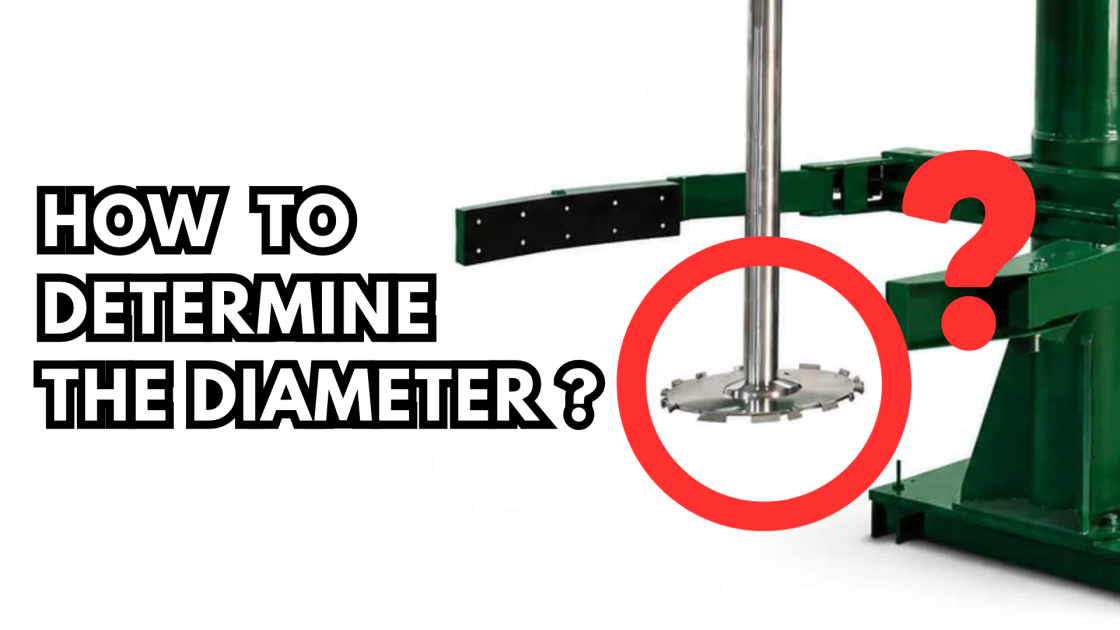
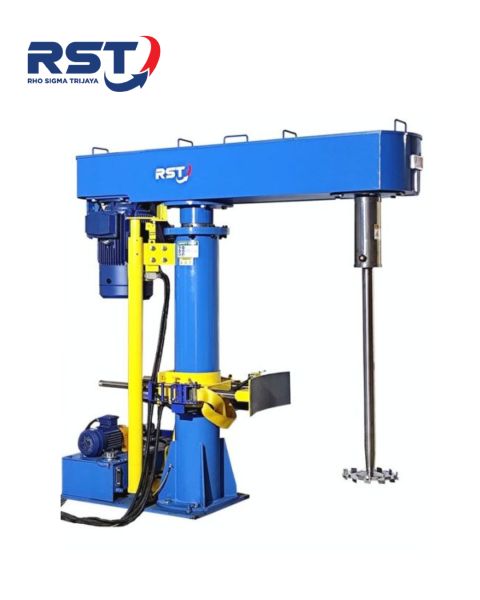
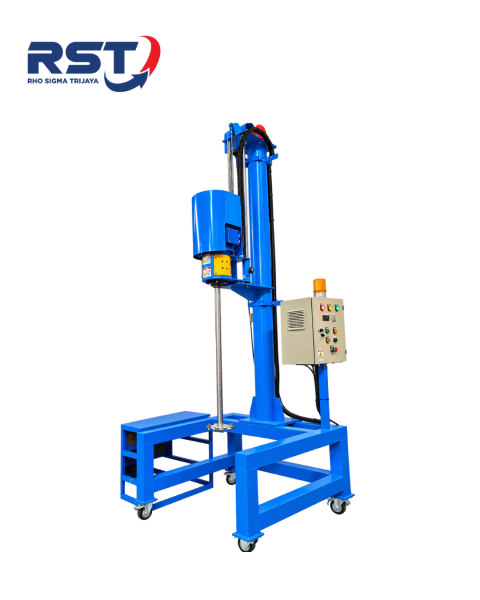
A High Speed Disperser is a mixing machine that uses a toothed dispersing disc rotating at high speed to generate material circulation and localized shear forces. These forces help wet out powders and disperse particles within a liquid medium.
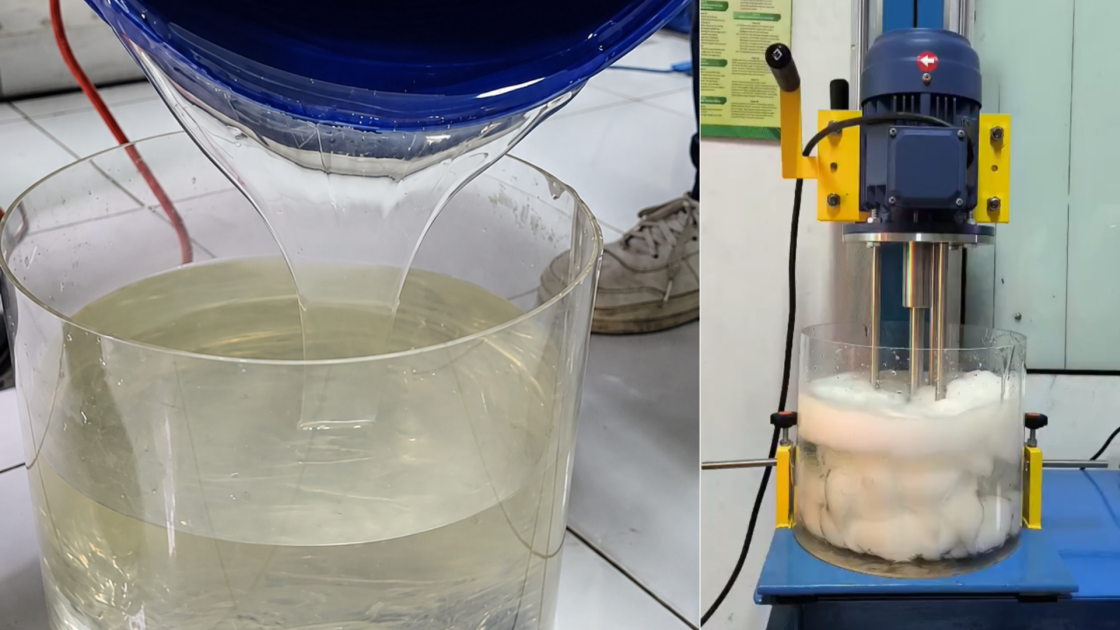
HSD mixers are widely used in paint manufacturing, ink production, coatings, pigment dispersion, and certain chemical formulations.
Typical applications include:
Dispersing pigments in paint formulations.
Wetting powders into liquid media.
Manufacturing inks and coatings.
Mixing chemicals that require a dispersion process.
Processing certain adhesive formulations compatible with HSD technology.
When should you consider an HSD mixer?
An HSD is worth considering when a process requires powder wetting, agglomerate breakup, and particle dispersion using appropriate shear forces.
However, HSD performance depends on several factors, including formulation characteristics, viscosity, dispersing disc diameter, rotational speed, motor power, and the required product quality.
An HSD does not automatically guarantee a specific particle size or dispersion quality. These targets may require further process evaluation and testing.
B. Industrial Agitator
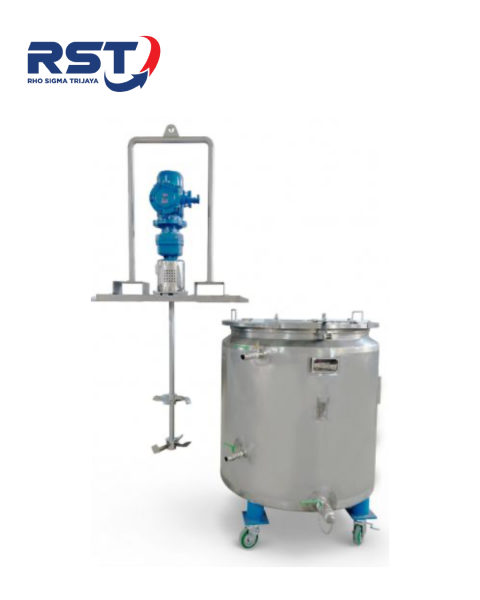
An industrial agitator is a mixing machine that uses an impeller to generate flow and circulation within a tank.
Common impeller types include propellers, pitched-blade turbines, hydrofoils, and other designs selected according to the process requirements.
Typical agitator applications include:
Blending multiple liquids.
Homogenizing liquid mixtures.
Keeping solid particles suspended.
Circulating materials within a tank.
Supporting temperature uniformity.
Maintaining product uniformity during storage or processing.
When is an industrial agitator the right choice?
An agitator can be an appropriate solution when the primary requirement is material blending and circulation rather than high-shear pigment dispersion.
Impeller selection should consider viscosity, tank geometry, material density, solids content, and the desired mixing performance.
For applications requiring intensive pigment dispersion, a conventional agitator may not generate sufficient shear to achieve the required results.
C. High-Shear Mixers and Specialized Mixing Technologies
Some applications require alternative technologies, such as rotor-stator high-shear mixers, inline mixers, or specialized mixing equipment.
These technologies may be suitable for processes requiring intense localized shear, emulsification, or specific powder-wetting and mixing configurations.
The selection should be based on the actual process requirements. For example, a rotor-stator mixer is not necessarily better than an HSD because the two technologies differ in their flow mechanisms, shear patterns, configurations, and operating characteristics.
D. Integrated Mixing Systems
An integrated mixing system combines the primary mixing equipment with the supporting components required for operation.
Depending on the project requirements, the system may include:
Mixing tank.
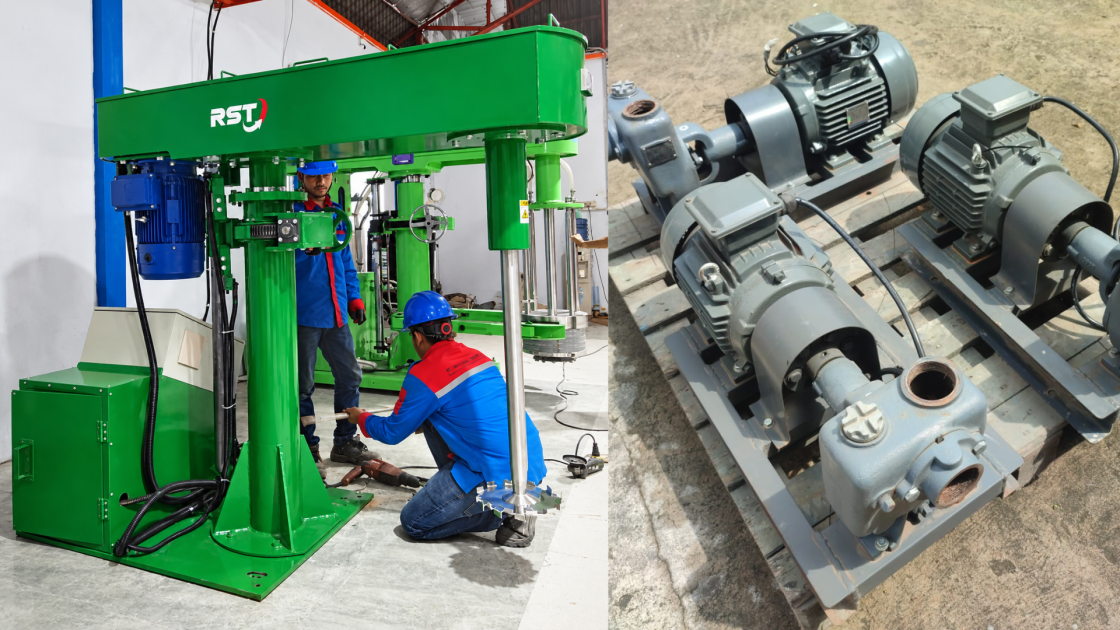
High Speed Disperser or industrial agitator.
Motor and gearbox, where required.
Inverter or Variable Frequency Drive (VFD).
Hydraulic or mechanical lifting system.
Electrical control panel.
Piping, valves, and product transfer systems.
Instruments and safety devices.
When should you consider an integrated mixing system?
An integrated system is worth considering when a company requires a complete equipment package rather than an individual mixing machine.
Its main advantage is that the mechanical and electrical components can be designed to work together as a coordinated system.
However, customers should confirm whether the quotation includes installation, electrical wiring, commissioning, operator training, and performance testing.
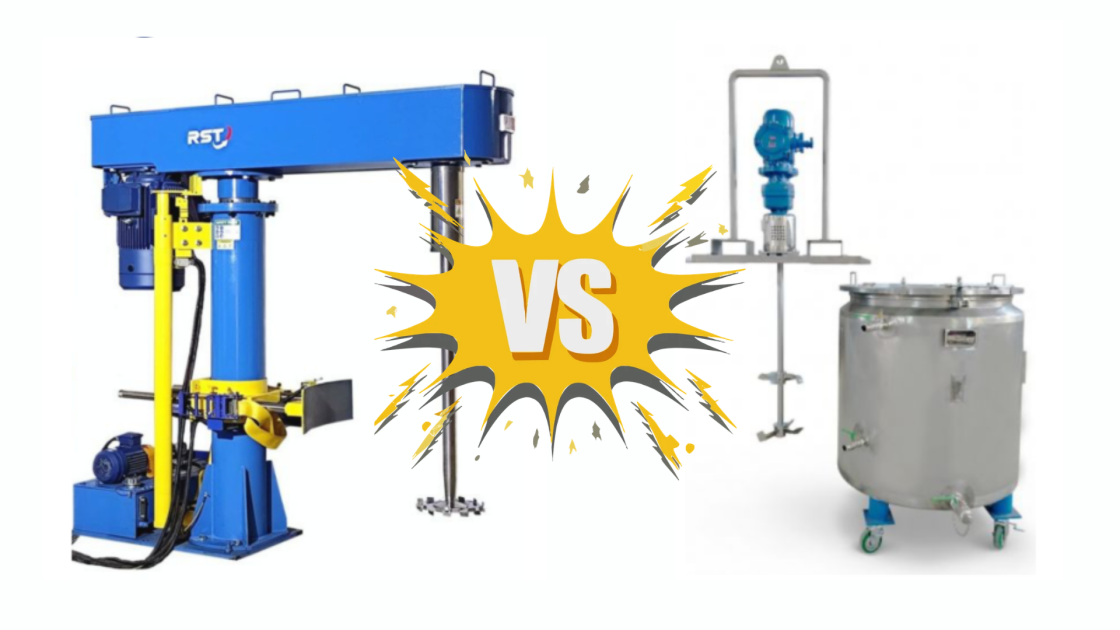
3. High Speed Disperser vs. Industrial Agitator: Key Differences
| Comparison Factor | High Speed Disperser | Industrial Agitator |
|---|---|---|
| Primary function | Dispersion and powder wetting | Blending and material circulation |
| Mixing element | Toothed dispersing disc | Propeller, turbine, hydrofoil, or other impellers |
| Shear characteristics | High localized shear around the disc | Depends on impeller design and rotational speed |
| Typical applications | Paint, ink, coatings, pigment dispersion | Liquid blending, suspension, and circulation |
| Viscosity considerations | Depends on formulation and machine design | Depends on impeller, torque, power, and flow pattern |
| Configuration | HSD machine with a suitable tank | Top-entry, side-entry, or other agitator configurations |
| Key design parameters | Disc diameter, speed, motor power, and batch volume | Impeller type, diameter, speed, torque, and flow capacity |
This comparison provides general guidance. The final equipment selection should always consider the actual material characteristics and process objectives.
4. When Should You Buy a New HSD, Use an Agitator, or Upgrade an Existing Mixer?
Option 1: Purchase a New High Speed Disperser
A new HSD may be the right choice when:
The existing machine cannot achieve the required dispersion quality.
Production capacity needs to increase.
The process requires more effective powder wetting or pigment dispersion.
The existing equipment has reached the end of its service life.
The company requires a machine with an operating range and control system suitable for a new process.
Before purchasing, evaluate the batch capacity, viscosity, dispersion targets, electrical supply, and installation requirements.
HSD selection should be based on process requirements rather than motor power in kW or HP alone.
Option 2: Use an Industrial Agitator
An industrial agitator may be more suitable when:
The primary objective is blending multiple liquids.
The process requires continuous material circulation.
Solid particles must remain suspended.
High-shear dispersion is not required.
An impeller-generated flow pattern better matches the process requirements.
For example, a tank used to blend several liquid ingredients may not require an HSD. An agitator with an appropriately selected impeller may deliver the required mixing performance.
Conversely, if the process requires pigment agglomerate breakup, a conventional agitator may not achieve satisfactory results.
Option 3: Modify or Upgrade an Existing Mixer
Replacing the entire machine is not always the only solution. An upgrade may be feasible if the existing tank, frame, and major components remain in suitable condition.
Potential modifications include:
Replacing the motor with one of an appropriate rating.
Installing a VFD for speed control.
Replacing the impeller or dispersing disc.
Improving or upgrading the lifting system.
Modifying the machine mounting structure or tank.
Upgrading the electrical control panel and safety devices.
Before carrying out any modifications, the engineering team or equipment manufacturer should evaluate the motor, shaft, bearings, frame, electrical system, and operating loads.
Increasing motor power or rotational speed without checking the machine's mechanical capabilities can create equipment failure and safety risks.
An upgrade is worth considering when the existing machine can safely meet the required process targets at a reasonable total cost.
Option 4: Purchase an Integrated Mixing System
An integrated mixing system should be considered when a project requires more than a standalone mixer.
For example, a company establishing a new paint production line may require a mixing tank, HSD, lifting system, VFD, electrical control panel, and product discharge system.
With an integrated system, the relationships between the different components can be planned from the beginning.
This option is particularly relevant when:
The existing tank is incompatible with the required mixing equipment.
The company is establishing a new production line.
Mechanical and electrical design coordination is required.
Multiple pieces of equipment must operate as one system.
The customer needs a clearly defined procurement scope.
Ensure that the proposal specifies whether installation, piping, wiring, commissioning, operator training, and performance testing are included.
5. Which Is More Cost-Effective: Upgrading an Existing Mixer or Buying a New Machine?
The decision should not be based on the purchase price alone.
| Evaluation Factor | Existing Mixer Upgrade | New Machine |
|---|---|---|
| Initial investment | Potentially lower if major components remain serviceable | Generally requires a higher initial investment |
| Existing tank | Can be reused if compatible | May require a new tank or additional modifications |
| Process performance | Depends on achievable improvements | Can be designed around new process requirements |
| Mechanical condition | Existing components require inspection | Main components are new |
| Production downtime | Depends on the scope of modification | Depends on fabrication, installation, and commissioning |
| Future capacity | Limited by the existing design | Can be designed for anticipated future needs |
| Technical risks | Depend on equipment condition and operating history | Can be reduced through clear specifications and acceptance criteria |
This table provides general guidance and does not guarantee that either option will always be cheaper.
An upgrade can become expensive if it requires major changes to the structure, motor, control system, and tank. Conversely, a new machine may involve significant installation costs.
A proper evaluation should compare total costs, production impact, achievable performance, and the expected service life of the equipment.
6. How to Calculate Total Cost of Ownership (TCO)
Procurement teams should evaluate the Total Cost of Ownership (TCO), not just the quoted equipment price.
Cost components to consider include:
Equipment purchase price.
Tank fabrication or modification costs.
Electrical installation and control panel costs.
Mechanical installation and commissioning.
Production downtime during replacement or modification.
Energy consumption.
Maintenance and spare parts.
Cleaning time and potential product losses.
Future production capacity expansion requirements.
For example, a machine with a lower initial price may require extensive tank modifications or additional installation work. A higher-priced proposal, on the other hand, may already include the tank, lifting system, and control panel.
To make a fair comparison, Procurement should ask each supplier to clearly identify the included scope of supply and any exclusions.
Where possible, compare operating costs per batch or per unit of finished product rather than focusing exclusively on the equipment purchase price.
7. Information Required to Compare Mixing Solutions
Before selecting an HSD, agitator, upgrade, or integrated system, Engineering and Production teams should prepare the following information.
A. Process Requirements
Product type and formulation characteristics.
Working volume per batch.
Viscosity and operating temperature range.
Required mixing or dispersion results.
Production capacity targets.
Expected processing time.
B. Existing Equipment Condition
Tank dimensions and construction material.
Current motor power and rotational speed.
Existing impeller or dispersing disc type.
Condition of the shaft, bearings, and lifting system.
Mechanical and electrical condition.
Engineering drawings and maintenance records, where available.
C. Factory Facilities
Available installation space and required clearances.
Electrical power supply.
Hazardous-area classification, where applicable.
Piping and product discharge requirements.
Cleaning procedures.
Safety requirements.
D. Commercial Requirements
Required quantity.
Target delivery schedule.
Installation scope.
Warranty requirements.
Spare parts and after-sales service requirements.
If some information is not yet available, the company can begin discussions using the information already known and identify the remaining items that require confirmation.
8. Practical Steps for Selecting the Right Mixing Solution
To avoid purchasing equipment that is oversized, undersized, or unsuitable for the process, follow these steps.
Step 1 — Define the required process outcome.
Determine whether the process requires liquid blending, powder wetting, pigment dispersion, solids suspension, or a combination of functions.
Step 2 — Evaluate the existing equipment.
If the company already has a mixer, assess its mechanical condition, process capability, capacity, and operating limitations.
Step 3 — Select the appropriate technology.
Consider an HSD for dispersion applications requiring high shear, an agitator for suitable blending and circulation applications, or another technology when the process requires a different mixing mechanism.
Step 4 — Evaluate the feasibility of an upgrade.
Determine whether replacing the motor, impeller, or disc, upgrading the control system, or modifying the tank can safely and economically meet the process requirements.
Step 5 — Define the procurement scope.
Clarify whether the company needs a standalone mixer, a mixer with a tank, or a complete integrated system.
Step 6 — Compare technical and commercial proposals.
Evaluate process suitability, total cost, installation requirements, lead time, warranty, and long-term operating needs.
For complex applications, material trials or performance testing may also be necessary before finalizing the equipment design.
9. Frequently Asked Questions
Is a High Speed Disperser always better than an agitator?
No. An HSD is designed for dispersion applications requiring high shear, while an agitator is often more suitable for blending, circulation, and suspension. The best choice depends on the process objectives.
Can an agitator replace an HSD in paint manufacturing?
Not in every application. An agitator can blend liquid ingredients and maintain circulation, but it may not achieve the required pigment dispersion quality. The formulation and dispersion targets must be evaluated before selecting the equipment.
Is upgrading an existing mixer always cheaper than buying a new machine?
Not always. An upgrade may be more economical if the tank and major components remain in good condition. However, extensive modifications, production downtime, or performance limitations may make a new machine the more practical investment.
Does a new HSD require a new tank?
No. An existing tank may be reused if its dimensions, construction material, working volume, mounting arrangement, and operating conditions are compatible with the proposed machine.
When should a company purchase an integrated mixing system?
An integrated system is worth considering when a company requires a combination of a tank, mixer, lifting system, control panel, and supporting components that must be designed to work together.
10. Industrial Mixing Solutions from PT Rho Sigma Trijaya
PT Rho Sigma Trijaya (RST) provides custom industrial mixing equipment and stainless steel tanks for a range of industrial applications, including paint, chemicals, adhesives, building materials, and other manufacturing processes.
Depending on the process requirements, customers can discuss solutions such as:
High Speed Dispersers (HSD Mixers).
Industrial mixing tanks.
Agitator systems and mixing configurations.
Custom stainless steel tanks.
Selected equipment modifications or upgrades following technical evaluation.
Integrated mixing equipment packages tailored to project requirements.
Our objective is to help manufacturers identify technically appropriate solutions rather than selecting equipment based solely on motor power or purchase price.
If your company is considering a new HSD, an industrial agitator, an upgrade to an existing mixer, or a complete integrated mixing system, the first step is to define the material characteristics, process targets, working volume, and condition of the available equipment.
Discuss your industrial mixing requirements with PT Rho Sigma Trijaya.
Website: https://www.rhosigmatrijaya.co.id
Email: sales1@rhosigmatrijaya.co.id
Contact the RST team via WhatsApp to discuss your application and explore the most suitable mixing solutions for your production needs.