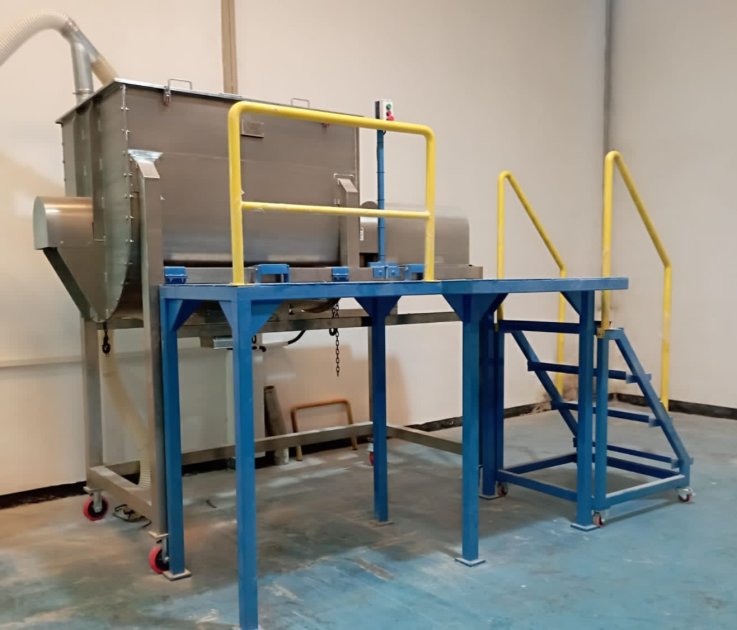
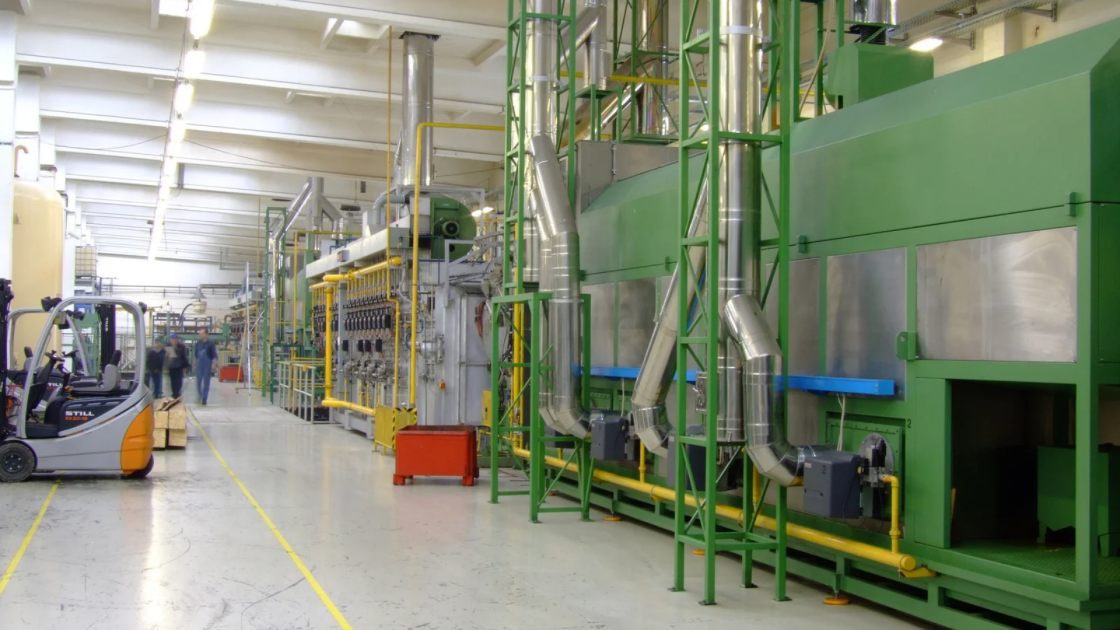
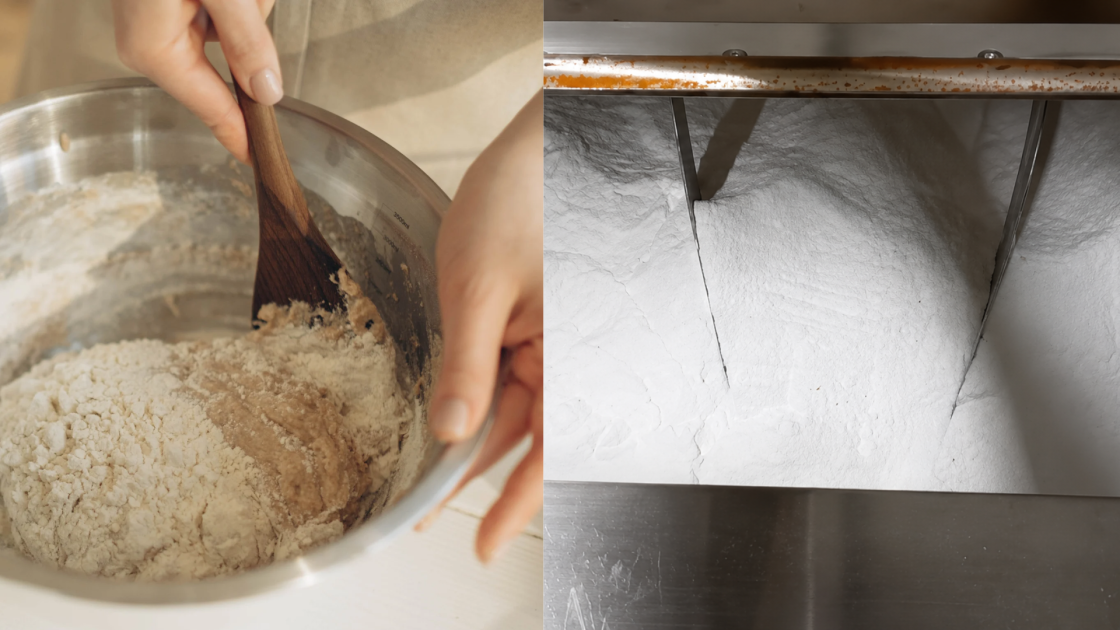
Memilih Ribbon Mixer Sesuai Kebutuhan Produksi
Pelajari cara menentukan konfigurasi custom Ribbon Mixer berdasarkan karakteristik produk, kapasitas produksi, discharge, conveyor, dust collector, dan layout pabrik bersama RST.
How to Choose the Right Ribbon Mixer for Your Product and Production Requirements
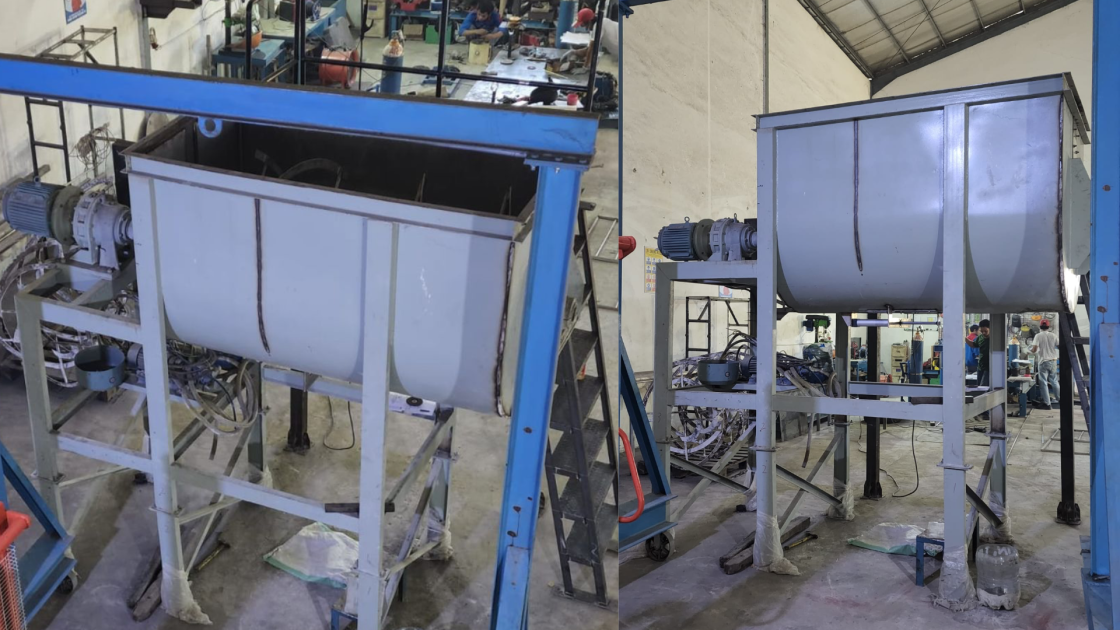
Planning to increase your production capacity next year? If your production process involves a ribbon mixer, choosing the right equipment requires more than simply selecting a larger mixing capacity.
Product characteristics, mixing requirements, discharge configuration, material handling systems, and factory layout all play important roles in determining the most suitable ribbon mixer design.
Every product has different processing requirements. A ribbon mixer designed for drinking powder, for example, may require a different configuration from one used for textile chemicals, road marking paint, or materials that tend to stick to mixing surfaces.
At PT Rho Sigma Trijaya (RST), we understand that selecting industrial mixing equipment starts with understanding the customer's product and production process. The goal is to identify a suitable configuration based on the actual application rather than relying solely on standard specifications.
1. Start with Your Product Characteristics, Not Just Mixer Capacity
One of the most important considerations when designing a ribbon mixer is understanding the material being processed.
Even products that appear similar can behave differently during mixing. Particle size, bulk density, flowability, moisture content, tendency to form lumps, and material sensitivity can all influence equipment design and mixing performance.
Common material categories include:
Dry powders: Such as drinking powder, chilli powder, chemicals, and dry building materials.
Granular materials: Products that require appropriate material movement and distribution during mixing.
Powder-liquid mixtures: Applications that require careful consideration of liquid addition, mixing performance, and the risk of lump formation.
Sticky or cohesive materials: Products that may require special consideration of agitator design, clearances, surface contact, and cleaning requirements.
Specialty materials: Products that do not behave like conventional dry powders and may require a different mixing mechanism or a specially engineered solution.
Not every material is automatically suitable for a conventional ribbon mixer. Wet, sticky, or highly cohesive materials may require further technical evaluation to determine whether a customized ribbon mixer is appropriate or whether another mixing technology would be more suitable.
The first question should not only be, "What capacity do we need?" but also, "How will our product characteristics affect the mixer design?"
2. Ribbon Mixer Configurations Can Differ Between Applications
Ribbon mixers do not always need to follow the same standard configuration. Their designs can be evaluated and adapted according to material characteristics, production requirements, and operating conditions.
Discharge System
Once mixing is complete, the material must be discharged and transferred to the next production stage.
Depending on the application, discharge options may include a bottom outlet with an open-close valve, a slide gate, or other specially designed discharge arrangements. Tilting or dumping mechanisms may also be considered where appropriate for the material and machine design.
The selection should consider discharge efficiency, residual material, cleaning requirements, and the position of downstream equipment.
Ribbon and Agitator Design
Ribbon geometry, clearance from the mixing chamber, and agitator configuration should be evaluated according to the material and desired mixing results.
Differences in particle size, density, and flow characteristics may require different engineering considerations. The objective is to achieve suitable material movement and mixing performance for the intended application.
Construction Material and Cleaning Requirements
The selection of construction materials, such as carbon steel or stainless steel, depends on the product, corrosion risks, hygiene requirements, and operating environment.
For food-related applications or production lines handling multiple product variants, accessibility for inspection and cleaning should also be considered during the design stage.
Dust Collection System
For applications that generate airborne dust during loading