Perbedaan Ribbon Mixer Powder Mixer
ribbon blender, mesin powder mixer, mesin mixing powder, mesin pencampur bubuk industri, jenis mixer industri, cara memilih powder mixer
Ribbon Mixer vs. Other Powder Mixers: Differences, Functions, and Industrial Applications
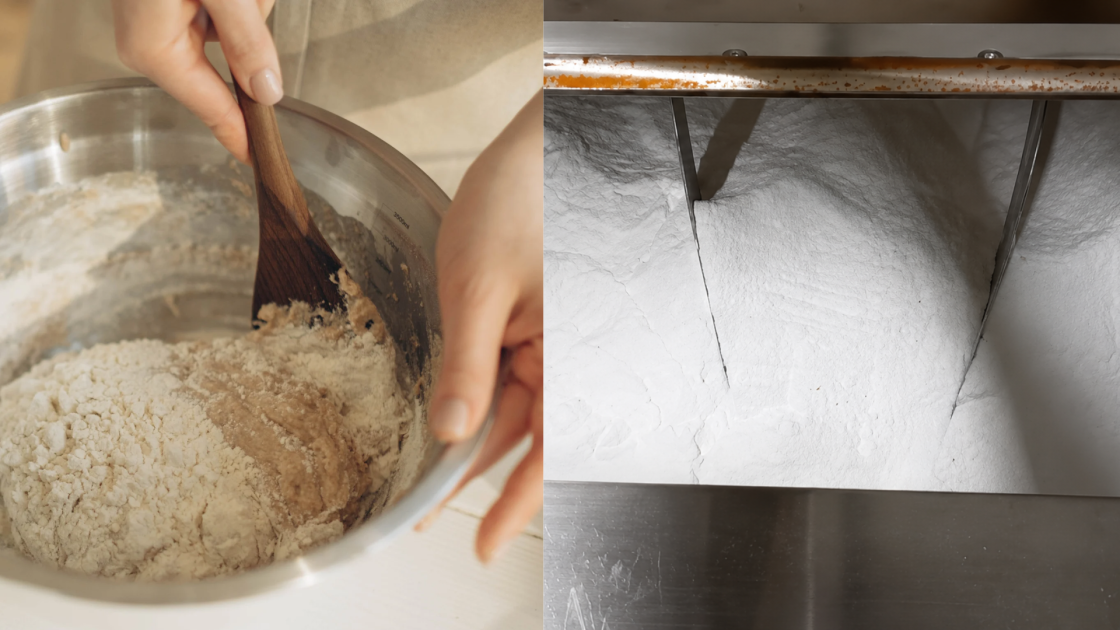
In industrial manufacturing, powder mixing plays an important role in maintaining formulation consistency and product quality. Industries such as food and beverage, pharmaceuticals, cosmetics, animal feed, fertilizers, and chemicals rely on mixing equipment to combine raw materials according to specific process requirements.
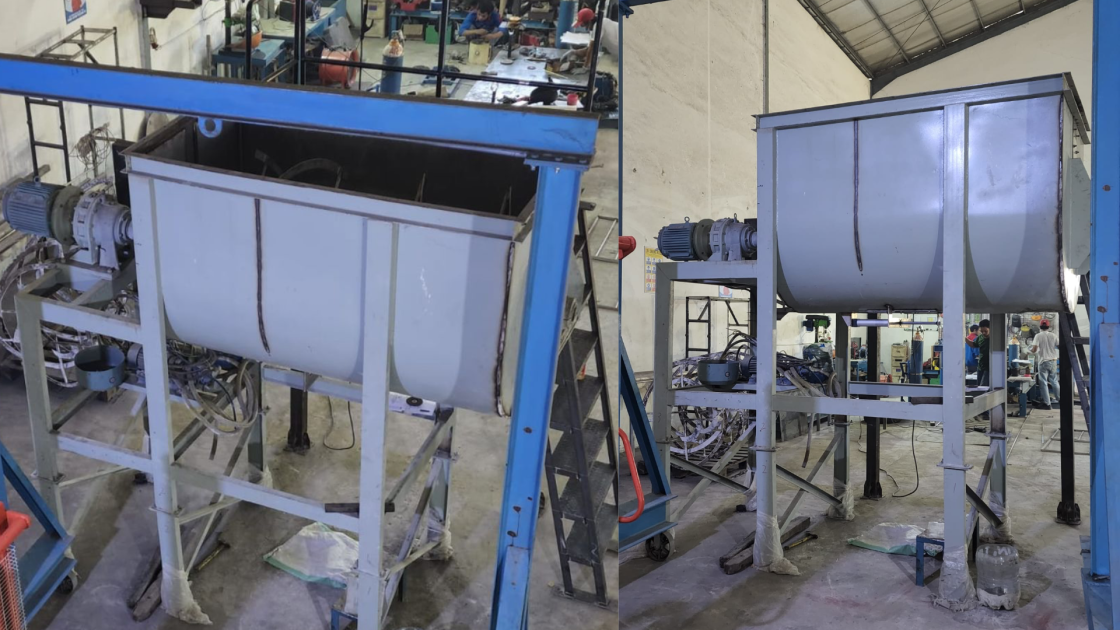
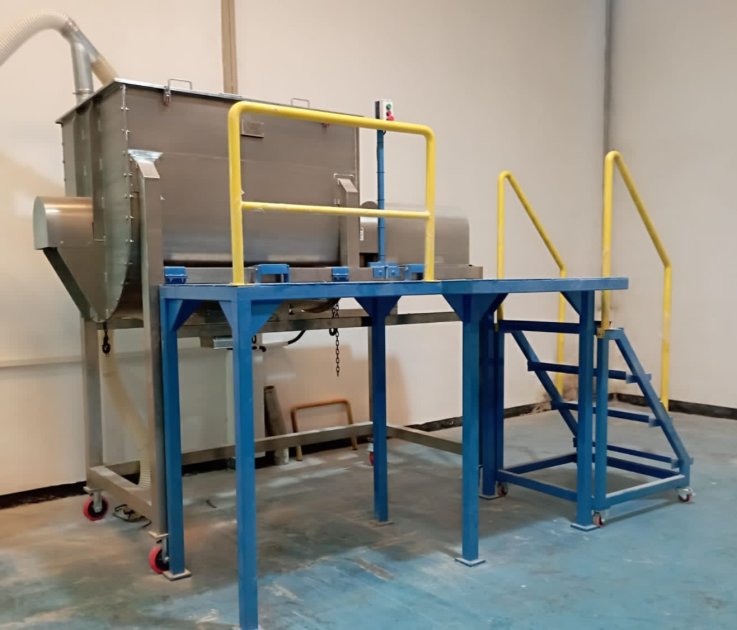
One of the most widely used machines for these applications is the Ribbon Mixer, also known as a Ribbon Blender. Featuring a helical ribbon agitator inside a horizontal trough, this machine is designed to circulate and distribute materials throughout the mixing process.
However, the Ribbon Mixer is not the only option for powder mixing. Other technologies include Paddle Mixers, V-Blenders, Double Cone Blenders, Plow Mixers, Drum Mixers, and Fluidized Bed Systems, each with different operating principles and applications.
What are the differences between a Ribbon Mixer and other powder mixers? And when is a Ribbon Mixer the right solution for industrial production?
What Is a Ribbon Mixer?
A Ribbon Mixer is an industrial mixing machine designed to blend powders and granules using a helical ribbon agitator inside a horizontal mixing trough.
In a typical design, the inner and outer ribbons move materials in opposite axial directions. This creates material circulation throughout the trough, helping distribute individual ingredients across the mixture.
This mixing mechanism makes the Ribbon Mixer a practical solution for many industrial batch mixing applications, particularly those involving dry powders and granules.
When Is a Ribbon Mixer the Right Solution for Industrial Production?
A Ribbon Mixer is worth considering when a manufacturer requires:
Mixing multiple powder ingredients into a single formulation, such as flour blends, food premixes, animal feed additives, fertilizers, or dry chemical formulations.
Batch capacity tailored to production requirements, through the appropriate selection of working volume and machine configuration.
A standardized mixing process, allowing parameters such as mixing time and agitator speed to be controlled and evaluated.
Integration with existing production systems, including hoppers, conveyors, weighing systems, feeding equipment, and packaging lines.
Increased production capacity, particularly when manual mixing or existing equipment can no longer meet operational requirements.
With the appropriate specifications, a Ribbon Mixer can help establish a more structured mixing process and support consistent production results.
Ribbon Mixer vs. Other Powder Mixers
Although all the machines discussed below are used for material mixing, each operates differently. These differences influence material movement, suitable applications, and the production requirements each machine can address.
1. Ribbon Mixer vs. Paddle Mixer
Ribbon Mixers and Paddle Mixers commonly use horizontal mixing chambers. Their main difference lies in the agitator design and the way materials move inside the machine.
A Ribbon Mixer uses helical ribbons to circulate material along the trough. A Paddle Mixer uses paddle-shaped blades to push, lift, and fold the material during mixing.
A Ribbon Mixer is worth considering when:
The process focuses on batch mixing of powders and granules.
Material circulation using a helical ribbon is suitable for the formulation.
Production requires a horizontal mixer with configurable capacity.
A Paddle Mixer is worth considering when:
A lifting and folding mixing pattern better suits the process.
The formulation requires a different agitator mechanism.
Specific mixing conditions need to be evaluated using a paddle-based design.
Both machines serve a wide range of industrial applications. The appropriate choice depends on material characteristics, homogeneity requirements, and process testing.
2. Ribbon Mixer vs. V-Blender
A V-Blender uses a V-shaped vessel that rotates around its axis. As the vessel rotates, materials repeatedly separate and recombine, creating a blending action.
Unlike a V-Blender, a Ribbon Mixer uses an internal agitator to generate material circulation inside a horizontal trough.
A Ribbon Mixer is particularly relevant when the process requires mechanical circulation using a helical agitator in a horizontal mixing chamber.
A V-Blender is worth considering when free-flowing dry powders require blending through vessel rotation with a relatively gentle mixing mechanism.
These differences should be considered when determining batch capacity, target homogeneity, and material feeding and discharge requirements.
3. Ribbon Mixer vs. Double Cone Blender
A Double Cone Blender features two interconnected conical sections. The entire vessel rotates, causing the material to move and redistribute throughout the mixing chamber.
A Ribbon Mixer moves material using an internal helical agitator, whereas a Double Cone Blender relies on vessel rotation.
A Ribbon Mixer can be considered for batch mixing processes that require mechanical agitation and material circulation along a horizontal trough.
A Double Cone Blender can be considered for blending free-flowing powders and granules through a rotating-vessel mechanism.
Both machines can handle dry materials, but their material flow patterns, equipment configurations, and process requirements differ.
4. Ribbon Mixer vs. Plow Mixer
A Plow Mixer, also known as a Ploughshare Mixer, uses plow-shaped mixing elements mounted on a horizontal shaft. These elements generate intensive material movement by lifting and dispersing the material throughout the mixing chamber.
Certain configurations can also incorporate high-speed choppers to break up agglomerates or help distribute added ingredients.
A Ribbon Mixer is a suitable option when the primary requirement is batch mixing of powders and granules using helical ribbon circulation.
A Plow Mixer is worth considering when the process requires more intensive material movement or involves formulations that are difficult to mix using a conventional mixing mechanism.
The selection should take into account mechanical energy requirements, material characteristics, target homogeneity, and operating conditions.
5. Ribbon Mixer vs. Drum Mixer
A Drum Mixer uses a rotating drum to lift and tumble materials during the mixing process.
A Ribbon Mixer relies on an internal helical agitator, while a Drum Mixer uses the rotation of the vessel to move the material.
A Ribbon Mixer can be considered for batch processes that require mechanical material circulation inside a horizontal trough.
A Drum Mixer can be considered for specific applications involving granular materials that can be mixed effectively through vessel rotation.
Large capacity alone is not enough to determine the right machine. The equipment must also meet the required mixing uniformity, cycle time, and discharge requirements.
6. Ribbon Mixer vs. Fluidized Bed System
A Fluidized Bed System uses a gas stream to move particles into a fluidized state.
Unlike a Ribbon Mixer, which relies on mechanical agitation, a fluidized bed uses interactions between gas and particles. Depending on the equipment configuration, it can combine mixing with drying or other particle-processing operations.
A Ribbon Mixer is worth considering when the primary requirement is batch mixing using mechanical agitation.
A Fluidized Bed System is more relevant when the process requires particle fluidization or combines mixing with gas-based processing operations.
Because their operating principles differ, these two technologies are not always direct alternatives.
Comparison Table: Ribbon Mixer vs. Other Powder Mixing Equipment
| Mixer type | Operating principle | When to consider it |
|---|---|---|
| Ribbon Mixer | Helical ribbon agitator inside a horizontal trough | Batch mixing of powders and granules using mechanical circulation |
| Paddle Mixer | Paddle blades lift and fold materials | Applications requiring a mixing pattern suited to paddle geometry |
| V-Blender | Rotation of a V-shaped vessel | Free-flowing dry powders requiring vessel-based blending |
| Double Cone Blender | Rotation of a double-cone vessel | Powder and granule blending through tumbling action |
| Plow Mixer | Plow-shaped elements generate intensive material movement | Formulations requiring intensive mixing action |
| Drum Mixer | Rotating drum with tumbling material movement | Specific applications involving granular materials |
| Fluidized Bed System | Gas flow moves and suspends particles | Processes requiring fluidization or gas-based particle processing |
This table serves as an initial selection guide. Actual mixing performance depends on material characteristics, equipment design, operating parameters, and product quality requirements.
How to Select a Ribbon Mixer for Industrial Production
After understanding the differences between mixing technologies, the next step is to determine the equipment specifications that match the production process.
1. Determine Batch Weight and Working Capacity
The mixer capacity must match the quantity of material processed in each production cycle.
An initial estimate can be calculated using the following formula:
Batch weight = Working volume × Bulk density
For example, if the planned working volume is 300 liters and the material bulk density is 0.6 kg/L, the estimated batch weight is 180 kg.
Working volume is not the same as the total vessel volume. Sufficient space must be available for material circulation, based on the equipment design.
2. Evaluate Material Characteristics
Important parameters include particle size, bulk density, flowability, moisture content, tendency to form agglomerates, and sensitivity to mechanical forces.
This information helps determine the appropriate agitator configuration and operating conditions.
3. Define the Required Mixing Uniformity
For products containing multiple ingredients, particularly additives present at low concentrations, mixing uniformity should be defined and measured.
Testing can involve collecting samples from multiple locations and evaluating them using an appropriate homogeneity parameter.
4. Plan the Feeding and Discharge Systems
Consider the inlet position, outlet size, conveyor requirements, hoppers, dust collectors, and cleaning access.
Proper integration allows the mixer to operate as part of a complete production system rather than as a standalone piece of equipment.
Conclusion: Is a Ribbon Mixer the Right Choice?
A Ribbon Mixer is a practical solution for many industrial powder and granule mixing applications. Its helical agitator, configurable design, and potential integration with other production equipment make it relevant for a wide range of batch mixing processes.
However, other powder mixing technologies serve different purposes. Paddle Mixers, V-Blenders, Double Cone Blenders, Plow Mixers, Drum Mixers, and Fluidized Bed Systems may be more suitable depending on material characteristics and process objectives.
The selection process should therefore begin with the production requirements: which materials need to be mixed, the required batch weight, the target mixing uniformity, and how the material will be transferred after mixing.
Looking for a Ribbon Mixer for Your Production Process?
PT Rho Sigma Trijaya (RST) can help evaluate industrial mixing equipment requirements based on material characteristics, production capacity, and the planned process configuration.
Discuss your powder mixing requirements with the RST team to evaluate the machine specifications and configuration suited to your industrial application.
Frequently Asked Questions About Ribbon Mixers
1. What is the difference between a Ribbon Mixer and a powder mixer?
A powder mixer is a general term for equipment used to blend powdered materials. A Ribbon Mixer is a specific type of powder mixer that uses a helical ribbon agitator inside a horizontal trough.
2. Which industries use Ribbon Mixers?
Ribbon Mixers can be used in food processing, animal feed, chemical manufacturing, fertilizers, cosmetics, and other industries requiring powder or granule mixing, provided the equipment specifications suit the application.
3. What is the difference between a Ribbon Mixer and a Paddle Mixer?
A Ribbon Mixer uses helical ribbons to circulate material, while a Paddle Mixer uses paddle-shaped blades to lift and fold the material.
4. How do you determine Ribbon Mixer capacity?
Capacity is determined by batch weight, bulk density, working volume, the space required for material movement, and production targets.
5. Can a Ribbon Mixer be customized for industrial requirements?
The machine configuration can be designed around capacity, material characteristics, discharge systems, construction materials, and integration requirements for other production equipment.