Percepat Produksi dengan Ribbon Mixer: Solusi Mixing untuk Bisnis yang Ingin Scale Up
Speed up production with a Ribbon Mixer. Reduce manual handling, improve mixing consistency, and increase production efficiency with the right mixing solution.
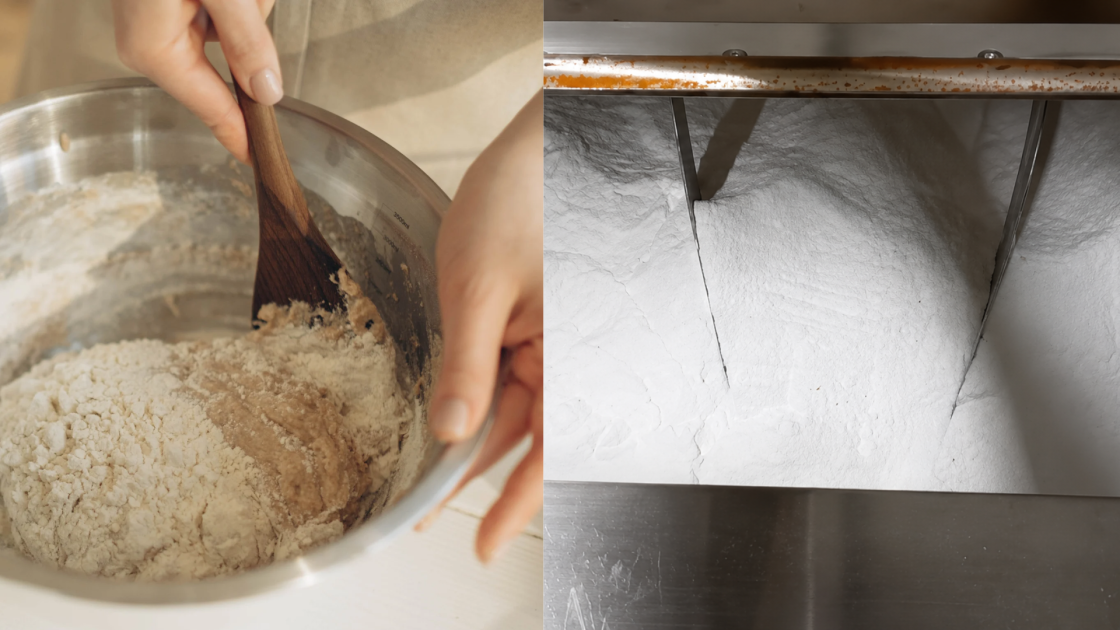
As production volumes grow, manual mixing can quickly become one of the bottlenecks in the manufacturing process. Larger batches often require more operators, more handling, and more time to achieve a consistent mixing result. While manual mixing may work for smaller-scale production, it can become increasingly difficult to maintain efficiency as demand increases. So, does increasing production capacity always mean adding more manpower?
Not necessarily. For many applications, a Ribbon Mixer can help improve mixing efficiency, reduce manual handling, and support businesses in increasing production capacity without simply adding more operators.
From Manual Mixing to a More Efficient Process
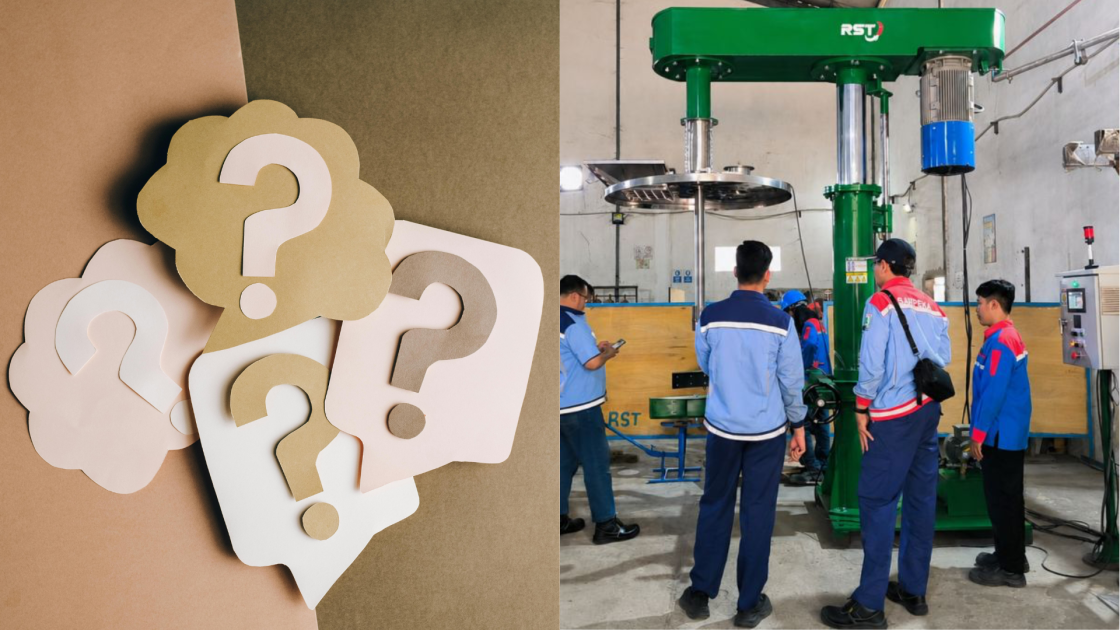
Recently, our workshop at RST welcomed a customer for a Ribbon Mixer trial for tempeh production.
Their existing mixing process was performed manually. As the batch size increased, several operators were required to handle the material and achieve the desired mixing result before it could move to the next production stage.
This approach can work when production volumes are relatively small. However, as demand grows, manual mixing can become a production bottleneck.
The customer came to RST looking for a solution to:
Reduce manual handling
Reduce dependency on multiple operators
Shorten the mixing process
Improve mixing consistency
Increase production efficiency
Because every material behaves differently during mixing, a trial was conducted to evaluate the Ribbon Mixer directly with the customer's product.
Ribbon Mixer Trial: Around 1 Minute for a 30 kg Batch
During the trial, the Ribbon Mixer was tested with a batch of approximately 30 kg.
The trial achieved an estimated mixing time of around 1 minute, with the product ready for the next production process.
This demonstrates how the right mixing equipment can help transform a labor-intensive process into a more controlled and efficient operation.
However, mixing time should not be considered a universal figure for every product.
Actual mixing performance can vary depending on several factors, including:
Material characteristics
Bulk density
Moisture content
Particle size
Batch size
Product formulation
Required level of homogeneity
For this reason, mixing trials are an important part of determining the right Ribbon Mixer configuration and process parameters.
How Can a Ribbon Mixer Speed Up Production?
A Ribbon Mixer is designed to mechanically mix materials using ribbon agitators inside a mixing chamber.
Compared with manual mixing, a properly configured machine can provide several advantages for production operations.
1. Reduce Manual Handling
Large quantities of material no longer need to be continuously handled manually by several operators during the mixing process.
With the right equipment, operators can focus more on loading, monitoring, unloading, and other production activities.
2. Make Mixing Time More Measurable
Manual mixing can result in variations in mixing time depending on the operator and the material condition.
A Ribbon Mixer allows the process to be evaluated and standardized based on actual trial results and defined operating parameters.
3. Improve Process Consistency
Consistency is one of the key challenges in mixing operations.
A mechanical mixing system can provide a more repeatable mixing process from batch to batch, provided that the material, formulation, batch size, and operating conditions remain consistent.
4. Increase Production Capacity
When demand increases, adding more operators is not the only way to increase output.
The right mixing equipment can help increase batch capacity while reducing the time and manpower required for the mixing process.
In other words, scaling up production can come from improving process efficiency, not simply increasing manpower.
Ribbon Mixers for More Than Just Food Production
The tempeh trial is one example of how a Ribbon Mixer can be applied to food production.
However, Ribbon Mixers can also be used for a wide range of materials and industries, depending on the characteristics of the product and the required process.
Typical applications may include:
Food ingredients
Flour and dry ingredients
Seasonings and premixes
Animal feed
Chemical powders
Fertilizers
Building materials
Powder and granular products
The machine configuration should always be selected based on the specific characteristics of the material and production requirements.
When Should You Consider a Ribbon Mixer?
A Ribbon Mixer may be worth considering when manual mixing is starting to limit production capacity.
Some common indicators include:
Production volume is increasing
More batches and larger material volumes are making manual mixing increasingly time-consuming.
Too many operators are involved
Several operators are required to perform what should ideally be a single production process.
Mixing time is inconsistent
Different batches require different mixing times because the process relies heavily on manual handling.
Product consistency needs improvement
The production process requires a more controlled level of mixing and homogeneity.
Your business is ready to scale up
You want to increase production output without increasing manpower at the same rate.
How to Choose the Right Ribbon Mixer
Selecting a Ribbon Mixer is not simply a matter of choosing a machine based on kilograms per batch.
Several parameters should be evaluated before determining the appropriate machine size and configuration, including:
Batch capacity
Bulk density
Material type
Particle size and characteristics
Moisture content
Target mixing time
Required level of homogeneity
Construction material
Loading and discharge requirements
Food-grade or sanitary requirements
Production environment and operating conditions
Understanding the actual production process is essential for developing a mixer that is suitable for the application.
Why a Mixing Trial Matters
Every material has different physical properties and mixing behavior.
For this reason, selecting a Ribbon Mixer based solely on capacity may not be enough. A mixing trial can provide valuable information about:
Mixing performance
Estimated mixing time
Suitable batch size
Material behavior during mixing
Mixing results
Required machine configuration
In the recent tempeh production trial, for example, the test provided an indication that a batch of approximately 30 kg could reach a ready-for-next-process condition in an estimated mixing time of around 1 minute.
The trial result can then become a useful reference when determining a more suitable mixing solution for the customer's production process.
Scaling Up Production Doesn't Always Mean Adding More Manpower
Increasing production capacity often starts with a simple question:
How can we produce more efficiently with the resources we already have?
The answer is not always to hire more operators.
In the right application, investing in suitable mixing equipment can help reduce manual handling, shorten process time, improve consistency, and increase the productivity of an existing production team.
As demonstrated by this Ribbon Mixer trial for tempeh production, even a traditional food production process can benefit from the right equipment and a more efficient mixing approach.
The right mixing equipment can help your business produce more efficiently — without simply adding more manpower.
Looking for a Ribbon Mixer for Your Production Process?
RST provides custom Ribbon Mixer solutions based on material characteristics, batch capacity, and specific production requirements.
If you are looking to replace manual mixing or increase your production capacity, talk to the RST team about your mixing requirements.