Cara memilih mixer berdasarkan viskositas material
Learn how to choose an industrial mixer based on material viscosity. Compare HSD and Jet Stream Mixers and find the right solution for your production needs.
How to Choose an Industrial Mixer Based on Material Viscosity
Choosing the right industrial mixer is essential for maintaining product quality, improving mixing efficiency, and ensuring consistent production results. One of the most important factors to consider when selecting a mixer is material viscosity, which describes a fluid's resistance to flow.
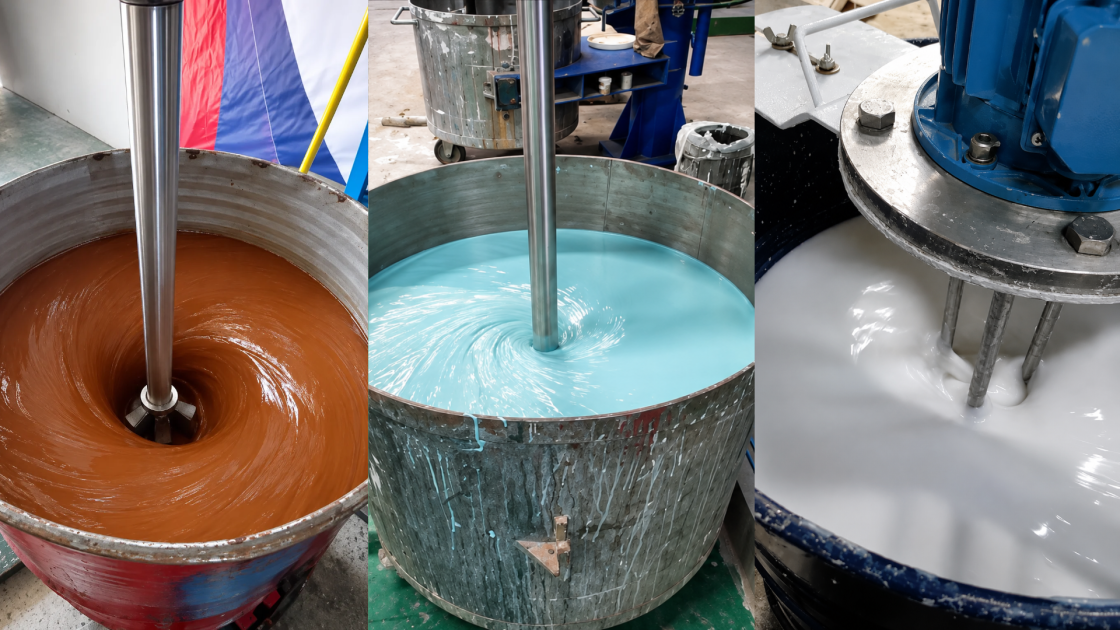
Materials such as water, chemical solutions, paint, ink, resin, adhesives, and industrial pastes have different flow characteristics. Low-viscosity materials flow easily, while highly viscous materials require careful consideration of impeller design, motor power, torque, and material circulation inside the mixing vessel.
Therefore, selecting an industrial mixer involves more than simply choosing a tank capacity or motor speed. The selection process must consider material viscosity, material properties, mixing objectives, and the technical specifications of the equipment.
This article explains how to understand material viscosity, provides examples of viscosity values in centipoise (cP), and offers practical guidance for selecting the right industrial mixer for different applications.
1. What Is Material Viscosity?
Viscosity is a measure of a fluid's resistance to flow. Simply put, the higher the viscosity, the greater the resistance to flow.
Viscosity is commonly expressed in centipoise (cP) or millipascal-seconds (mPa·s). These units have the same numerical values.
For example, water at 20°C has a viscosity of approximately 1 cP. In contrast, highly viscous materials such as adhesives and industrial pastes can have viscosities ranging from thousands to tens of thousands of cP, or even higher, depending on their formulation and measurement conditions.
These differences affect how materials move during mixing and which type of mixer should be considered.
2. Examples of Viscosity Values for Different Materials
The following table provides estimated viscosity ranges for materials commonly found in everyday applications and industrial processes.
| Material | Approximate Viscosity (cP) | General Characteristics |
|---|---|---|
| Acetone at 20°C | 0.3 | Very low viscosity |
| Water at 20°C | 1.0 | Very low viscosity |
| Ethanol at 20°C | 1.2 | Very low viscosity |
| Cooking oil | 50–100 | More viscous than water |
| Pure glycerin at 20°C | 1,000–1,500 | Highly viscous |
| Water-based paint | 100–5,000 | Varies by formulation |
| Industrial ink | 100–10,000 | Varies by ink type |
| Liquid resin | 100–10,000+ | Varies by resin type |
| Adhesive or glue | 1,000–100,000+ | Can be highly viscous |
| Industrial paste | 10,000–100,000+ | High to very high viscosity |
Note: These values are illustrative estimates, not fixed specifications for every product. Actual viscosity may vary depending on composition, temperature, measurement method, and shear rate. For non-Newtonian materials such as certain paints, inks, and adhesives, viscosity measurements can also depend on the test conditions.
This table provides a useful starting point, but viscosity alone is not sufficient to determine the required mixer capacity or specifications.
3. How Does Viscosity Affect Mixer Selection?
As material viscosity increases, it becomes increasingly important to evaluate the mixer's ability to generate flow and overcome resistance during mixing.
A. Mixers for Low-Viscosity Materials
Low-viscosity materials, such as water and certain chemical solutions, flow relatively easily. Mixing generally relies on liquid circulation to distribute components evenly throughout the vessel.
An Agitator with Mixing Tank can be considered for liquid blending and homogenization.
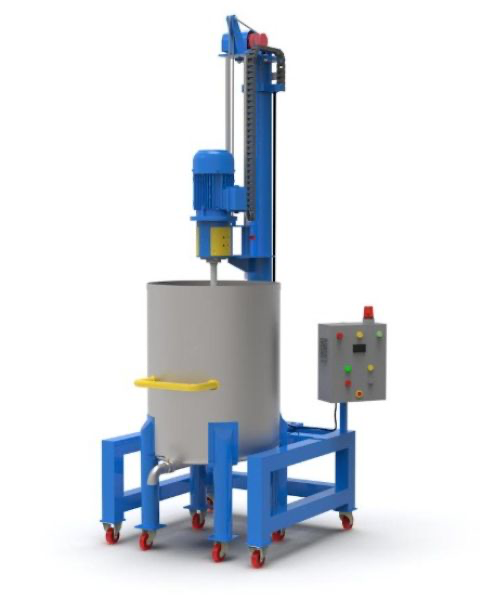
The impeller type, motor power, and operating speed must be selected according to the material properties and process requirements.
Typical applications include chemical solution blending, liquid homogenization, and ingredient dissolution.
Mixer selection should also consider vessel dimensions, material density, operating speed, and the required mixing performance.
B. Mixers for Medium-Viscosity Materials
Medium-viscosity materials have greater flow resistance than low-viscosity liquids. The appropriate mixer depends on whether the process requires homogenization, dispersion, or another specific mixing function.
High Speed Disperser (HSD) Mixer
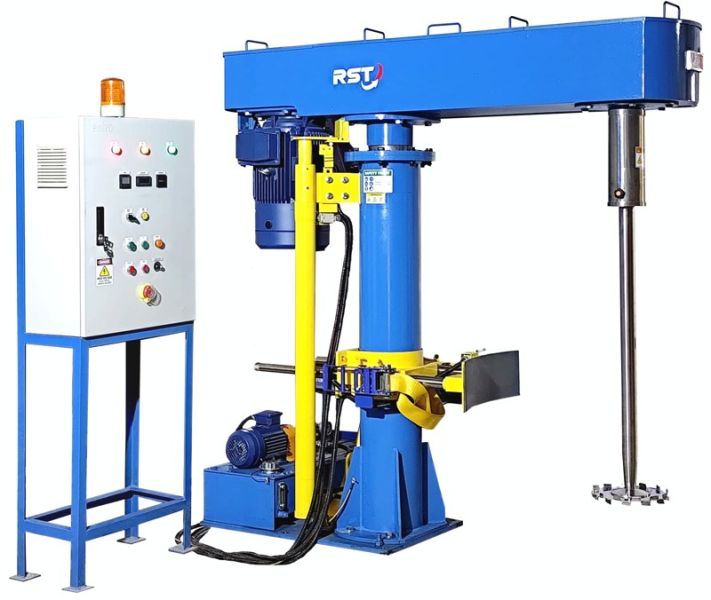
An HSD Mixer is designed for high-speed dispersion processes, such as incorporating pigments and additives into liquid media in the paint, ink, and chemical industries.
An HSD Mixer does more than simply stir liquids. Its disperser disc generates shear forces that help break down agglomerates and distribute particles throughout the liquid medium.
Learn more about the HSD Mixer from PT Rho Sigma Trijaya.
C. Mixers for High-Viscosity Materials
High-viscosity materials require special consideration of torque, motor power, mixing element design, and the system's ability to move material effectively throughout the mixing process.
Examples include industrial pastes, highly viscous adhesives, and certain resin, paint, and ink formulations.
For these applications, mixer selection must be based on the actual material characteristics and equipment specifications. Not every high-speed mixer is suitable for highly viscous materials because the requirements for shear and torque can differ significantly.
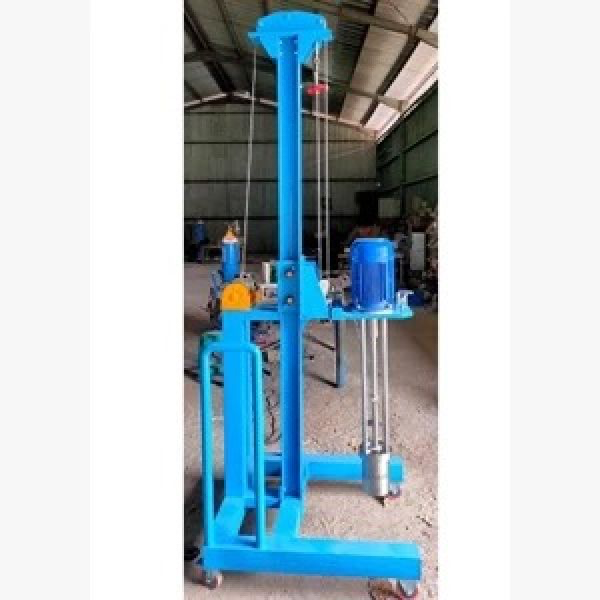
The Jet Stream Mixer is one of RST's mixing solutions that can be evaluated for high-viscosity material applications, subject to the machine configuration and application requirements.
Potential applications include industrial pastes, adhesives, and certain high-viscosity paint, ink, and resin formulations.
To determine suitability, consider the material's actual viscosity, batch capacity, operating conditions, and required mixing uniformity. For materials with high flow resistance, the torque requirement and the mixer's ability to move the material throughout the vessel must be carefully evaluated.
Learn more about the Jet Stream Mixer from RST.
4. A Practical Guide to Mixer Selection Based on Viscosity
The following table provides an initial guide to matching material viscosity with mixer types that may be considered.
| Indicative Viscosity | Material Characteristics | Mixer Types to Consider |
|---|---|---|
| Approximately 1–100 cP | Low viscosity; flows relatively easily | Propeller Mixer, Turbine Mixer, Agitator |
| 100–1,000 cP | Moderately more viscous | Agitator with a suitable impeller |
| 1,000–10,000 cP | Viscous; performance depends on formulation | Evaluate impeller design, torque, and process requirements |
| Above 10,000 cP | High to very high viscosity | Specialized mixer evaluation; RST Jet Stream Mixer may be considered according to application specifications |
Important: These ranges are preliminary guidelines, not universal operating limits for each mixer type. A material with a viscosity of 1,000 cP does not automatically require a specific mixer. Materials with the same viscosity can exhibit different flow behaviors and may require different mixing designs.
For accurate equipment selection, viscosity data must be assessed alongside batch volume, density, vessel dimensions, mixing objectives, and the mechanical capabilities of the mixer.
5. Other Factors to Consider When Selecting an Industrial Mixer
Viscosity is an important parameter, but it is not the only factor that determines the appropriate mixer and its specifications.
A. Material Density
Density refers to the mass of a material per unit volume. High-density materials can increase mechanical loading under certain operating conditions, particularly when solid particles must be distributed or maintained in suspension.
B. Tank Capacity and Dimensions
A mixer designed for a 100-liter vessel will not necessarily deliver the same performance when used in a 1,000-liter tank.
Tank diameter, liquid height, bottom geometry, and impeller position can affect flow patterns and energy distribution during mixing.
Therefore, mixer selection must account for the actual working capacity and vessel geometry.
C. Mixing Objectives
Determine the desired outcome before selecting the equipment. Is the process intended to blend two liquids, dissolve solids, disperse pigments, maintain product uniformity, or mix highly viscous materials?
For example, an HSD Mixer is particularly relevant when high-speed dispersion is required. An agitator may be more suitable for liquid homogenization, depending on its configuration and application.
D. Rotational Speed and Torque
A higher RPM does not necessarily produce better mixing.
Certain applications require high rotational speeds to generate sufficient shear. However, viscous materials may also require greater torque to overcome resistance during agitation.
Motor power and torque must therefore be evaluated according to material properties, operating speed, and impeller design.
E. Temperature and Material Behavior
Some materials change viscosity in response to temperature or shear. Understanding these changes is important when determining the appropriate mixer configuration.
F. Construction Materials and Safety
Materials in contact with the product must be compatible with its chemical properties.
For applications involving chemicals, paint, ink, and adhesives, consider corrosion resistance, cleaning requirements, and applicable safety requirements, especially when handling flammable materials.
6. Information to Prepare Before Selecting a Mixer
Before requesting a quotation or determining equipment specifications, prepare the following information:
Material type: Paint, ink, resin, adhesive, paste, or other chemicals.
Material viscosity: Value in cP, if available.
Measurement temperature and conditions: The conditions under which viscosity was measured.
Material density: Expressed in kg/L or kg/m³.
Batch capacity: Volume or weight of material per batch.
Tank dimensions and geometry: Diameter, height, and bottom configuration.
Mixing objective: Homogenization, dispersion, dissolution, or high-viscosity mixing.
Target mixing time: If already established.
Construction and safety requirements: Material compatibility and applicable operating requirements.
This information helps the equipment manufacturer evaluate the mixer type, motor power, torque, rotational speed, impeller design, and vessel configuration.
If the material characteristics are not fully known, material testing can help validate the proposed design approach before scaling up to industrial production.
7. Industrial Mixing Solutions from PT Rho Sigma Trijaya
PT Rho Sigma Trijaya provides industrial mixing and material-handling equipment for a range of manufacturing applications, including the paint, ink, chemical, adhesive, and other process industries.
Our product range includes:
HSD Mixer (High Speed Disperser): Designed for dispersing pigments and additives into liquid media.
Jet Stream Mixer: Designed for mixing applications according to the machine configuration and process requirements.
Agitator with Mixing Tank: Used for liquid blending and homogenization inside a tank.
IBC Mixer: Used for mixing liquid materials directly inside an IBC container.
Ribbon Mixer: Designed for blending powders, fine materials, and granules.
Each mixer has different functions and operating characteristics. Selecting the right equipment requires consideration of viscosity, batch capacity, density, mixing objectives, and production targets.
To explore our equipment range, visit the Products & Services page of PT Rho Sigma Trijaya.
FREE Trial Mixing at the RST Workshop in Banten!
Still unsure which mixer is best for your material?
Bring your material to the PT Rho Sigma Trijaya workshop in Banten and try our mixing process for FREE!
By conducting a trial using your actual material, the RST team can help evaluate the mixing process and identify a more suitable mixing solution based on your material characteristics and production requirements.
With a trial mixing session, you can:
Test your material directly using a suitable mixer configuration for evaluation.
Observe the mixing results and assess product uniformity.
Evaluate alternative mixing solutions based on your process requirements.
Discuss technical solutions with the RST team before deciding on equipment for production.
Rather than relying solely on estimates, evaluate your material's mixing performance through an actual trial with the RST team.
FREE Trial Mixing at the RST Workshop in Banten!
Contact PT Rho Sigma Trijaya to discuss your requirements and schedule a trial session. Equipment availability and testing requirements must be confirmed before your visit.
Website: https://rhosigmatrijaya.co.id/
Conclusion
Choosing an industrial mixer based on material viscosity requires an understanding of the material's consistency, flow behavior, and mixing objectives.
Water, with a viscosity of approximately 1 cP, behaves very differently from adhesives or pastes that may reach tens of thousands of cP. These differences influence impeller design, motor power, torque requirements, and overall mixer configuration.
However, viscosity is not the only determining factor. Density, tank capacity, temperature, material behavior, and production targets must also be considered.
By evaluating these parameters together, manufacturers can select mixing equipment that better matches their production requirements and helps maintain consistent product quality.
Need help choosing the right mixer for your material?
Contact PT Rho Sigma Trijaya to discuss your material characteristics, production capacity, and industrial mixing requirements.
Visit our official website to learn more about our mixing solutions and arrange your FREE Trial Mixing session at our workshop in Banten.
Frequently Asked Questions: Choosing a Mixer Based on Material Viscosity
What is the viscosity of water in cP?
Water has a dynamic viscosity of approximately 1 cP at 20°C. Its viscosity decreases as temperature increases.
Does higher viscosity always require a larger motor?
Not necessarily. Motor power and torque requirements depend on viscosity, impeller design, RPM, batch volume, and vessel geometry. Motor specifications should be determined through an evaluation of the actual operating conditions.
Can one mixer handle different viscosity levels?
Yes, within a defined operating range. However, mixing performance may vary between materials. Significant changes in viscosity may require a reassessment of the mixer design and drive system.
Is an HSD Mixer suitable for viscous materials?
An HSD Mixer is primarily designed for high-speed dispersion. Its suitability for viscous materials depends on the material characteristics, disc design, and drive capabilities. For highly viscous materials, torque requirements and flow patterns must be evaluated carefully.
How should I select a mixer if the material viscosity is unknown?
If possible, measure the viscosity using an instrument appropriate for the material. For non-Newtonian materials, also record the measurement temperature and test conditions so the data can be used as a basis for mixer selection.