Industrial Mixer Lokal atau Impor? 10 Hal yang Perlu Dipertimbangkan Sebelum Membeli
Industrial mixer lokal vs impor? Pelajari perbandingan harga, custom design, garansi, spare part, dan after-sales service sebelum memilih manufacturer industrial mixer di Indonesia.
Local vs. Imported Industrial Mixers: Which Is Better for Your Business?
When looking for an industrial mixer, ribbon mixer, high speed disperser, mixing tank, or custom mixing equipment, one important decision is whether to purchase from a local Indonesian manufacturer or an overseas supplier.
Price is important, but it should not be the only consideration. For industrial equipment, factors such as technical communication, custom design, warranty, spare parts availability, technical support, factory visits, and after-sales service can significantly affect long-term operating costs and production reliability.
For companies with specific process requirements, purchasing from an industrial mixer manufacturer in Indonesia can offer several practical advantages.
1. Easier Communication with the Manufacturer
One of the main advantages of buying from a local manufacturer is easier communication.
Customers can discuss their equipment requirements directly with the sales and engineering teams, including capacity, material characteristics, mixing speed, motor specifications, and construction materials such as SUS304 or SUS316L stainless steel.
Communicating in Indonesian can also make it easier to explain production challenges and identify the most appropriate equipment configuration.
This is particularly important for custom-built machines, where specifications cannot always be determined by tank capacity alone.
2. Custom Design to Match Your Production Requirements
Industrial mixers are not always suitable for a one-size-fits-all approach.
Material characteristics, bulk density, viscosity, working volume, target mixing time, RPM, and process requirements can all influence the machine design.
A local manufacturer can discuss these factors with the customer and develop an equipment configuration suited to the intended application.
Customization may include:
Working volume and total tank volume
Ribbon or impeller type and dimensions
Shaft diameter
Mixing speed
Motor and gearbox configuration
SUS304 or SUS316L stainless steel construction
Heating or cooling jackets
Vacuum systems
Lifting systems
Electrical controls
Fixed or mobile equipment
Explosion-proof requirements
When purchasing a custom industrial mixer, the manufacturer's ability to understand the customer's production process is an important factor in achieving the desired mixing performance.
3. Easier Access to Warranty and After-Sales Service
Industrial equipment operates under demanding production conditions and may require technical assistance during its service life.
Buying from a local manufacturer can make it easier to contact the supplier when troubleshooting or technical support is needed.
Before purchasing, customers should clarify the warranty terms and after-sales service arrangements.
Important questions include:
How long is the warranty period?
Which components and conditions are covered?
What is the warranty claim procedure?
Who will handle troubleshooting?
Is technical support available after installation?
These considerations can be just as important as the initial purchase price when comparing industrial equipment suppliers.
4. The Opportunity to Visit a Physical Workshop
A physical workshop is an important factor to consider when evaluating a local manufacturer.
Customers may be able to visit the facility and observe the manufacturing capabilities and fabrication processes firsthand.
Depending on the facility, these may include:
Cutting and fabrication
Welding
Machining
Assembly
Surface finishing
Electrical assembly
Quality control
A factory visit can help customers better understand the manufacturer's actual production capabilities rather than relying solely on product images or sales presentations.
For projects involving significant capital investment, visiting the workshop can provide additional confidence before placing an order.
5. Easier Factory Acceptance Testing (FAT)
For certain industrial equipment projects, customers may require a Factory Acceptance Test (FAT) before shipment.
FAT allows the equipment to be inspected and tested at the manufacturer's facility before delivery to the customer's site.
Depending on the project requirements, inspections and tests may cover:
Equipment dimensions and construction
Welding quality
Motor and gearbox operation
Electrical control systems
Equipment movement
Mixing functionality
Safety systems
Technical documentation
Working with a manufacturer in Indonesia can make factory visits and FAT coordination more convenient than arranging inspections at an overseas manufacturing facility.
6. Easier Access to Spare Parts and Components
Spare parts availability is an important consideration for maintaining industrial equipment.
Components that may require replacement during the equipment's service life include:
Bearings
Mechanical seals
Couplings
Motors
Gearboxes
Variable frequency drives (VFDs)
Seals and gaskets
Shafts
Mixing blades or ribbons
When the manufacturer is based in Indonesia, communication regarding spare parts and replacement components may be more straightforward.
Customers can also request recommendations based on the original equipment specifications.
However, actual availability depends on the components used and the manufacturer's supply chain.
7. Easier Equipment Repairs and Modifications
Production requirements can change over time, and existing equipment may need modifications to accommodate new processes or improve performance.
Possible modifications include:
Replacing mixing blades
Modifying shafts
Upgrading motors
Adding heating jackets
Modifying electrical controls
Improving safety systems
Adjusting equipment capacity
Upgrading lifting systems
Working with a local manufacturer can make it easier to discuss these requirements directly with the engineering team familiar with the machine's design and construction.
This is particularly valuable when equipment requires ongoing engineering support rather than being treated as a one-time purchase.
8. Less Dependence on International Shipping
Purchasing imported equipment may involve additional processes such as international shipping, customs clearance, freight arrangements, and coordination with overseas suppliers or local distributors.
If spare parts or replacement components are needed, customers may also have to wait for international deliveries.
A local manufacturer can reduce dependence on these processes when the equipment is manufactured and supported in Indonesia.
However, imported equipment is not necessarily a disadvantage. For certain applications, overseas manufacturers may offer specialized technologies or specifications that are difficult to source locally.
The key is to compare the total cost of ownership and the support available after purchase, rather than focusing solely on the initial price.
9. Consider Total Cost of Ownership, Not Just Purchase Price
When comparing industrial mixers, it is important to look beyond the initial purchase price.
Total Cost of Ownership (TCO) considers the overall cost of acquiring, operating, maintaining, and supporting equipment throughout its service life.
Factors to evaluate include:
Equipment purchase price
Shipping and transportation
Installation
Commissioning
Spare parts
Maintenance
Technical support
Production downtime
Modification costs
Spare parts shipping costs
A machine with a lower initial price may not necessarily offer the lowest overall cost if technical support is difficult to access or replacement parts take a long time to obtain.
A thorough comparison should consider equipment performance, reliability, maintenance requirements, and the supplier's long-term support capabilities.
10. More Accessible Technical Support in Indonesia
When equipment problems occur, timely technical assistance can help minimize production disruption.
A local manufacturer offers geographical and communication advantages. Customers can communicate through email, telephone, WhatsApp, or video calls. Depending on the service agreement and technical requirements, on-site support may also be easier to arrange.
This can be particularly important for equipment used continuously in manufacturing operations, where extended downtime may affect production schedules and delivery commitments.
Local or Imported Industrial Mixers: Which Should You Choose?
There is no single answer that applies to every application.
Imported equipment may be the right choice when it offers specific technologies, performance characteristics, or certifications required by the customer.
Local manufacturers, on the other hand, can offer advantages in communication, custom engineering, factory visits, warranty coordination, spare parts, technical support, and after-sales service.
| Consideration | Local Manufacturer | Imported Equipment |
|---|---|---|
| Communication | Direct communication with the local team | Depends on the overseas supplier or distributor |
| Custom design | Can be discussed directly with the manufacturer | Depends on the manufacturer's capabilities |
| Factory visits | May be arranged in Indonesia | May require international travel |
| FAT | Easier to coordinate locally | Depends on the manufacturing location |
| Warranty | Local coordination may be more convenient | Depends on the warranty provider and distributor |
| Spare parts | Local sourcing may be possible | Some components may require importing |
| Technical support | Local support may be more accessible | Depends on the supplier's service network |
| Shipping | Domestic delivery | International shipping may be required |
Repairs and modifications | Can be discussed directly with the manufacturer | Depends on the supplier's service arrangements |
The best decision should be based on application suitability, engineering capabilities, manufacturing quality, warranty coverage, after-sales support, and total cost of ownership.
What Should You Ask Before Buying an Industrial Mixer?
Before selecting a supplier or manufacturer, consider asking the following questions:
Who manufactures the equipment?
Does the company have its own workshop or manufacturing facility?
Can customers arrange a factory visit?
Can the equipment be customized?
What are the total tank volume and working volume?
Which construction materials are used?
What is the mixing speed in RPM?
Which motor and gearbox are specified?
What warranty is provided?
What after-sales services are available?
Are spare parts available?
Can a Factory Acceptance Test be arranged?
What is the production lead time?
Are engineering drawings and equipment documentation provided?
These questions can help buyers evaluate manufacturers more objectively and select equipment that meets their operational requirements.
RST as an Industrial Mixer Manufacturer in Indonesia
PT Rho Sigma Trijaya (RST) is an Indonesian manufacturer specializing in industrial mixing equipment and stainless steel process equipment for various industries, including paint, ink, chemicals, adhesives, building materials, and food and beverage.
RST manufactures a range of equipment, including:
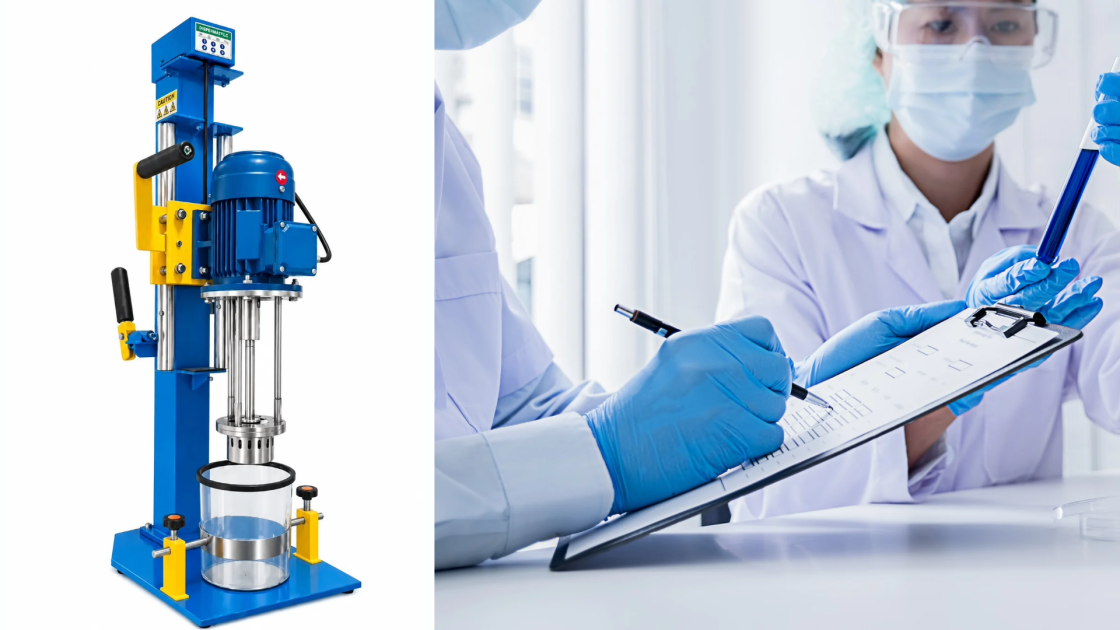
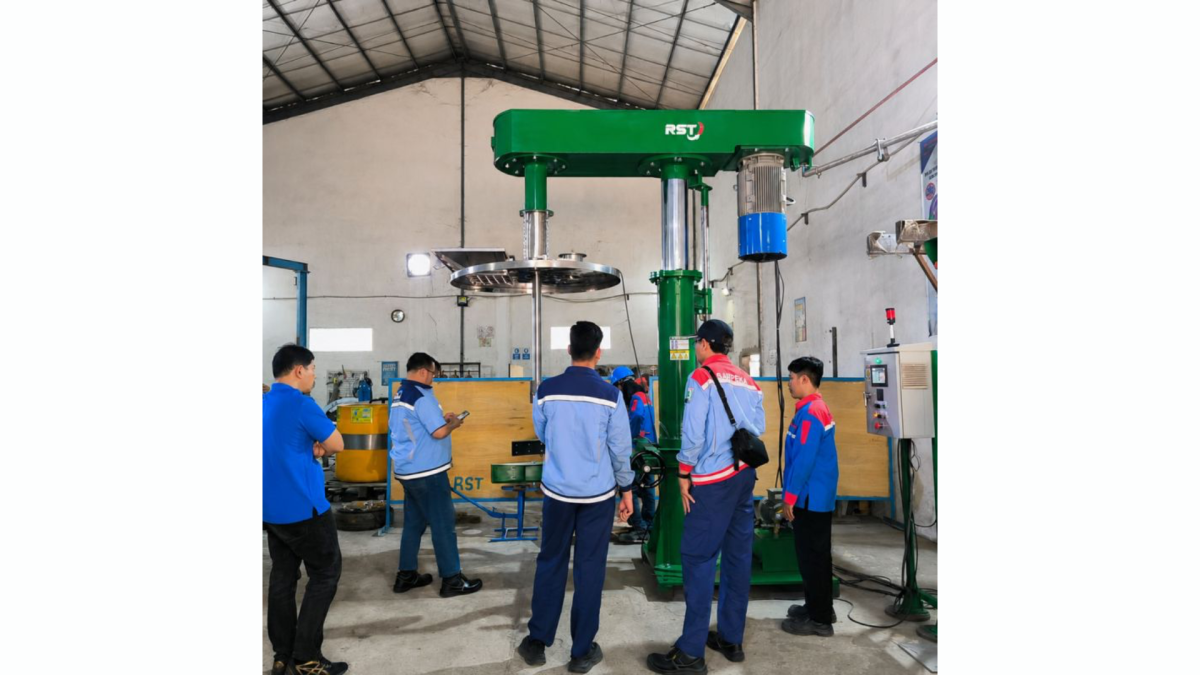
High Speed Dispersers (HSD)
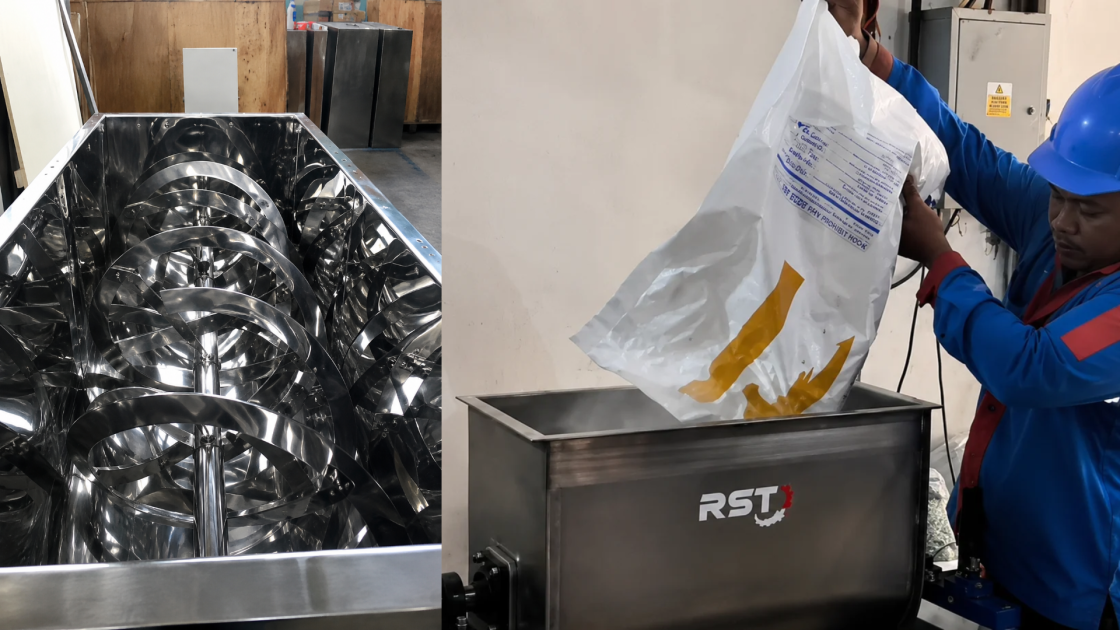
Ribbon Mixers
Paste Mixers
Mixing Tanks
Double Jacket Tanks
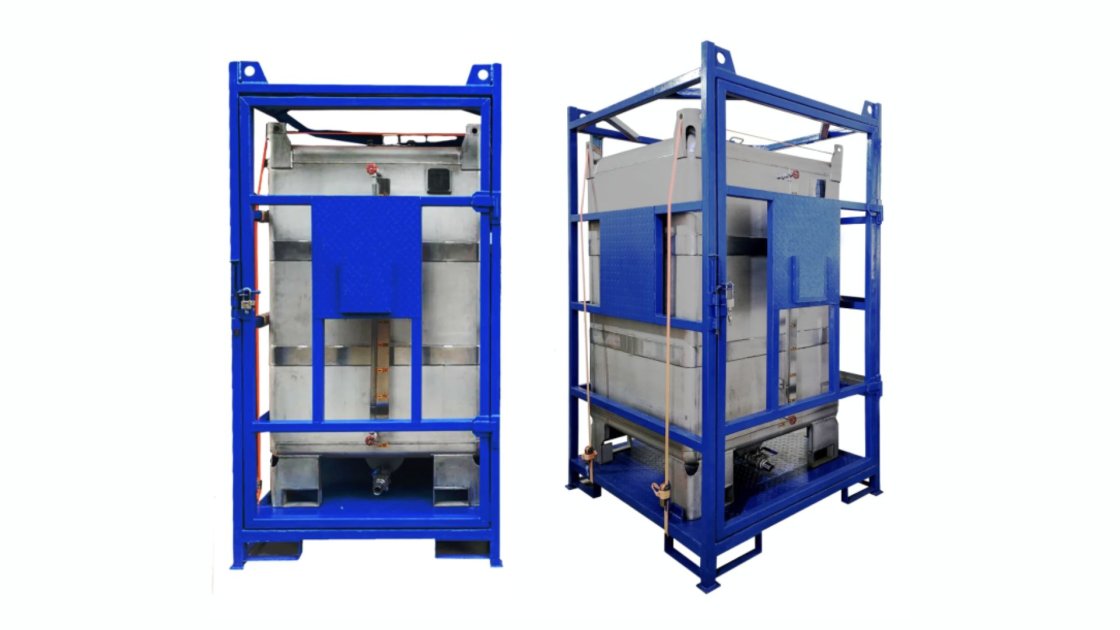
IBC Tanks
Laboratory Mixers
Screw Conveyors
In addition to standard equipment, RST offers customized solutions based on each customer's production process and technical requirements.
Our Services
RST provides engineering and manufacturing services to support customers throughout their equipment requirements, including:
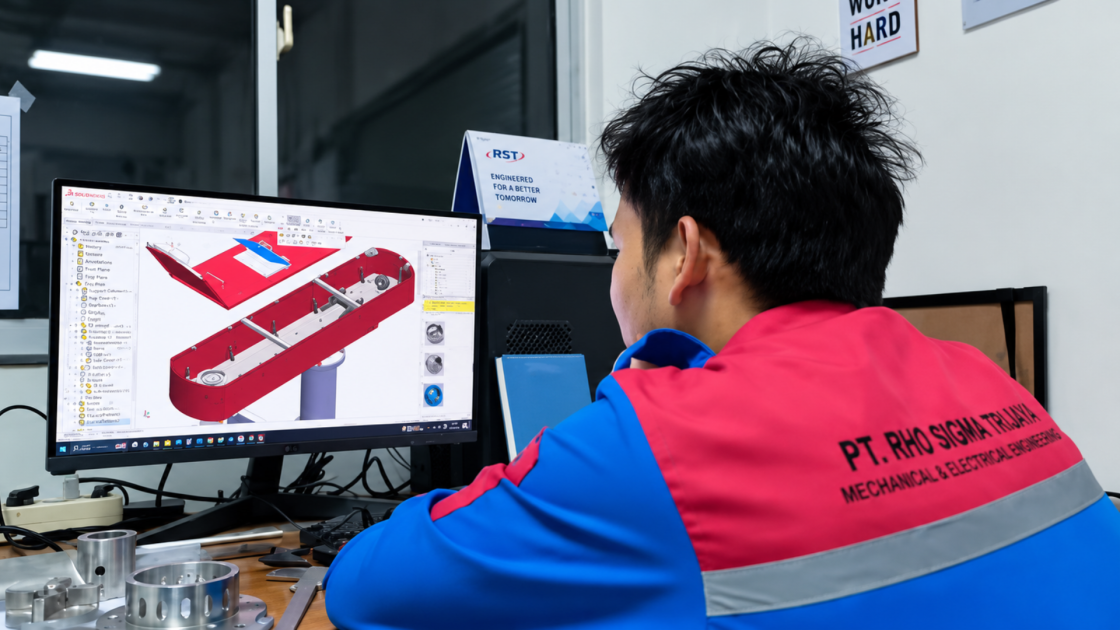
Custom Equipment Design – Developing equipment configurations based on process requirements and customer specifications.
Equipment Fabrication – Manufacturing industrial mixers and stainless steel process equipment.
Stainless Steel Fabrication – Fabricating tanks and process equipment using suitable construction materials.
Equipment Assembly and Testing – Assembling equipment and performing inspections and functional tests according to project requirements.
Equipment Repair and Modification – Discussing repair, replacement, and modification requirements for existing equipment.
Technical Consultation – Helping customers evaluate working volume, material characteristics, viscosity, mixing speed, motor and gearbox specifications, heating or cooling systems, and electrical controls.
Quality Certifications and Manufacturing Facilities
RST holds ISO 9001:2015 certification for Quality Management Systems and ISO 45001:2018 certification for Occupational Health and Safety Management Systems.
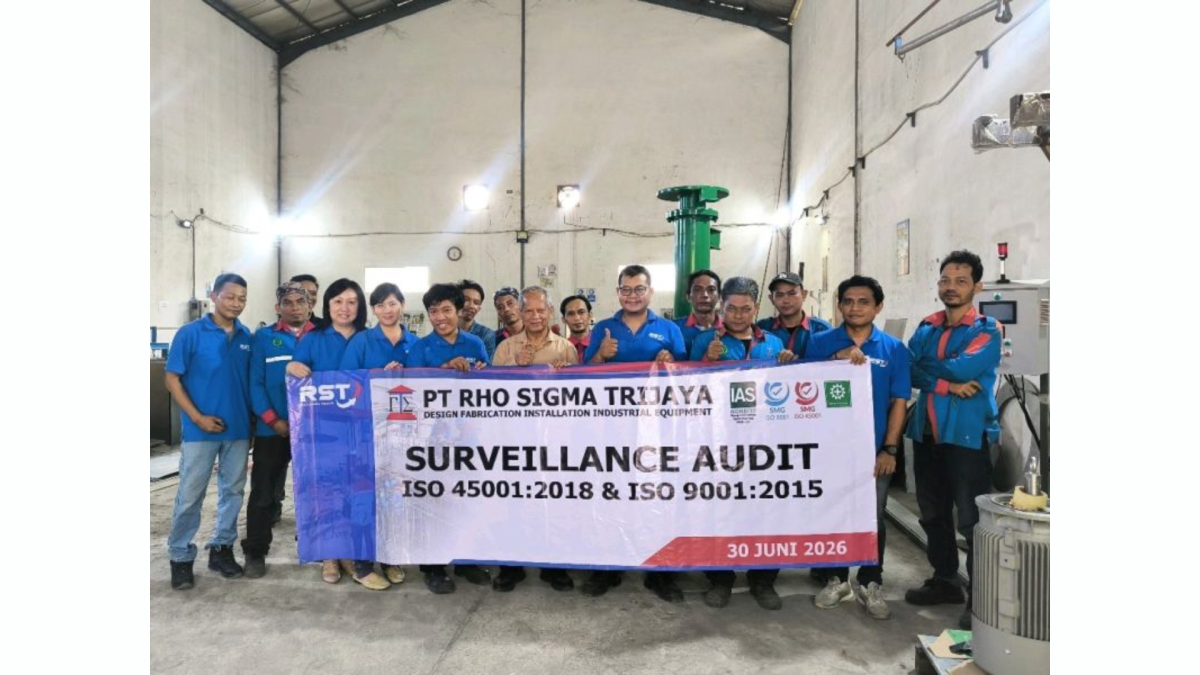
With its machine manufacturing workshop in Banten, Indonesia, RST offers customers the opportunity to discuss their requirements directly with the team and arrange a workshop visit by appointment to see the manufacturing facilities and production processes.
Warranty and After-Sales Support
RST provides warranty coverage according to the terms and conditions stated in the quotation and purchase agreement. Customers can also discuss technical support, spare parts, troubleshooting, and equipment modifications according to their equipment and service requirements.
By working directly with an Indonesian manufacturer, customers can benefit from closer communication, customized engineering discussions, access to local manufacturing facilities, and coordination of after-sales support.
If you are looking for an industrial mixer manufacturer in Indonesia or require customized mixing equipment and stainless steel process equipment, contact PT Rho Sigma Trijaya (RST) to discuss your project requirements.
Conclusion
Choosing an industrial mixer from a local Indonesian manufacturer is about more than where the machine is made.
It is also about the support available throughout the equipment lifecycle, from specification and engineering to fabrication, testing, delivery, and after-sales service.
For companies requiring custom industrial mixing equipment, a local manufacturer may offer practical advantages in communication, customized design, factory visits, FAT coordination, warranty support, spare parts, technical assistance, and equipment modifications.
Before making a purchasing decision, compare not only the equipment price but also the manufacturer's engineering capabilities, production facilities, product quality, warranty terms, after-sales service, and total cost of ownership.
If you are looking for an industrial mixer, ribbon mixer, high speed disperser, mixing tank, or customized stainless steel equipment in Indonesia, contact PT Rho Sigma Trijaya (RST) to discuss your application and equipment requirements.