SUS304 vs SUS316 vs SUS316L: Which Stainless Steel Is Right for Your Industrial Tanks?
Learn the differences between SUS304, SUS316, and SUS316L stainless steel in composition, corrosion resistance, welding, cost, and industrial tank applications.
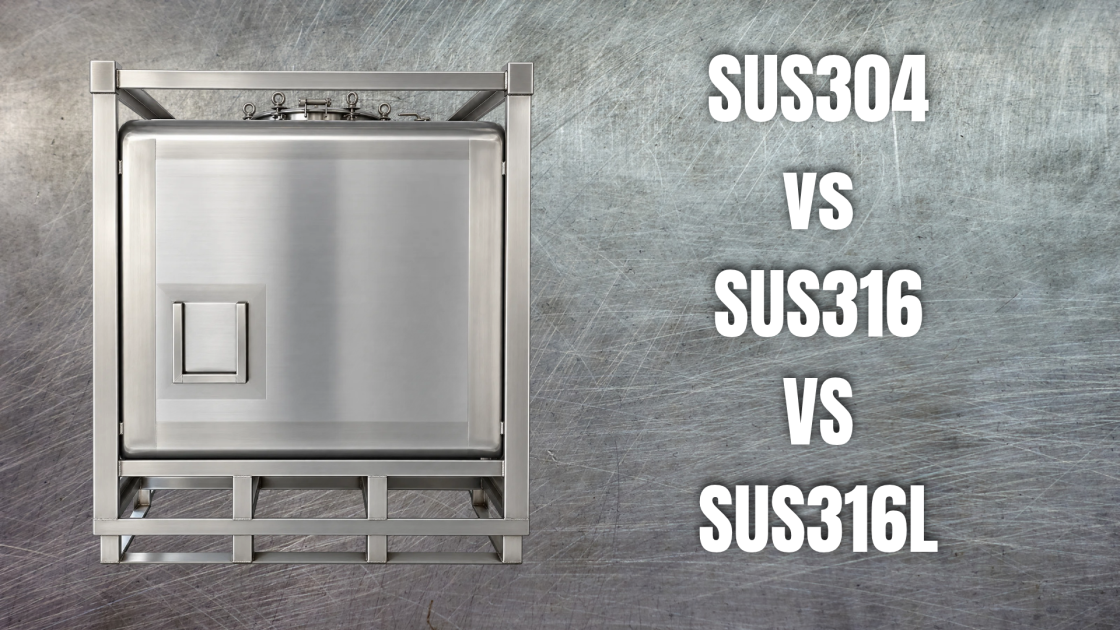
In industrial manufacturing, material selection is one of the most important factors affecting corrosion resistance, equipment service life, fabrication costs, and process safety.
Three stainless steel grades commonly used in industrial tank manufacturing are SUS304, SUS316, and SUS316L.
At first glance, these materials may look similar. However, differences in their chemical composition, particularly molybdenum and carbon content, give each grade distinct characteristics and applications.
Is SUS316 always better than SUS304? What is the difference between SUS316 and SUS316L? And when is investing in SUS316L really necessary?
This article explains the differences between these three stainless steel grades and provides practical guidance for selecting the right material for your industrial application.
1. Understanding SUS304 Stainless Steel
SUS304 is an austenitic stainless steel containing chromium and nickel. It is commonly known as 18/8 stainless steel because its nominal composition contains approximately 18% chromium and 8% nickel.
Chromium forms a passive layer on the stainless steel surface that helps protect the material against corrosion. Nickel stabilizes the austenitic structure and contributes to its excellent fabrication characteristics.
SUS304 is widely used because it offers good corrosion resistance for many industrial applications, is easy to form and weld, and is relatively economical.
Characteristics of SUS304
- Good corrosion resistance in general industrial environments.
- Excellent weldability and fabrication characteristics.
- Easily formed into tanks, pipes, and process components.
- Suitable for many water-based products, provided they are chemically compatible.
- Generally more economical than SUS316 and SUS316L.
Applications of SUS304
Paint, Coating & Adhesive
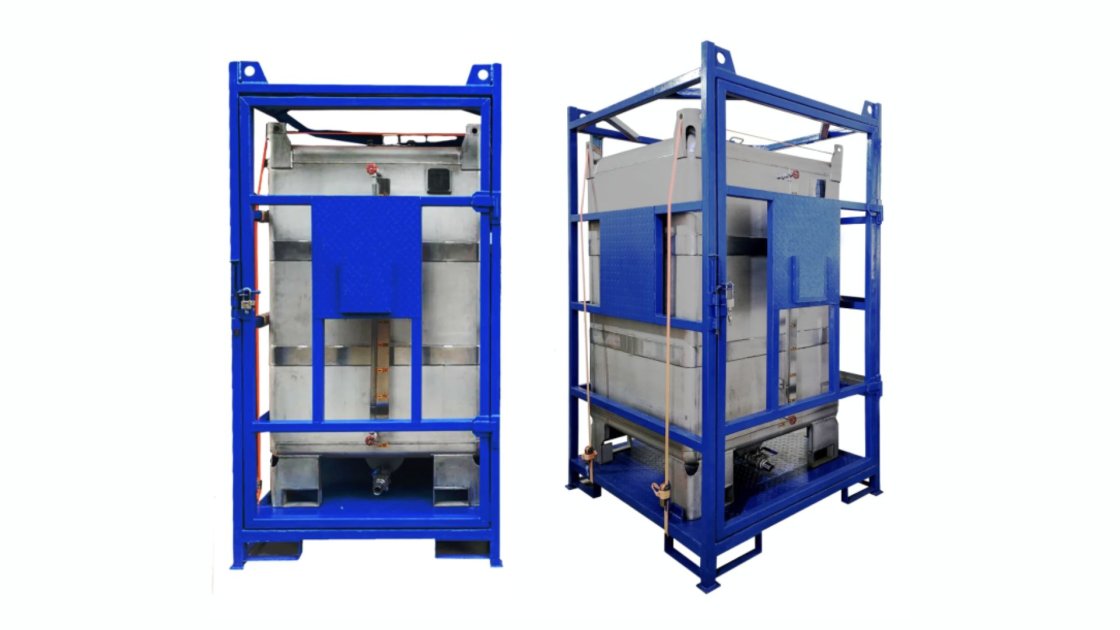
Used for mixing tanks, storage tanks, and IBC tanks handling products with chemical compositions compatible with SUS304.
Food & Beverage
Used for food ingredient storage tanks and liquid processing equipment that meet the required material and sanitary design specifications.
General Industrial Applications
Used for water tanks, utility tanks, and process equipment operating in relatively non-aggressive environments.
SUS304 is often an economical choice for general applications when the product, operating temperature, and cleaning procedures do not require higher corrosion resistance.
However, SUS304 may not be suitable for high-chloride solutions, aggressive chemicals, or operating conditions that increase the risk of pitting corrosion.
2. Understanding SUS316 Stainless Steel
SUS316 is an austenitic stainless steel containing chromium and nickel, with the addition of approximately 2–3% molybdenum.
The addition of molybdenum is one of the key differences between SUS316 and SUS304.
Molybdenum improves resistance to localized corrosion, particularly pitting corrosion and crevice corrosion in chloride-containing environments.
Because of these characteristics, SUS316 is commonly used in chemical processing and industrial applications involving more challenging corrosion conditions.
Characteristics of SUS316
- Contains molybdenum to improve localized corrosion resistance.
- Generally more resistant to pitting corrosion than SUS304.
- Offers improved resistance in certain chloride-containing environments.
- Good fabrication and welding characteristics.
- Generally more expensive than SUS304.
Applications of SUS316
Chemical Processing
Used for tanks and process equipment handling chemicals that are compatible with SUS316.
Pharmaceutical & Specialty Chemicals
Used for process equipment with specific corrosion resistance and material requirements.
Chloride-Containing Environments
Can be considered for applications requiring greater resistance to localized corrosion than SUS304.
It is important to note that SUS316 is not corrosion-proof. Under high chloride concentrations, elevated temperatures, or exposure to certain chemicals, SUS316 can still experience corrosion.
Material selection must be based on chemical compatibility and actual operating conditions.
3. Understanding SUS316L Stainless Steel
SUS316L is the low-carbon version of SUS316.
The letter "L" stands for Low Carbon, indicating a lower maximum carbon content compared with standard SUS316.
Both grades contain similar principal alloying elements, including molybdenum, and generally offer comparable corrosion resistance under equivalent conditions.
The main difference is the lower carbon content of SUS316L, which helps reduce the risk of sensitization during welding.
What Is Sensitization?
In austenitic stainless steel, exposure to certain temperatures during welding or heat treatment can cause chromium carbides to form along the grain boundaries.
This process can reduce the chromium concentration in areas adjacent to the grain boundaries, increasing the risk of intergranular corrosion.
SUS316L has a maximum carbon content of 0.03%, compared with the typical maximum of 0.08% for standard SUS316 under commonly used ASTM specifications.
The lower carbon content helps minimize chromium carbide formation and reduces the risk of sensitization under appropriate welding conditions.
Characteristics of SUS316L
- Generally offers corrosion resistance comparable to SUS316.
- Has a low carbon content, with a maximum of 0.03% under common ASTM specifications.
- Suitable for many applications involving extensive welding.
- Helps reduce the risk of intergranular corrosion following welding heat exposure.
- Widely used in process tanks, pharmaceutical equipment, and certain hygienic applications.
Applications of SUS316L
Pharmaceutical Equipment
Used for process tanks requiring low-carbon material, controlled surface finishing, and fabrication documentation.
Sanitary Process Equipment
Used for tanks requiring controlled welding quality, surface cleanliness, and enhanced corrosion resistance.
Chemical & Specialty Process Tanks
Used for process equipment requiring the corrosion resistance of the 316 alloy family combined with the advantages of low carbon content.
For tanks with numerous welded joints, SUS316L is often considered because of its low-carbon characteristics.
However, SUS316L does not automatically provide higher corrosion resistance than SUS316 under all conditions. Both grades generally offer similar corrosion resistance when material condition, surface quality, and operating environments are comparable.
4. SUS304 vs SUS316 vs SUS316L: Key Differences
The following table compares the three stainless steel grades based on characteristics relevant to industrial tank fabrication.
| Parameter | SUS304 | SUS316 | SUS316L |
|---|---|---|---|
| Stainless steel type | Austenitic | Austenitic | Austenitic |
| Chromium | 18–20% | 16–18% | 16–18% |
| Nickel | 8–10.5% | 10–14% | 10–14% |
| Molybdenum | No intentional addition | 2–3% | 2–3% |
| Maximum carbon | 0.08% | 0.08% | 0.03% |
| General corrosion resistance | Good | Better in certain environments | Generally comparable to SUS316 |
| Chloride pitting resistance | Lower | Higher than SUS304 | Generally comparable to SUS316 |
| Sensitization risk during welding | Requires consideration | Requires consideration | Lower due to low carbon content |
| Fabrication characteristics | Good | Good | Good |
| Relative material cost | Generally the most economical | Generally higher than SUS304 | Generally higher than SUS304 |
Note: The compositions shown are typical ranges based on commonly used ASTM specifications for grades 304, 316, and 316L. JIS, ASTM, and EN standards have their own requirements. Actual chemical composition must be verified against the applicable material standard and mill test certificate.
Summary of the Comparison
SUS304: Suitable for a wide range of general industrial applications under compatible corrosion conditions.
SUS316: Contains molybdenum, which improves resistance to localized corrosion.
SUS316L: Has a similar alloy composition to SUS316 but a lower carbon content, helping reduce the risk of intergranular corrosion after welding.
Therefore, SUS316L is not simply SUS316 with universally higher corrosion resistance. Its primary advantage is its low carbon content, while molybdenum provides the principal improvement in localized corrosion resistance.
5. Which Material Is Suitable for Your Industrial Tank?
Material selection should be based on the product being handled, operating temperature, process conditions, and cleaning procedures.
A. Paint, Coating & Adhesive Industry
For many paints, coatings, and adhesives, SUS304 can be used when the product formulation is chemically compatible with the material.
However, paint and coating formulations vary significantly. Some products contain salts, pigments, corrosive additives, or chemical components that may affect material compatibility.
The following table provides an initial material selection guide.
| Application | Material to Consider |
|---|---|
| Compatible water-based paint | SUS304 |
| General-purpose mixing tank | SUS304 |
| Formulations with higher corrosion risk | SUS316 or SUS316L |
| Aggressive chemical products | Specific compatibility evaluation required |
For mixing tanks used regularly, material selection should also consider cleaning frequency, cleaning agents, temperature, and potential product residue.
B. Chemical Industry
In the chemical industry, no single stainless steel grade is suitable for every chemical.
SUS304 can be used for a range of compatible chemicals. SUS316 and SUS316L may be considered when improved localized corrosion resistance is required.
However, certain acids, concentrated chloride solutions, and aggressive chemicals can attack all three grades.
Before finalizing the material specification, consider the following:
- Chemical name and concentration.
- Storage and process temperature.
- Duration of contact with the material.
- Exposure to cleaning chemicals.
- Corrosion risks around welds and crevices.
For conditions not covered by standard compatibility data, further technical evaluation is necessary.
C. Food & Beverage Industry
SUS304 is widely used for food tanks and processing equipment because of its fabrication characteristics and good corrosion resistance for many products.
SUS316L may be considered when the process involves salt, acids, or more demanding corrosion and welding requirements.
However, stainless steel material alone does not guarantee that a tank meets food-grade or sanitary requirements.
Hygienic design, surface finish, welding quality, drainability, valves, seals, and cleaning procedures must also be specified.
D. Pharmaceutical Industry
SUS316L is frequently used in pharmaceutical process equipment when material and fabrication requirements include low carbon content, corrosion resistance, and controlled surface and weld quality.
Specifications may include surface roughness, passivation, material traceability, welding documentation, and inspection procedures.
SUS316L alone does not automatically guarantee pharmaceutical compliance. Final requirements must be determined based on the process and applicable customer standards.
6. How Material Selection Affects Industrial Tank Costs
When selecting a tank material, raw material cost is an important factor, but it is not the only consideration.
SUS316 and SUS316L generally have higher material costs than SUS304 because of their nickel and molybdenum content.
The final tank cost is also affected by:
- Tank capacity and dimensions.
- Stainless steel plate thickness.
- Frame construction and structural requirements.
- Fabrication and welding complexity.
- Surface finishing and passivation requirements.
- Valves, fittings, and supporting components.
- Inspection, testing, and material documentation.
For applications compatible with SUS304, using SUS316L may not provide operational benefits that justify the additional cost.
On the other hand, if the process requires higher corrosion resistance, selecting SUS316 or SUS316L may help reduce the risk of premature corrosion and repair costs.
Material selection principle: Choose the material based on actual operating conditions, not simply the lowest price or the highest grade.
7. Is SUS316L Always Better for Welded Tanks?
Not necessarily.
SUS316L offers an advantage through its low carbon content, particularly in reducing the risk of sensitization during welding.
However, the final corrosion resistance of a tank is also influenced by fabrication quality.
Important factors include:
- Selecting the appropriate filler metal.
- Controlling heat input and following suitable welding procedures.
- Providing shielding gas protection on the weld root where required.
- Removing heat tint and surface contamination.
- Applying pickling and passivation when required.
- Preventing iron contamination from fabrication tools and equipment.
A SUS316L tank fabricated without proper quality control may still experience corrosion around welded areas.
Conversely, a properly designed and fabricated SUS304 tank can perform well in applications for which it is suitable.
Therefore, material selection and fabrication quality must be considered together.
8. Checklist Before Ordering a Custom Stainless Steel Tank
Before requesting a quotation for an IBC tank, mixing tank, or chemical storage tank, prepare the following information.
| Information | Purpose |
|---|---|
| Product name and chemical composition | Determine material compatibility |
| Tank capacity | Establish dimensions and structural requirements |
| Operating temperature | Evaluate corrosion resistance and design requirements |
| Mixing conditions | Determine mechanical and structural requirements |
| Cleaning procedures | Evaluate exposure to cleaning chemicals |
| Material thickness | Establish design and fabrication requirements |
| Surface finish | Define cleanliness and surface quality requirements |
| Material certificate | Verify material traceability and compliance with specifications |
This information helps manufacturers recommend suitable materials and tank configurations for the customer's process requirements.
Conclusion: SUS304, SUS316, or SUS316L?
Each material has its own characteristics and advantages in industrial manufacturing.
SUS304 is generally suitable for general industrial tanks, compatible water-based products, and many coating and food processing applications.
SUS316 offers improved resistance to pitting and crevice corrosion in many specific environments due to its molybdenum content.
SUS316L has a similar alloy composition to SUS316 but a lower carbon content, making it a common choice for welded tank fabrication and applications requiring reduced risk of intergranular corrosion.
There is no single material that is suitable for every application. The right material is one that meets the chemical, mechanical, fabrication, and operational requirements at an appropriate cost.
Need a Custom Stainless Steel Tank for Your Industrial Application?
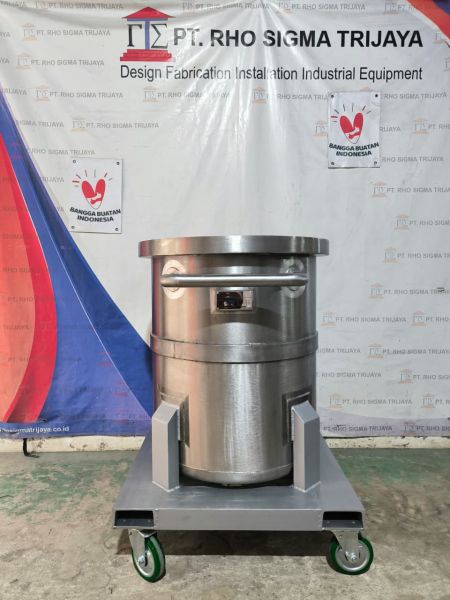
PT Rho Sigma Trijaya (RST) manufactures custom stainless steel tanks and industrial mixing equipment for the paint, coating, chemical, adhesive, food, and other industrial sectors.
Our team works with customers to discuss tank capacity, material specifications, tank design, frames, agitators, valves, and equipment configurations based on their specific applications.
Contact the RST team to discuss your stainless steel tank requirements.
PT Rho Sigma Trijaya (RST)
Website: www.rhosigmatrijaya.co.id
Email: sales1@rhosigmatrijaya.co.id
Industrial Mixing Solutions | Custom Stainless Steel Fabrication