What Is an IBC Mixer? Functions, Working Principles, and Industrial Applications
Learn what an IBC Mixer is, how it works, its applications, mixer types, and how to choose the right IBC mixing system for industrial liquid processing.
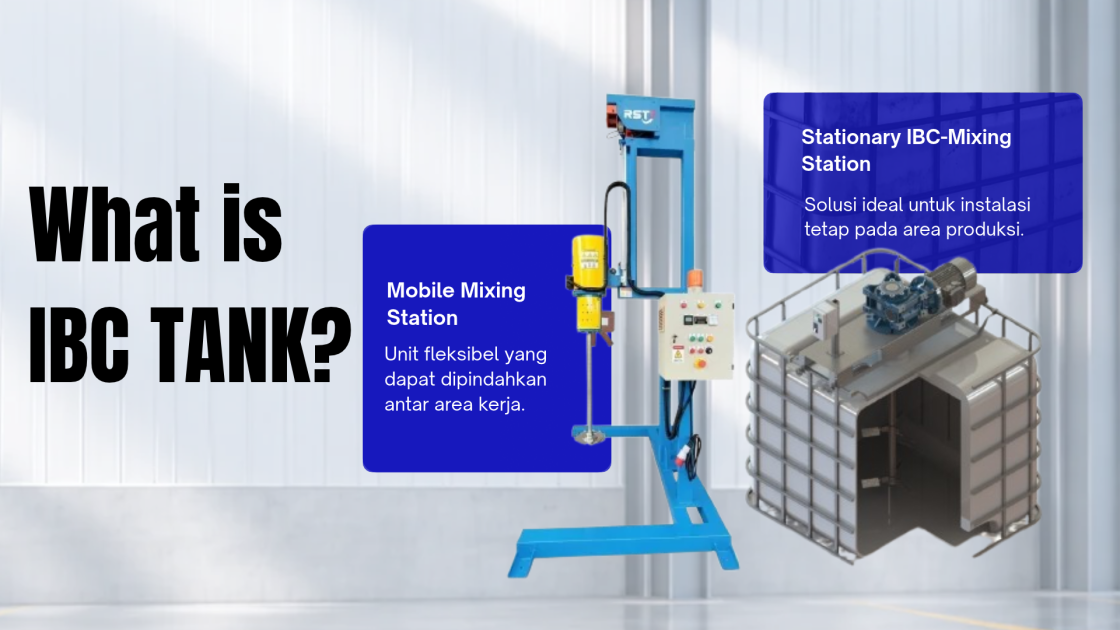
An IBC Mixer is an industrial mixing system designed to blend, homogenize, or maintain the consistency of liquids inside an Intermediate Bulk Container (IBC Tank). It is commonly used in chemical, paint, coating, adhesive, food processing, and other manufacturing industries that handle liquid materials in bulk quantities.
Unlike conventional mixing tanks, an IBC Mixer allows materials to be mixed directly inside an existing IBC container. This provides a practical solution for manufacturers who need flexible mixing operations without transferring liquids into a separate mixing vessel.
In this article, we will explore what an IBC Mixer is, how it works, its applications, and the important factors to consider when selecting the right mixing system.
1. What Is an IBC Mixer?
An IBC Mixer is a mechanical mixing device installed on or integrated with an IBC Tank to agitate and blend liquid products.
An IBC Tank typically has a capacity of 1,000 liters and consists of an inner container, a protective outer frame, and a bottom discharge valve. When equipped with a suitable mixer, the container can also function as a temporary mixing vessel.
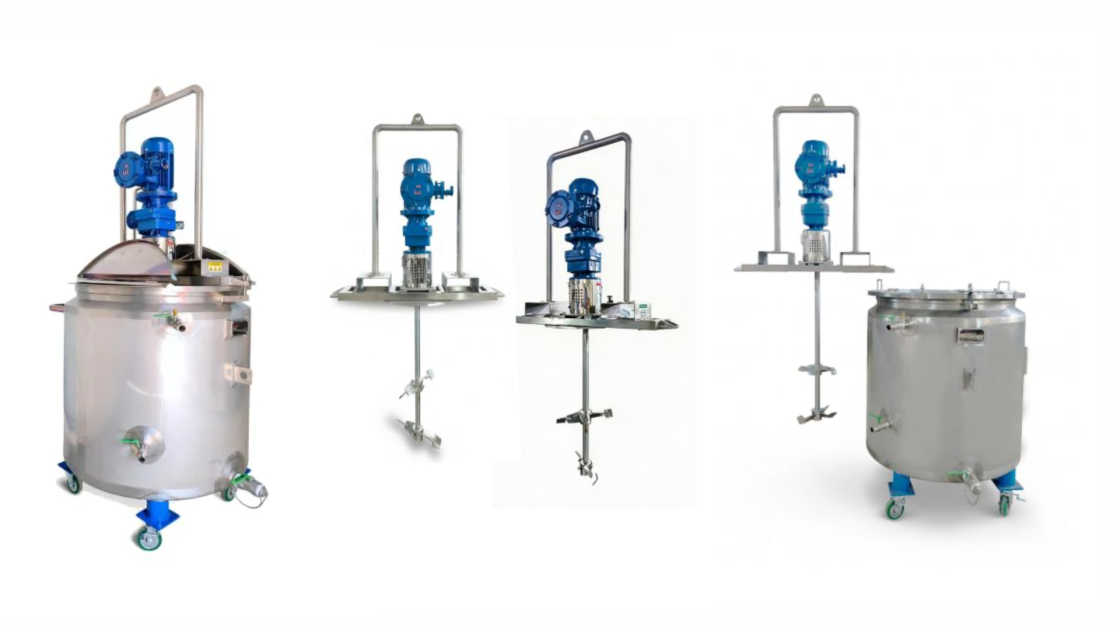
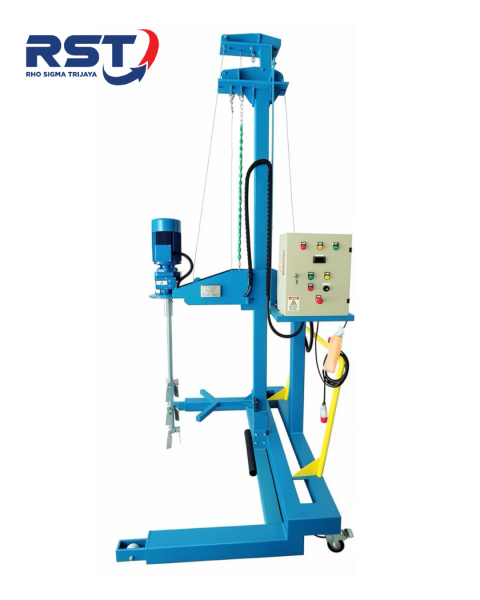
The mixing system generally consists of:
Electric motor or pneumatic motor
Gearbox or speed reduction system, when required
Agitator shaft
Mixing impeller or blade
Mounting structure or support frame
Speed control system, depending on the application
The impeller rotates inside the container to generate fluid movement, helping distribute ingredients, improve uniformity, and reduce material separation.
2. How Does an IBC Mixer Work?
An IBC Mixer works by converting motor power into rotational movement through an agitator shaft and impeller.
When the motor operates, the impeller generates fluid circulation inside the IBC Tank. The resulting flow pattern depends on the impeller design, rotational speed, liquid viscosity, and tank geometry.
The mixing process generally involves three main mechanisms:
A. Circulation
The impeller creates liquid movement throughout the container, helping distribute materials from one area to another.
B. Blending
Different liquid components are combined to achieve a more uniform mixture.
C. Suspension
For applications involving solid particles, an appropriately selected impeller can help keep particles distributed throughout the liquid and reduce sedimentation.
The actual mixing performance depends on the product characteristics and the design of the mixing system.
3. Types of IBC Mixer Systems
Different products require different mixing configurations. The most suitable system depends on viscosity, density, batch size, and the required mixing results.
A. Top Entry IBC Mixer
A top-entry mixer is installed above the IBC Tank, with the agitator shaft extending vertically into the liquid.
It is commonly used for liquid blending, chemical mixing, and maintaining product uniformity.
Advantages:
Direct installation from the top
Flexible impeller selection
Suitable for various liquid mixing applications
Can be designed with variable speed control
B. High-Speed IBC Mixer
A high-speed mixer uses a specially designed impeller operating at relatively high rotational speeds.
It is suitable for applications requiring faster blending, liquid circulation, or dispersion of certain ingredients, depending on the formulation and impeller design.
C. Low-Speed IBC Agitator
A low-speed agitator is designed for gentle mixing and continuous product movement.
It is often suitable for products that require controlled agitation, such as certain chemical solutions, liquid additives, and other industrial formulations.
D. Customized IBC Mixing System
Some applications require more than a standard portable mixer.
A customized system may include:
Specially designed agitator blades
Variable frequency drive (VFD)
Adjustable mounting structure
Stainless steel wetted components
Special shaft and impeller configurations
The configuration should be determined based on the actual process requirements.
4. Industrial Applications of IBC Mixers
IBC Mixers are used in industries where liquid materials need to be blended, homogenized, or kept in motion.
Common applications include:
Paint and Coating Industry
Mixing liquid coatings, additives, pigments, and other formulation ingredients. The appropriate mixing configuration depends on the viscosity and dispersion requirements.
Chemical Industry
Blending chemical solutions, liquid additives, and industrial chemicals while maintaining product consistency.
Adhesive Industry
Mixing liquid adhesive components and maintaining uniformity during processing or temporary storage.
Food and Beverage Industry
Mixing selected liquid ingredients, syrups, and food-processing materials. The equipment must be designed to meet the applicable hygiene and material requirements.
Water Treatment Industry
Blending chemical solutions and liquid treatment additives.
5. What Are the Advantages of Using an IBC Mixer?
Using an IBC Mixer can offer several operational benefits:
Flexible Operation: Mixing can be performed directly inside an IBC container without requiring a separate mixing tank.
Space Efficiency: It can reduce the need for additional fixed mixing vessels.
Material Handling Efficiency: The same container may be used for storage, handling, and mixing when the application and container design permit.
Process Flexibility: Different mixing configurations can be selected for different products.
Batch Processing: Suitable for operations that handle liquid products in IBC-sized batches.
However, an IBC Tank must be specifically evaluated for mixing suitability. Not every standard storage IBC is designed to withstand the forces generated during agitation.
6. How to Choose the Right IBC Mixer
Selecting the right IBC Mixer requires understanding the product and its mixing requirements.
Consider the following factors:
1. Product Viscosity
Viscosity determines the resistance of a liquid to flow. Low-viscosity liquids generally require different mixing configurations from high-viscosity materials.
2. Product Density
Product density affects the power required to achieve the desired circulation and mixing performance.
3. Mixing Capacity
Determine the actual working volume and operating liquid level inside the IBC Tank.
4. Impeller Design
Different impeller types generate different flow patterns. The selection should match the required mixing objective.
5. Motor Power and Speed
Motor power and rotational speed must be evaluated based on viscosity, impeller diameter, batch size, and mixing requirements.
6. Material of Construction
For industrial chemical applications, stainless steel such as SUS304 or SUS316L may be considered depending on chemical compatibility and process requirements.
7. Mounting and Structural Safety
The mixer support, mounting arrangement, shaft length, and IBC structure must be evaluated to ensure safe operation.
7. IBC Mixer vs. Conventional Mixing Tank
Although both systems are designed to mix materials, they serve different operational needs.
| Feature | IBC Mixer | Conventional Mixing Tank |
|---|---|---|
| Main purpose | Mixing inside an IBC | Dedicated mixing process |
| Mobility | Generally portable | Often fixed installation |
| Capacity | Based on IBC size | Customizable |
| Installation | Mounted on IBC | Integrated with tank structure |
| Flexibility | Suitable for multiple IBC operations | Suitable for dedicated processes |
| Customization | Depends on mixer and IBC design | Broad design flexibility |
An IBC Mixer is often preferred when operational flexibility and container-based processing are important. A dedicated mixing tank may be more suitable for continuous production, demanding mixing processes, or applications requiring specialized vessel construction.
8. Important Safety Considerations
Before installing an IBC Mixer, several technical aspects should be evaluated.
Ensure the IBC container is suitable for mechanical agitation.
Verify that the mounting structure can withstand operating loads and vibration.
Select an appropriate motor and impeller configuration.
Check the minimum operating liquid level to avoid excessive vibration and air entrainment.
Provide suitable electrical protection and emergency stopping arrangements.
Consider grounding and explosion protection where flammable or hazardous materials are involved.
Follow the equipment manufacturer's operating and maintenance instructions.
A standard IBC container should not automatically be assumed suitable for mechanical mixing. Its frame, inner container, support arrangement, and operating conditions must be checked before use.
9. Custom IBC Mixer Solutions by RST
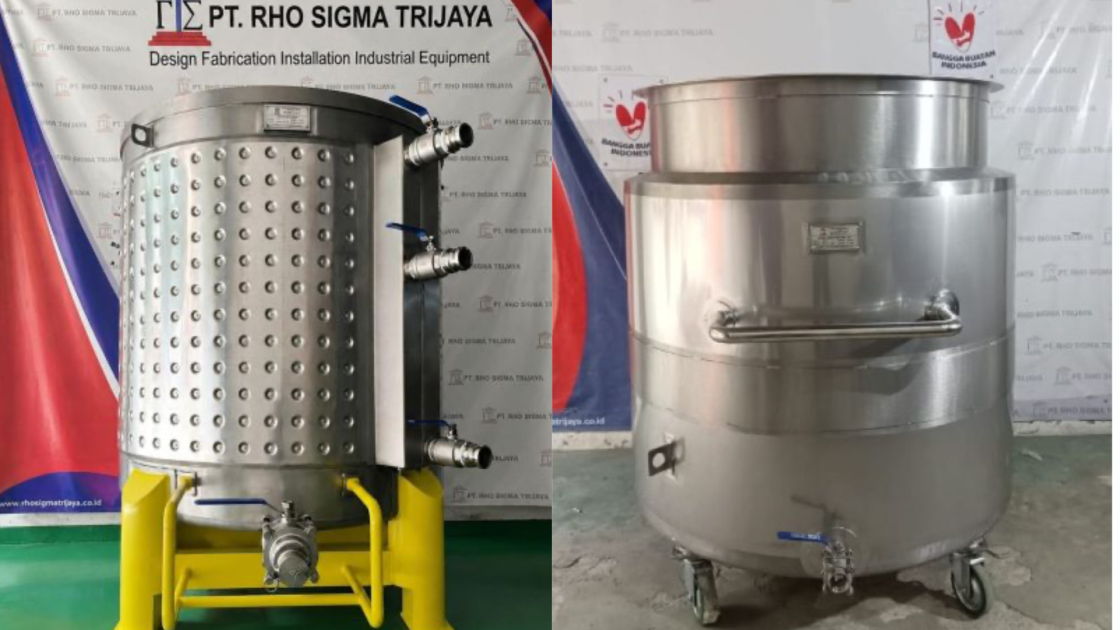
PT Rho Sigma Trijaya (RST) specializes in industrial mixing equipment and custom stainless steel tank manufacturing.
Understanding that every industrial mixing application has different requirements, RST focuses on developing mixing solutions based on product characteristics, process requirements, and operational conditions.
Our engineering approach considers:
Product viscosity and density
Required mixing performance
Motor power and rotational speed
Agitator and impeller configuration
Material of construction
Mounting and structural requirements
Whether your application involves chemical blending, paint processing, adhesives, or other industrial liquid products, selecting the correct mixing configuration is essential for achieving consistent and efficient operation.
Looking for an IBC Mixer for your industrial process?
Contact PT Rho Sigma Trijaya to discuss your mixing requirements and explore a customized industrial mixing solution.
Website: https://www.rhosigmatrijaya.co.id
Email: sales1@rhosigmatrijaya.co.id
Frequently Asked Questions (FAQ)
1. What is the main function of an IBC Mixer?
An IBC Mixer is used to blend, homogenize, or maintain the uniformity of liquid products directly inside an IBC Tank.
2. Can an IBC Tank be used for mixing?
Yes, provided that the IBC container and its supporting structure are suitable for mechanical agitation. Standard storage IBCs are not automatically designed for mixing applications.
3. What is the standard capacity of an IBC Mixer?
IBC Mixers are commonly designed for 1,000-liter IBC containers, although the actual working volume depends on the container and mixing application.
4. Can an IBC Mixer handle high-viscosity liquids?
It depends on the viscosity, density, impeller design, motor power, and mechanical configuration. High-viscosity products may require a specially engineered mixing system.
5. What materials are used for IBC Mixer construction?
Stainless steel such as SUS304 and SUS316L may be used for wetted components, depending on the chemical compatibility and process requirements.
6. What is the difference between an IBC Mixer and an IBC Tank?
An IBC Tank is primarily designed for bulk material storage and transportation, while an IBC Mixer is an additional mechanical system that enables mixing inside a suitable IBC container.