Exproof vs-Standard Motor Industrial Mixer
Non-Exproof Motor, Explosion Proof Motor, Exproof Mixer, Industrial Mixer Motor, Exproof Electric Motor. - Standard Electric Motor - Explosion Proof Motor - Exproof Mixer - Industrial Mixer Motor - Exproof vs Standard Motor - Explosion Proof Industrial Mixer
Exproof vs Standard Motor for Industrial Mixers: What Are the Differences?
In manufacturing industries such as Paint, Ink, Chemical, Adhesive, and Coating, selecting the right drive motor for an industrial mixer is an important part of equipment design.
Besides considering motor power (kW or HP), rotational speed (RPM), and torque, workplace safety and operating environment conditions must also be taken into account.
One common question in industrial mixing applications is: What is the difference between an Exproof Motor and a Standard Motor? Does every mixer used for solvent-based products require an Exproof Motor?
To answer these questions, it is important to understand the construction, protection principles, and applications of each motor type.
1. What Is a Standard Motor?
A Standard Motor is a conventional electric motor that does not have special construction or certification for use in explosive atmospheres.
Standard motors are widely used in industrial machinery because they are readily available, cost-effective, and offered in various power ratings.
Key Characteristics of Standard Motors:
Operates using an AC electrical power supply.
Available in single-phase and three-phase configurations.
Commonly uses induction motor technology.
Can be combined with a gearbox.
Can be equipped with a Variable Frequency Drive (VFD) to control rotational speed, subject to motor specifications.
Generally offers a lower initial investment cost.
Applications of Standard Motors in Industrial Mixers
Standard motors are commonly used in:
Water-based paint mixers.
Water-based adhesive mixers.
Mixing tanks for non-flammable materials.
Food processing equipment.
Industrial mixers installed in non-hazardous areas.
The use of a Standard Motor must be based on the hazardous area classification of the installation location. Even if the processed product is non-flammable, the surrounding production environment must still be evaluated.
2. What Is an Exproof Motor?
An Exproof Motor (Explosion-Proof Motor) is an electric motor designed with specific protection methods to operate in environments where explosive atmospheres may occur, according to its classification and certification.
An explosive atmosphere can form when flammable gas or vapor mixes with air at a concentration within the flammable range and an ignition source is present.
One commonly used motor protection method is Ex d (Flameproof Enclosure).
In an Ex d construction, the motor enclosure is designed to withstand an internal explosion and prevent the ignition of the surrounding explosive atmosphere through specially engineered joints and flamepaths.
Key Characteristics of Exproof Motors:
Features an enclosure designed with a specific explosion protection method.
Has appropriate equipment marking and certification.
Designed for specific hazardous area conditions.
Requires special installation and maintenance procedures.
Can be combined with compatible gearboxes and variable frequency drives.
Applications of Exproof Motors in Industrial Mixers
Exproof motors are commonly used in:
Solvent-based paint mixers.
Printing ink mixers.
Chemical mixers handling flammable substances.
Solvent-based adhesive mixers.
Resin and coating mixers.
Mixing tanks installed in classified hazardous areas.
It is important to understand that not every Exproof Motor is suitable for every hazardous area. Motor specifications must match the hazardous area classification and applicable certification requirements.
3. Key Differences Between Exproof and Standard Motors
| Parameter | Standard Motor | Exproof Motor |
|---|---|---|
| Construction | Conventional electric motor | Special explosion-protected construction |
| Explosion protection | No specific Ex protection | Protection according to certification |
| Enclosure | Standard motor enclosure | Designed according to Ex protection method |
| Ex certification | None | Available according to product specification |
| Application | Non-hazardous areas | Suitable classified hazardous areas |
| Power supply | AC single-phase/three-phase | AC single-phase/three-phase, depending on model |
| VFD compatibility | Generally available | Requires Ex compatibility evaluation |
| Initial investment | Relatively lower | Relatively higher |
| Maintenance | Standard motor maintenance | Requires specific Ex maintenance procedures |
4. Physical Construction Differences
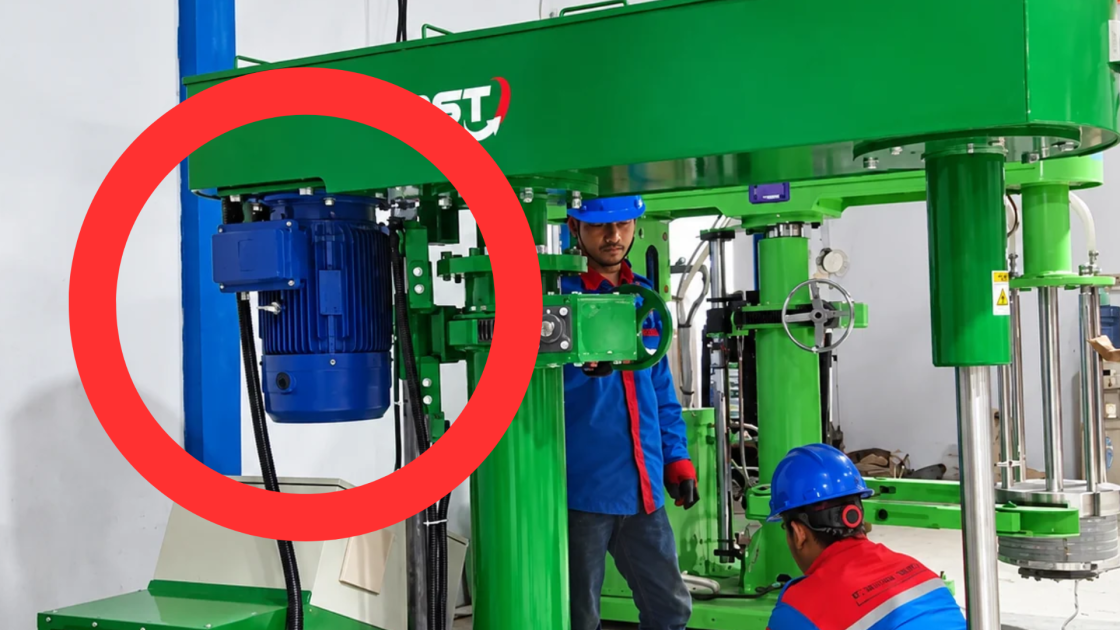
Although Exproof and Standard Motors may look similar from the outside, their internal construction and protection designs can be significantly different.
A. Standard Motor
A Standard Motor is designed to perform its electromechanical function with protection suitable for conventional industrial environments.
Its enclosure is not designed to contain or prevent the transmission of an internal explosion according to Ex protection methods.
B. Exproof Motor
For motors using Ex d (Flameproof) protection, several components have specific design requirements, including:
Flamepath: Precision-engineered joints designed to prevent an internal explosion from igniting the surrounding explosive atmosphere.
Terminal Box: Special construction and cable connection arrangements suitable for the protection method.
Cable Gland: Must comply with the motor's certification and protection requirements.
Housing: Designed and tested according to applicable explosion protection standards.
Fasteners: Bolts and fastening components must comply with the Ex design requirements.
Therefore, modifications to the housing, terminal box, or flamepath of an Exproof Motor must never be performed without proper technical assessment.
5. Understanding Exproof Motor Classification
When selecting an Exproof Motor, several technical parameters must be considered.
A. Zone Classification
Hazardous area classification determines how frequently an explosive atmosphere may be present.
For gas and vapor atmospheres:
Zone 0: Explosive gas atmosphere is present continuously, for long periods, or frequently.
Zone 1: Explosive gas atmosphere is likely to occur occasionally during normal operation.
Zone 2: Explosive gas atmosphere is not likely to occur during normal operation and, if it does occur, will exist only for a short period.
For combustible dust atmospheres:
Zone 20: Explosive dust atmosphere is present continuously, for long periods, or frequently.
Zone 21: Explosive dust atmosphere is likely to occur occasionally during normal operation.
Zone 22: Explosive dust atmosphere is not likely to occur during normal operation and, if it does occur, will exist only for a short period.
B. Temperature Class (T-Class)
Temperature class indicates the maximum permissible surface temperature of the equipment.
| Temperature Class | Maximum Surface Temperature |
|---|---|
| T1 | 450°C |
| T2 | 300°C |
| T3 | 200°C |
| T4 | 135°C |
| T5 | 100°C |
| T6 | 85°C |
The lower the maximum temperature, the more stringent the surface temperature requirement.
C. Gas Group
Flammable gases and vapors have different ignition characteristics.
Under the IEC classification system, common gas groups include IIA, IIB, and IIC.
The selected motor must be suitable for the gas group present in the installation area.
D. Certification
Commonly referenced standards and certification systems include:
IECEx
ATEX
IEC 60079 series
The motor's equipment marking must be checked to confirm suitability for the intended hazardous area.
6. Does Solvent-Based Paint Mixing Always Require an Exproof Motor?
Not necessarily. The requirement cannot be determined solely by the product type.
Solvent-based paint may release flammable vapors. However, the need for an Exproof Motor must be determined through hazardous area classification and an appropriate risk assessment.
Several factors must be evaluated:
Type and characteristics of the solvent.
Product flash point.
Potential formation of flammable vapor concentrations.
Room ventilation system.
Mixer installation location.
Hazardous area classification.
Operating temperature and process conditions.
For example, mixing solvent-based paint in an enclosed production area where solvent vapors may accumulate requires careful hazardous area assessment.
On the other hand, not every chemical or paint mixing process automatically requires an Exproof Motor. The decision should be based on the actual area classification and applicable safety requirements.
7. Can an Exproof Motor Be Used with a Variable Frequency Drive (VFD)?
Yes. An Exproof Motor can be combined with a Variable Frequency Drive (VFD), provided that the motor and drive system are compatible and meet the required protection conditions.
This configuration is useful for industrial mixers that require adjustable rotational speed to accommodate different product characteristics.
For example:
Low-speed mixing for homogenization.
Medium-speed mixing for blending.
High-speed mixing for dispersion.
However, the combination of an Exproof Motor and VFD must consider:
Motor certification and VFD operating requirements.
Permitted frequency range.
Motor temperature rise.
Cooling system performance.
Overload protection.
Compatibility of the inverter and installation system with the hazardous area requirements.
Not every Exproof Motor can be connected directly to a standard inverter without technical evaluation.
8. Which Motor Is More Suitable for Industrial Mixers?
The selection depends on production requirements and the operating environment.
Standard Motor is suitable for:
Water-based paint mixing.
Water-based adhesive mixing.
Mixing tanks installed in non-hazardous areas.
Production processes that do not require explosion protection.
Exproof Motor is suitable for:
Solvent-based paint mixing.
Solvent-based printing ink production.
Flammable chemical processing.
Resin and coating applications with potential flammable vapor hazards.
Mixing equipment installed in hazardous areas according to the applicable classification and certification.
From an investment perspective, Standard Motors are generally more economical, while Exproof Motors involve a higher initial cost due to their specialized construction, protection methods, and certification requirements.
However, motor selection should never be based on price alone. Operational safety and equipment suitability must remain the main priorities.
9. Custom Industrial Mixer Manufacturer – PT Rho Sigma Trijaya
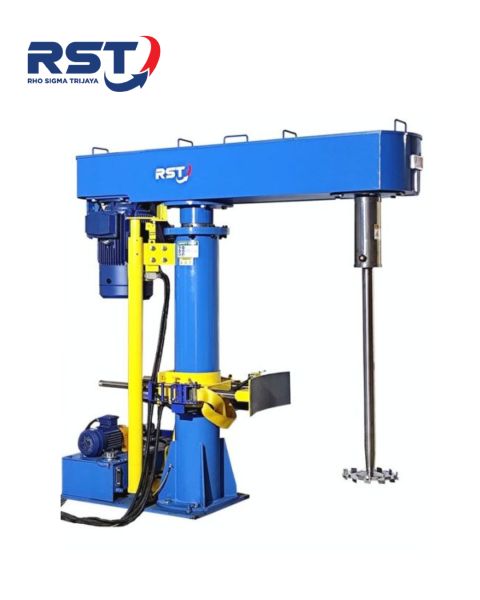
PT Rho Sigma Trijaya (RST) is an engineering company and industrial equipment manufacturer specializing in custom industrial mixing solutions.
We understand that every mixing process has different requirements, including material characteristics, viscosity, batch capacity, operating speed, and production environment conditions.
RST provides various industrial mixing solutions, including:
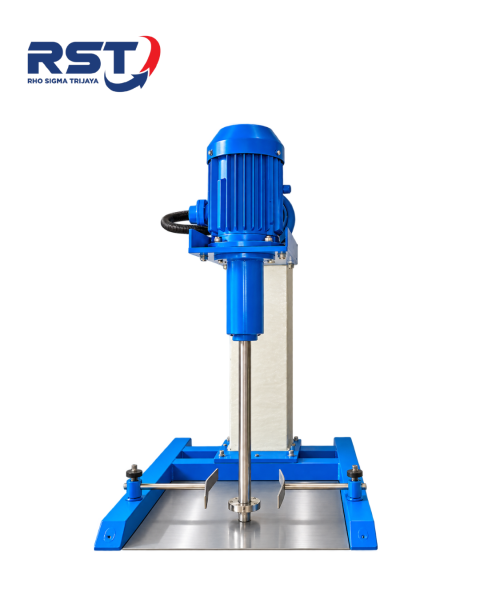
High Speed Disperser (HSD Mixer).
Paste Mixer.
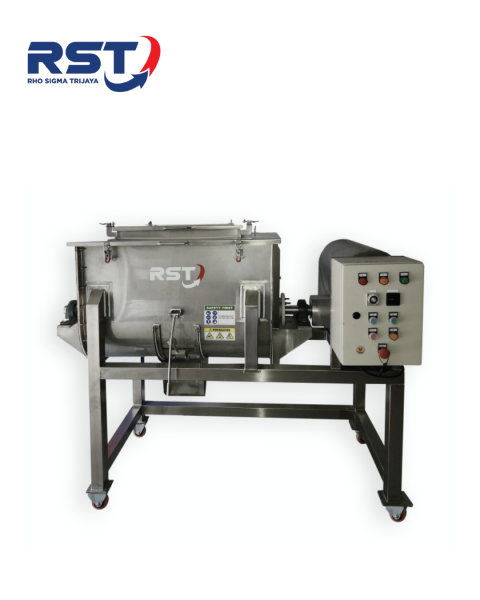
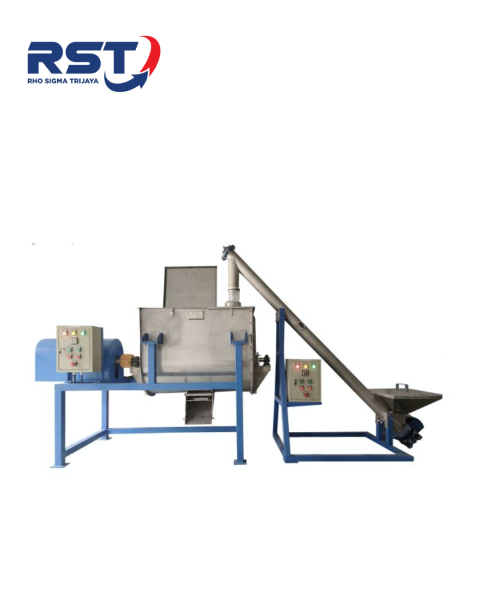
Ribbon Mixer.
Drum Mixer.
Portable Mixer.
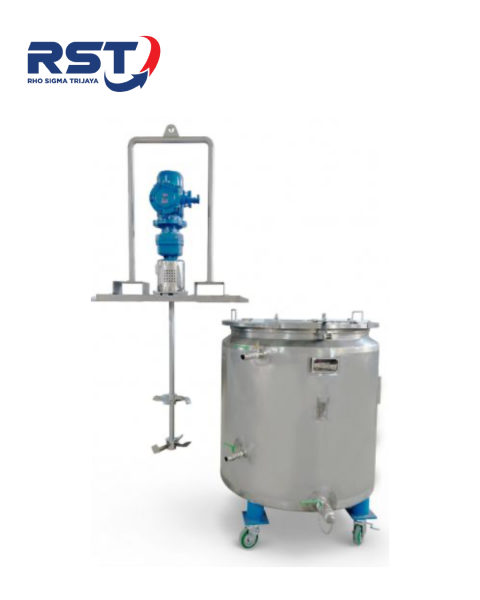
Double Jacket Mixing Tank.
Custom Industrial Mixing Systems.
Motor configurations and drive systems can be customized according to process requirements, production capacity, and safety considerations at the customer's facility.
Looking for a Custom Industrial Mixer?
Contact PT Rho Sigma Trijaya to discuss your industrial mixing equipment requirements with our engineering team.
Website: https://www.rhosigmatrijaya.co.id
Email: sales1@rhosigmatrijaya.co.id
Frequently Asked Questions (FAQ)
1. What is the main difference between an Exproof Motor and a Standard Motor?
A Standard Motor is a conventional electric motor without explosion protection certification. An Exproof Motor features specialized construction and certification for use in hazardous areas according to its classification.
2. Is an Exproof Motor more powerful than a Standard Motor?
Not necessarily. Exproof refers to explosion protection, not higher motor power, torque, or performance.
3. Do all paint industry mixers require Exproof Motors?
No. The requirement depends on hazardous area classification, solvent characteristics, potential explosive atmosphere formation, and risk assessment.
4. Is an Exproof Motor more expensive than a Standard Motor?
Generally, yes. This is due to its specialized construction, protection methods, testing, and certification requirements.
5. Can an Exproof Motor be combined with a gearbox?
Yes. An Exproof Motor can be combined with a gearbox, provided that the configuration, installation, and explosion protection requirements are properly maintained.
6. Is IP55 the same as Exproof certification?
No. IP55 indicates protection against dust ingress and water jets. It is not an explosion protection certification. A Standard Motor with IP55 protection is not automatically suitable for hazardous areas.