Panduan Memilih Tangki Industri untuk Mixing dan Storage
tangki industri, industrial tank, mixing tank, storage tank, double jacket tank, stainless steel tank, tangki stainless steel, custom tank manufacturer
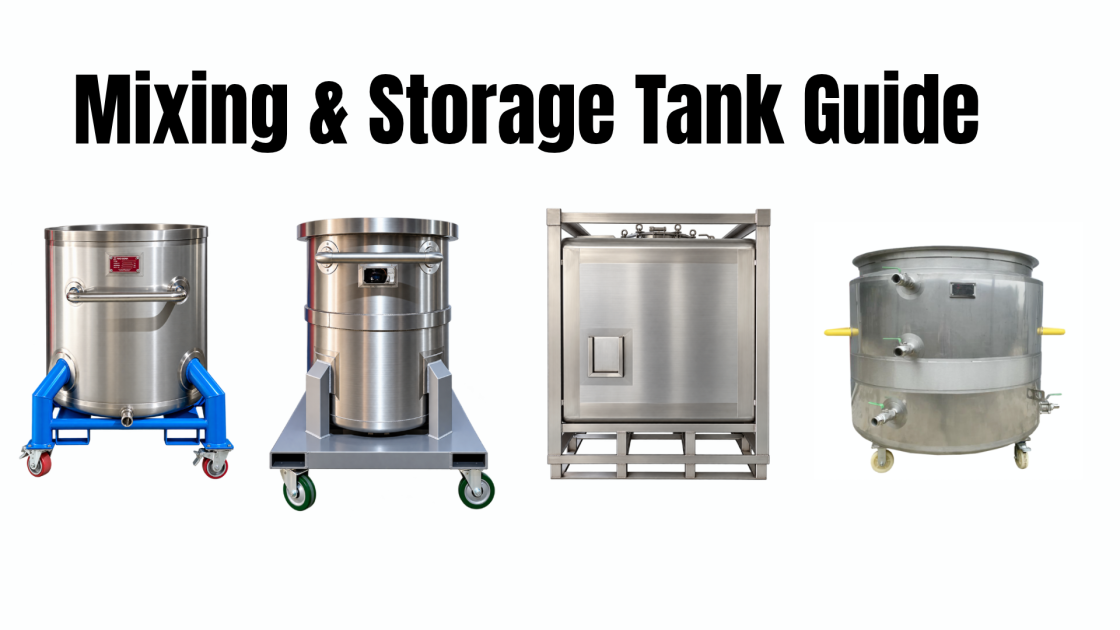
Types of Industrial Tanks and Their Functions: A Complete Guide to Choosing the Right Tank
Industrial tanks play an important role in modern manufacturing processes. They are not only used for storing raw materials and finished products but also for mixing, heating, cooling, homogenizing, and processing various materials.
Different industries require different types of industrial tanks depending on material characteristics, production capacity, operating temperature, viscosity, and process requirements.
For example, paint and chemical manufacturers require tanks designed for liquid blending, powder incorporation, and high-viscosity mixing. Meanwhile, food and beverage manufacturers need tanks designed with hygiene, cleanability, and material compatibility in mind.
Understanding the different types of industrial tanks and their functions is essential when selecting the right equipment for your production facility.
This guide covers the most common types of industrial tanks, their functions, applications, and important considerations when choosing a tank for manufacturing operations.
1. What Is an Industrial Tank?
An industrial tank is a vessel designed to store, hold, mix, or process various materials in manufacturing and industrial operations.
These materials may include liquids, powders, chemicals, pastes, and high-viscosity products.
Industrial tanks are commonly manufactured from different materials, including:
Stainless Steel SUS304: Widely used for general industrial applications, liquid storage, and processing.
Stainless Steel SUS316L: Suitable for applications requiring higher corrosion resistance, depending on the chemicals and operating conditions.
Carbon Steel: Used for applications requiring strong structural construction, with protective coatings or linings where necessary.
Depending on the process requirements, industrial tanks can be equipped with additional components such as mixers, agitators, heating jackets, insulation, level sensors, load cells, and temperature control systems.
2. Different Types of Industrial Tanks and Their Functions
The following are some of the most commonly used industrial tanks in manufacturing facilities.
A. Mixing Tank
A mixing tank is an industrial vessel designed to combine two or more materials to achieve a uniform mixture or a specific product consistency.
Mixing tanks are commonly equipped with an agitation system, such as paddle mixers, anchor agitators, or other types of impellers depending on the material characteristics and mixing requirements.
Main Functions of a Mixing Tank:
Mixing different liquid materials.
Homogenizing materials with different properties.
Dissolving additives into liquids.
Maintaining material uniformity during production.
Supporting emulsification and high-viscosity mixing processes with suitable equipment.
Industrial Applications:
Paint and coating manufacturing.
Ink production.
Adhesive and glue manufacturing.
Chemical processing.
Cosmetics and personal care.
Food and beverage production.
RST Solution: Custom Mixing & Storage Tank
PT Rho Sigma Trijaya provides custom Mixing & Storage Tanks designed according to specific production requirements.
Available construction materials include SUS304, SUS316L, and carbon steel, depending on the intended application.
Tank capacity, geometry, bottom design, agitator type, and additional configurations can be customized to meet individual process requirements.
B. Double Jacket Tank
A double jacket tank is an industrial vessel constructed with two layers of walls. The space between these layers, known as the jacket, allows heating or cooling media to circulate around the tank.
This design helps control the temperature of the material during production.
Common heating media include:
Steam.
Hot oil.
Electric heating systems.
For cooling applications, chilled water or other suitable cooling media can be used depending on the system design.
Main Functions of a Double Jacket Tank:
Heating materials during production.
Cooling products under controlled conditions.
Maintaining stable product temperatures.
Supporting processes that require precise temperature management.
Industrial Applications:
Adhesive and glue manufacturing.
Chemical processing.
Food and beverage production.
Cosmetics and personal care.
Pharmaceutical manufacturing.
RST Solution: Custom Double Jacket Tank
PT Rho Sigma Trijaya manufactures custom Double Jacket Tanks using SUS304 and SUS316L stainless steel.
Tank capacity can be customized, with options for heating systems, insulation, and mixing configurations.
The tank can also be integrated with different agitator designs, such as anchor, blade, or high-shear mixing systems, depending on the application.
C. Storage Tank
A storage tank is designed to store raw materials, intermediate products, or finished goods before they are transferred, processed, or distributed.
Unlike a mixing tank, a standard storage tank primarily serves as a storage vessel and does not always require an agitation system.
However, an agitator can be installed when the stored material tends to settle or requires continuous mixing.
Main Functions of a Storage Tank:
Storing liquid raw materials.
Holding intermediate or finished products.
Maintaining material availability for subsequent production processes.
Supporting internal material storage and distribution systems.
Industrial Applications:
Paint and ink manufacturing.
Chemical processing.
Adhesive manufacturing.
Food and beverage production.
Agrochemical manufacturing.
RST Solution: Custom Mixing & Storage Tank
RST provides customized industrial storage tanks based on required capacity, material specifications, tank geometry, and installation requirements.
Additional features may include level sensors, load cells, insulation, and CIP spray balls, depending on the application.
D. Stainless Steel IBC Tote Tank
IBC stands for Intermediate Bulk Container. An IBC tank is a container designed for storing and transporting medium to large quantities of liquid materials.
Stainless steel IBC tanks are commonly used in applications requiring durable construction, corrosion resistance, and material compatibility.
Main Functions of an IBC Tote Tank:
Storing liquid raw materials.
Facilitating material transfer between production areas.
Supporting internal factory distribution.
Providing temporary storage before materials enter the next production stage.
Industrial Applications:
Chemical manufacturing.
Food and beverage production.
Pharmaceutical manufacturing.
Cosmetics and personal care.
Adhesive and coating industries.
RST Solution: Stainless Steel IBC Tote Tank
PT Rho Sigma Trijaya provides stainless steel IBC Tote Tanks manufactured from SUS304 and SUS316L, depending on application requirements.
For processes requiring mixing directly inside the container, an IBC system can also be integrated with an IBC Mixer.
E. Expansion Tank
An expansion tank is a vessel designed to accommodate changes in fluid volume caused by temperature variations or pressure conditions within a system.
Expansion tanks are commonly used in closed-loop fluid systems, including heating, cooling, and certain industrial circulation systems.
Main Functions of an Expansion Tank:
Accommodating thermal expansion and contraction of fluids.
Helping maintain system pressure stability.
Reducing the risk of excessive pressure increases caused by thermal expansion, when properly designed and installed.
Industrial Applications:
Industrial heating and cooling systems.
Fluid circulation systems.
Chemical process installations.
Factory utility systems.
RST Solution: Custom Expansion Tank
RST provides custom Expansion Tanks manufactured from stainless steel SUS304 and SUS316.
Depending on the design requirements, tanks can be equipped with sight glasses, safety valves, welded construction, and pressure testing.
F. Bentone Pot (Mixing Vessel)
A Bentone Pot is a type of mixing vessel used for preparing and mixing Bentonite-based materials or similar additives that require specific dispersion and activation processes.
In paint, coating, and chemical manufacturing, Bentone is commonly used as a rheology modifier to help control product viscosity and flow properties.
The mixing process must consider material characteristics, ingredient addition sequence, and the required mixing energy.
Main Functions of a Bentone Pot:
Supporting the preparation of Bentonite-based materials.
Facilitating the dispersion of additives.
Preparing materials before they enter the next production stage.
Industrial Applications:
Paint and coating manufacturing.
Ink production.
Adhesive manufacturing.
Chemical processing.
RST provides custom Bentone Pots and mixing vessels designed according to material characteristics and specific process requirements.
3. Comparison of Different Industrial Tank Types
Each industrial tank serves a different purpose. The following table provides a quick comparison to help identify the right tank for your application.
| Tank Type | Main Function | Common Applications |
|---|---|---|
| Mixing Tank | Mixing and homogenizing materials | Paint, chemicals, adhesives |
| Double Jacket Tank | Heating and cooling materials | Food, chemicals, cosmetics |
| Storage Tank | Storing raw materials and finished products | General manufacturing |
| IBC Tote Tank | Liquid storage and transportation | Chemicals, food, pharmaceuticals |
| Expansion Tank | Accommodating fluid volume expansion | Heating and cooling systems |
| Bentone Pot | Bentonite preparation and mixing | Paint, coatings, chemicals |
It is important to understand that one industrial tank can perform more than one function.
For example, a Double Jacket Tank can be equipped with an agitator, allowing it to function as a mixing vessel with temperature control capabilities.
4. How to Choose the Right Industrial Tank
Selecting an industrial tank involves more than comparing capacity and price. The tank design must match the material characteristics and production requirements.
Here are several important factors to consider.
1. Material Characteristics
Consider the type of material that will be processed or stored, such as:
Low-viscosity liquids.
High-viscosity liquids and pastes.
Corrosive chemicals.
Materials that tend to settle.
Temperature-sensitive products.
These characteristics influence tank material selection, agitator configuration, and vessel design.
2. Tank Capacity
Tank capacity should be determined based on production requirements.
Important considerations include:
Working volume.
Total geometric volume.
Production batch size.
Required headspace.
For example, a tank with a geometric volume of 1,000 liters does not necessarily have a working volume of 1,000 liters. The operating volume must account for sufficient space during the mixing process.
3. Construction Material
Tank construction material must be compatible with the product being handled.
SUS304 stainless steel is widely used in general industrial applications, while SUS316L may be preferred for applications requiring higher corrosion resistance.
Final material selection should consider chemical composition, temperature, concentration, and operating conditions.
4. Mixing Requirements and Agitator Selection
If the tank is used for mixing, the agitator must be selected according to the viscosity and physical properties of the material.
Examples include:
Paddle agitators for suitable liquid blending applications.
Anchor agitators for high-viscosity materials and wall-side circulation.
High-shear mixers for processes requiring intensive shear forces.
Impeller selection and rotational speed significantly affect mixing performance.
5. Temperature Requirements
If the process requires heating or cooling, consider a Double Jacket Tank or another suitable thermal control system.
The design should account for operating temperature, heating or cooling media, and required heat transfer performance.
6. Safety and Control Systems
Industrial tanks can be equipped with various supporting systems, including:
Temperature sensors.
Level sensors.
Pressure gauges.
Safety valves.
Load cells.
Motor and inverter control systems.
The required components depend on the tank function and process risk.
5. Which Industries Require Industrial Tanks?
Industrial tanks are widely used across different manufacturing sectors.
Paint and Coating Industry
Requires mixing tanks, storage tanks, and double jacket tanks for processing resins, pigments, solvents, and additives.
Chemical Industry
Uses industrial tanks for storing, mixing, and processing various chemicals with suitable construction materials and process configurations.
Adhesive and Glue Industry
Requires mixing vessels and tanks with appropriate agitators to handle high-viscosity materials.
Food and Beverage Industry
Requires stainless steel tanks designed with hygiene, cleanability, and product compatibility in mind.
Cosmetics and Personal Care Industry
Uses mixing tanks and double jacket tanks for blending, homogenization, and temperature control during the production of lotions, liquid soaps, and creams.
Pharmaceutical Industry
Requires tanks with appropriate material specifications, hygienic design, documentation, and cleaning procedures based on applicable process requirements.
6. Custom Industrial Tank Manufacturer in Indonesia
Not every manufacturing process can use a standard industrial tank. Differences in material characteristics, batch capacity, viscosity, operating temperature, and production requirements often require customized tank designs.
PT Rho Sigma Trijaya (RST) is an engineering and manufacturing company providing industrial mixing and fabrication equipment for various manufacturing industries.
RST offers custom design and fabrication of different industrial tanks, including:
Mixing & Storage Tanks.
Double Jacket Tanks.
Stainless Steel IBC Tote Tanks.
Expansion Tanks.
Bentone Pots (Mixing Vessels).
Tank configurations can be customized according to customer requirements, including:
Tank capacity and dimensions.
SUS304 or SUS316L stainless steel construction.
Material thickness.
Agitator and impeller selection.
Heating and cooling systems.
Insulation and surface finishing.
Instrumentation and control systems.
In addition to tank fabrication, RST also provides mixer and agitator systems that can be integrated with industrial tanks to support efficient production processes.
With an engineering-based approach, RST helps manufacturers determine suitable equipment configurations according to their specific production requirements.
Looking for a Custom Industrial Tank for Your Production Process?
Discuss your industrial tank requirements with the engineering team at PT Rho Sigma Trijaya.
Website: https://www.rhosigmatrijaya.co.id/
Email: sales1@rhosigmatrijaya.co.id
Contact our team to discuss tank design, capacity, construction materials, and configurations suitable for your manufacturing process.
7. Frequently Asked Questions (FAQ)
What are the most common types of industrial tanks?
Common industrial tank types include mixing tanks, storage tanks, double jacket tanks, IBC tanks, expansion tanks, and various process vessels. Each type serves a different purpose depending on storage and manufacturing requirements.
What is the difference between a mixing tank and a storage tank?
A mixing tank is designed to blend or homogenize materials and is generally equipped with an agitator. A storage tank is primarily used for holding raw materials or finished products and does not always require a mixing system.
What is the function of a double jacket tank?
A double jacket tank is used to heat or cool materials through the circulation of heating or cooling media in the space between its two walls.
What is the best material for industrial tanks?
There is no single material suitable for every application. SUS304 is commonly used for general industrial applications, while SUS316L may be preferred when higher corrosion resistance is required. Material selection depends on the product composition and operating conditions.
Can industrial tanks be custom-made?
Yes. Industrial tanks can be customized according to capacity, dimensions, construction material, agitator type, heating or cooling systems, and specific production requirements.
What capacities are available for industrial tanks?
Industrial tank capacity depends on the design and application requirements. PT Rho Sigma Trijaya provides custom tank solutions with capacities tailored to customer production needs.
Can a mixing tank be equipped with a heating system?
Yes. A mixing tank can be designed with a heating system such as a double jacket, hot oil circulation, steam heating, or electric heating, depending on process requirements.
What is the difference between an IBC tank and a mixing tank?
An IBC tank is generally used for storing and transporting medium-sized quantities of materials. A mixing tank is designed for blending materials and is usually equipped with an agitator. An IBC tank can also be integrated with a mixer when direct mixing inside the container is required.