Perbedaan IBC vs Drum
perbedaan IBC dan drum, IBC mixer, drum mixer, industrial mixer, IBC tank mixer, interchangeable mixer, IBC mixing system, industrial drum mixer, mixer IBC tank, mesin mixer IBC, mesin pengaduk IBC, mesin pengaduk drum, mixer drum industri, IBC tank agitator, drum agitator, industrial mixing equipment, portable industrial mixer, portable drum mixer, IBC agitator, IBC mixing machine, industrial agitator, chemical mixer, chemical mixing equipment, mixer untuk IBC tank 1000 liter, mixer untuk drum
IBC vs Drum: What Is the Difference and Which Industrial Mixer Should You Use?
When handling industrial liquids, choosing the right storage container is only part of the process. Manufacturers also need to consider how materials will be mixed, homogenized, and transferred into their production systems.
Two of the most commonly used industrial containers are Intermediate Bulk Containers (IBC) and industrial drums.
Although both are designed for storing and transporting liquids, they differ in capacity, construction, handling requirements, and mixing applications.
In this guide, we explain the differences between IBC tanks and industrial drums, and how to select the right industrial mixer for each application.
1. What Is an IBC Tank?
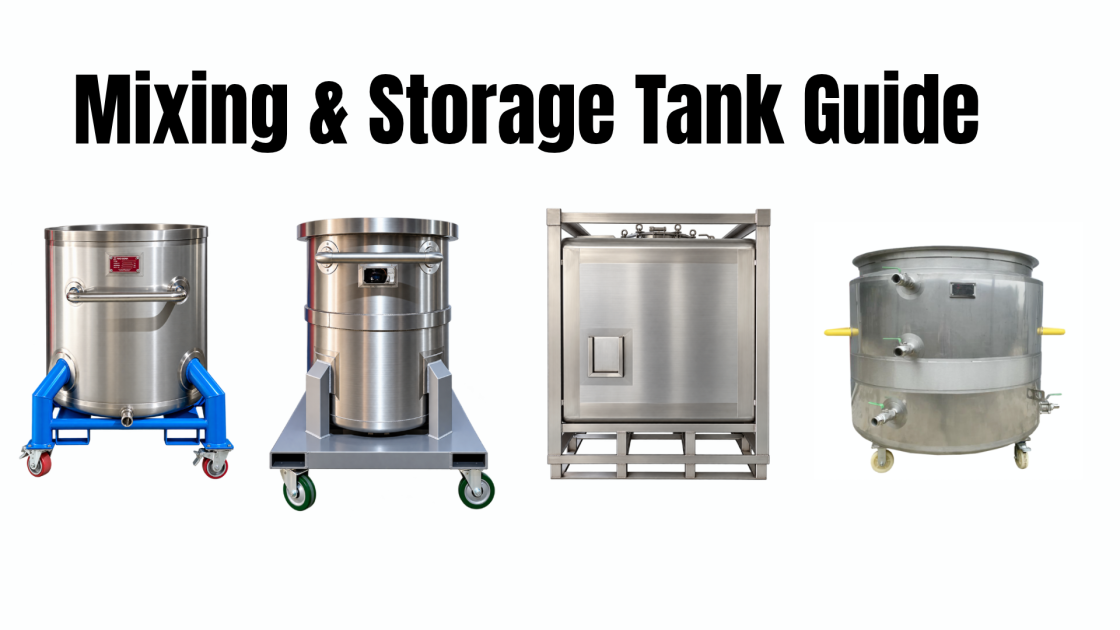
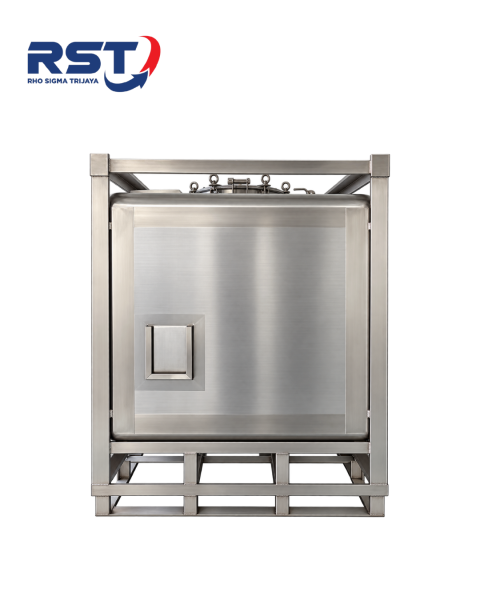
An Intermediate Bulk Container (IBC), commonly known as an IBC Tote, is an industrial container designed for storing and transporting bulk liquids and certain other materials.
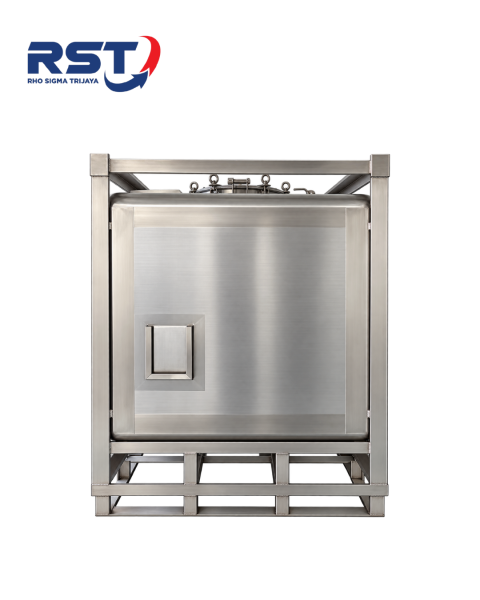
A typical IBC has a capacity of approximately 1,000 liters, although other capacities and designs are available.
IBC containers are commonly manufactured from:
High-Density Polyethylene (HDPE)
Stainless Steel (SUS304 or SUS316L)
Composite materials with protective metal cages
IBC tanks are widely used in chemical manufacturing, paint production, food processing, adhesives, and liquid distribution.
Their larger capacity helps reduce the number of containers required for bulk material handling.
2. What Is an Industrial Drum?
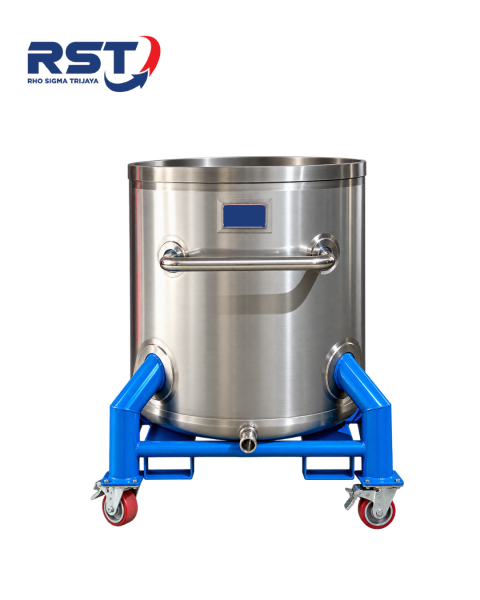
An industrial drum is a cylindrical container commonly used for storing and transporting chemicals, liquids, oils, paints, and other industrial materials.
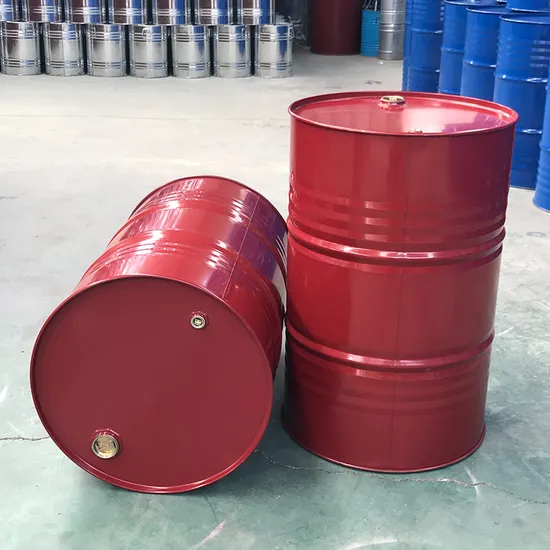
A standard industrial drum typically holds approximately 200 liters, although 210-liter and 220-liter capacities are also available.
Common drum materials include:
Carbon Steel
Stainless Steel
High-Density Polyethylene (HDPE)
Drums are suitable for smaller batches, multiple product variations, and applications where materials need to be stored or distributed in separate quantities.
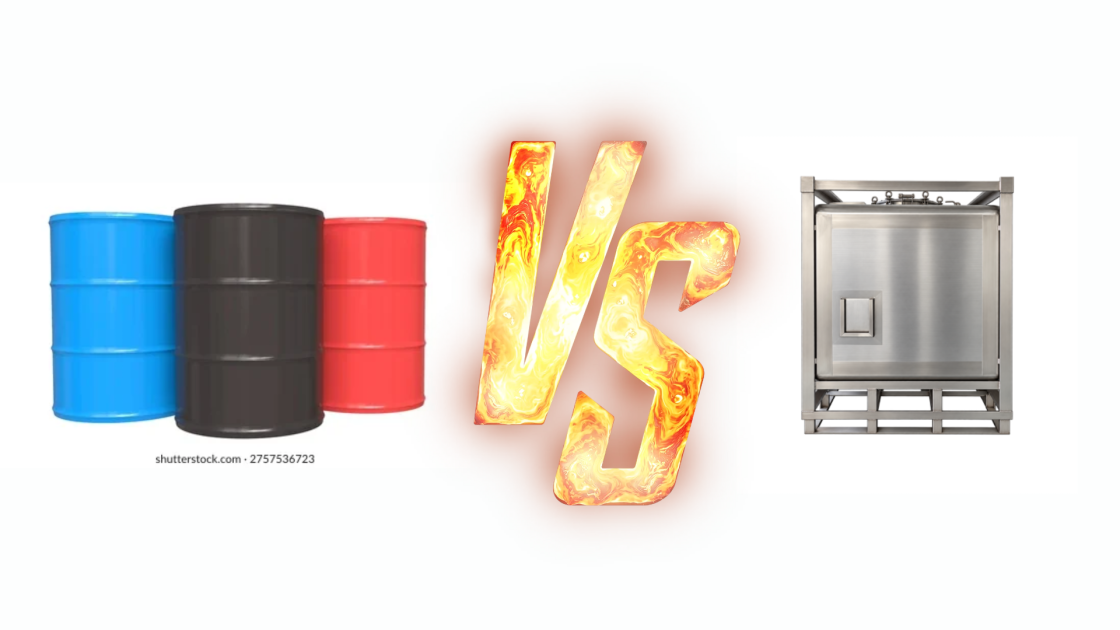
image source: https://id.made-in-china.com/co_sdcy-steel/product_100L-200L-Industrial-Steel-Drum-55-Gallon-Metal-Barrel_uohrrguyhy.html
3. IBC vs Drum: Key Differences
The main difference between an IBC and a drum is their storage capacity and material handling configuration.
| Parameter | IBC Tank | Industrial Drum |
|---|---|---|
| Typical capacity | 1,000 liters | 200–220 liters |
| Shape | Rectangular | Cylindrical |
| Material | HDPE, stainless steel, composite | Steel, stainless steel, HDPE |
| Handling | Forklift or pallet truck | Drum trolley or forklift |
| Discharge | Bottom outlet valve | Pump or drum outlet |
| Application | Bulk storage | Smaller batch storage |
| Typical usage | Large-volume operations | Flexible material distribution |
For example, one 1,000-liter IBC can replace approximately five 200-liter drums. This can simplify material handling and reduce the number of containers used in bulk production operations. However, drums remain useful when manufacturers handle different products in smaller quantities.
4. What Type of Mixer Is Suitable for IBC Tanks and Industrial Drums?
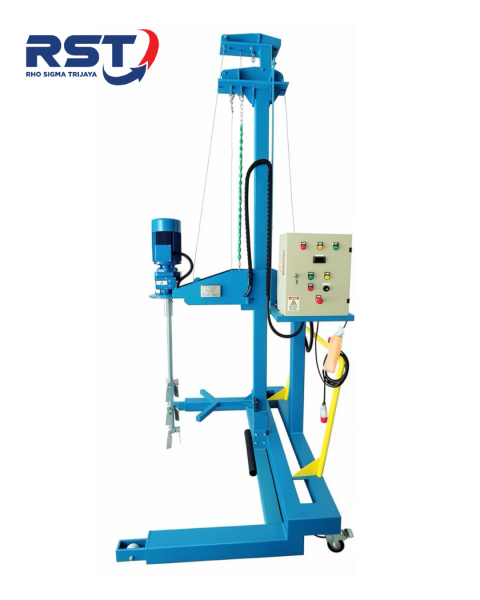
An IBC and Drum Mixer is designed to mix materials directly inside different types of containers, including IBC tanks and industrial drums.
Instead of using separate mixing machines for each container, an interchangeable mixer system allows one mixing unit to be used for both applications by changing or adjusting the mounting arrangement.
This provides greater flexibility for manufacturers handling different batch sizes and container types.
A. Interchangeable IBC & Drum Mixer
The system consists of a common mixing unit that can be adapted to different containers.
Typical components include:
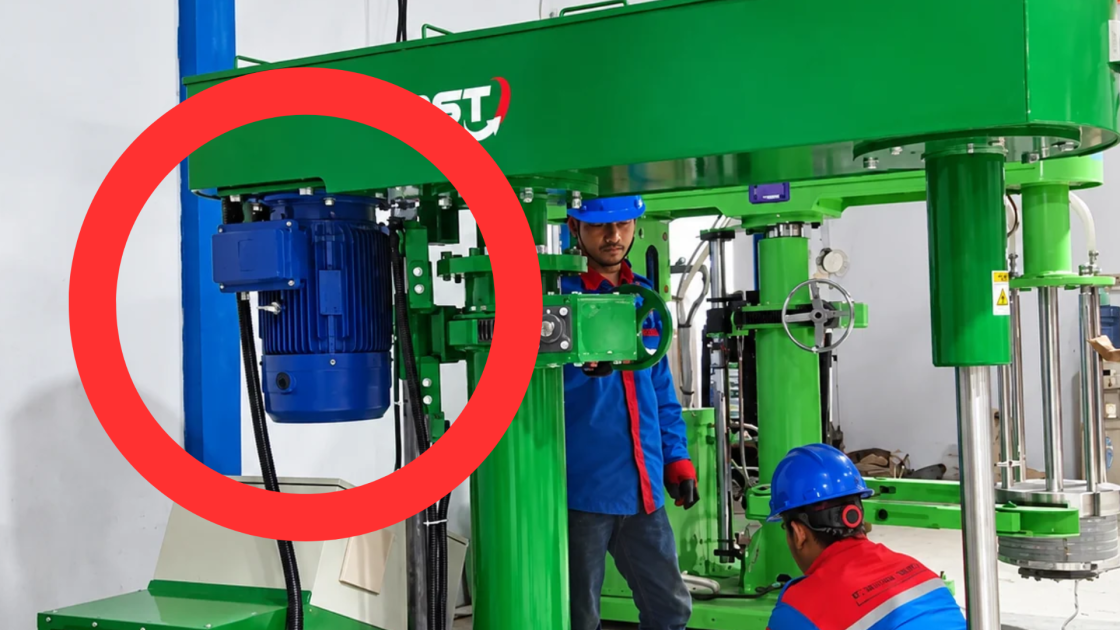
Electric motor
Gearbox or direct-drive system
Mixing shaft
Propeller or turbine impeller
Interchangeable mounting frame or adjustable mounting system
Variable Frequency Drive (VFD), if required
The mounting configuration can be adapted to suit the opening, dimensions, and structural requirements of the IBC tank or industrial drum.
B. Suitable Impeller Selection
The impeller selection depends on the material characteristics and mixing objectives.
Propeller: Suitable for low-viscosity liquids and circulation.
Pitched Blade Turbine: Suitable for general blending and liquid homogenization.
High-Torque Impeller: Suitable for applications requiring higher torque and lower operating speeds.
C. Applications
An interchangeable IBC and Drum Mixer can be used for various industrial applications, including:
Chemical blending
Paint homogenization
Liquid detergent mixing
Resin blending
Adhesive mixing
Industrial chemical additives
D. Advantages of an Interchangeable Mixer System
Using one mixer for different container types offers several operational advantages:
Greater flexibility: One mixing unit can serve both IBC tanks and industrial drums.
Reduced equipment investment: No need to purchase separate complete mixer units for each container type.
Space efficiency: Fewer dedicated mixing machines are required.
Simplified maintenance: A common motor and drive system can be maintained as one equipment platform.
Production versatility: Suitable for manufacturers handling different batch volumes.
Important: The interchangeable mounting system must be engineered to support the mixer assembly safely. The structural capacity, stability, shaft length, impeller clearance, and container compatibility must be evaluated for both IBC and drum applications. A standard HDPE IBC cage should not automatically be considered a structural support for the mixer.
5. How Does an Interchangeable IBC & Drum Mixer Work?
The operating principle is relatively simple. The same motor, drive system, mixing shaft, and impeller assembly can be used with different mounting configurations.
A. IBC Tank Configuration
The mixer is installed using a dedicated mounting frame or support structure designed to position the impeller correctly inside the IBC container.
B. Industrial Drum Configuration
The same mixer unit is transferred to a drum mounting arrangement, with the shaft and impeller positioned according to the drum dimensions and working volume.
The mounting arrangement can be changed depending on the container being used.
This interchangeable concept allows manufacturers to use one mixing system for both bulk material handling and smaller batch operations.
For high-viscosity applications, motor torque, shaft strength, impeller geometry, available headspace, and operating speed must be evaluated to ensure reliable mixing performance.
With the right engineering design, one interchangeable mixer system can provide a practical solution for both IBC and drum mixing applications.
6. How to Select the Right Industrial Mixer?
Selecting an industrial mixer requires more than considering the container capacity.
Several engineering parameters must be evaluated.
1. Material Viscosity
Viscosity influences the required motor torque, shaft design, impeller geometry, and mixing speed.
2. Specific Gravity
Materials with higher specific gravity can increase the mechanical load on the mixing system.
3. Mixing Objective
Different applications require different mixing mechanisms, such as:
Homogenization
Blending
Solid suspension
Pigment dispersion
Dissolving
4. Batch Volume
The actual working volume determines the required impeller diameter, shaft length, and mounting position.
5. Material Compatibility
Wetted parts must be compatible with the process material. Stainless steel SUS304 or SUS316L may be considered depending on chemical compatibility, corrosion requirements, and product specifications.
7. Custom Industrial Mixing Solutions by RST
At PT Rho Sigma Trijaya (RST), we understand that every industrial mixing application has different requirements.
RST specializes in designing and manufacturing industrial mixing equipment and stainless steel tanks for various industries, including paint, ink, chemical, adhesive, and building materials.
Our engineering capabilities include:
Industrial IBC Tote Tanks
IBC Mixing Systems
Portable Drum Mixers
High Speed Dispersers (HSD)
Industrial Mixing Tanks
Custom Agitator Systems
Our engineering team can help evaluate your material characteristics, working volume, viscosity, and mixing objectives to develop a suitable mixing solution.
Looking for an IBC Mixer or Drum Mixer for your production process?
Contact RST to discuss your industrial mixing requirements.
Website: https://rhosigmatrijaya.co.id/
Email: sales1@rhosigmatrijaya.co.id
Frequently Asked Questions (FAQ)
1. What is the difference between an IBC and a drum?
An IBC is a bulk storage container typically holding around 1,000 liters, while an industrial drum commonly holds approximately 200 liters. IBCs are generally handled using forklifts, whereas drums can be handled using drum trolleys or forklifts.
2. Can you mix materials directly inside an IBC tank?
Yes. An appropriately designed IBC mixer can mix materials directly inside an IBC container. The mounting system, shaft, impeller, and container compatibility must be properly evaluated.
3. What is the best mixer for a 1,000-liter IBC tank?
A top-entry IBC mixer is a common solution. The motor power, gearbox, impeller diameter, and mixing speed depend on material viscosity, density, working volume, and mixing objectives.
4. What is the best mixer for a 200-liter drum?
A portable electric or pneumatic drum mixer is commonly used. Propeller and pitched blade impellers are suitable for many liquid applications, while high-viscosity products may require high-torque configurations.
5. Can an IBC mixer be used for paint and chemical products?
Yes. IBC mixing systems can be designed for paint, chemical, resin, and adhesive applications, provided that the mixer design and wetted materials are compatible with the product.
6. Can RST manufacture a customized IBC mixer?
Yes. RST provides custom industrial mixing equipment and tank manufacturing solutions based on customer process requirements, material characteristics, and production capacity.