Apa itu Double Jacket Tank dan Fungsinya
Tangki Double Jacket, Double Jacket Tank, Double Jacket Mixing Tank, Tangki Pemanas Industri, Tangki Pendingin Industri, Stainless Steel Jacketed Tank, Industrial Heating Tank, Industrial Cooling Tank, Mixing Tank SUS304, Mixing Tank SUS316, Tangki Mixing Industri, Heating and Cooling Tank, Industrial Process Tank, Tangki Kimia Industri.
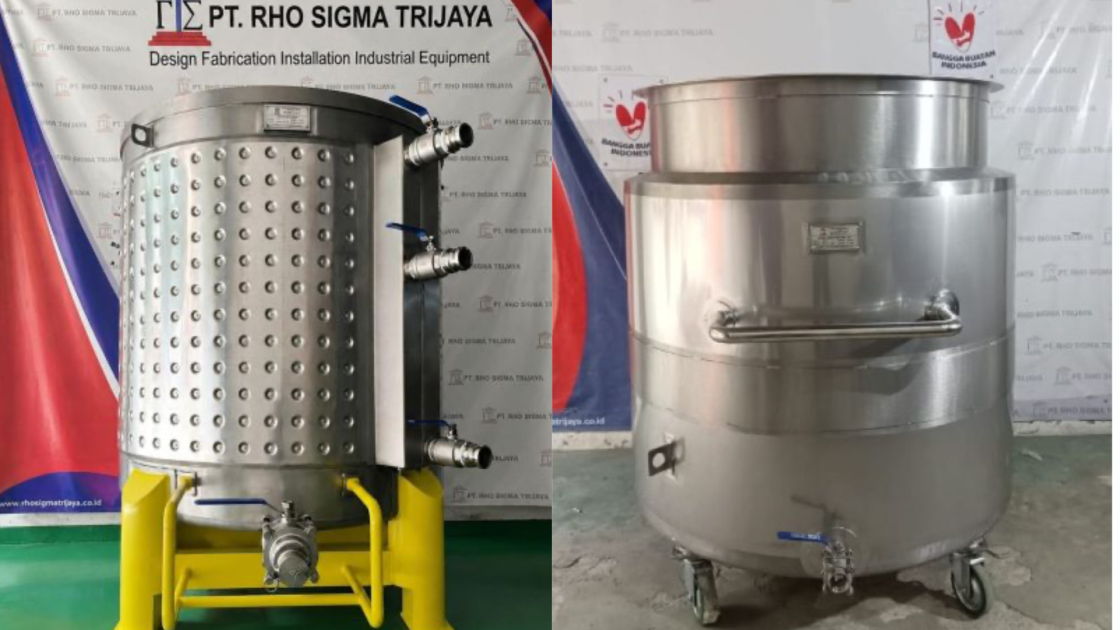
What Is a Double Jacket Tank? Understanding Its Functions and Applications in Industrial Processing
In many industrial processes, maintaining the right product temperature is just as important as achieving proper mixing. Certain materials require heating to reduce viscosity, improve solubility, or support chemical reactions. Others need cooling to maintain product stability and prevent overheating during processing.
A Double Jacket Tank is designed to support these temperature control requirements while allowing materials to be processed inside the tank.
Widely used in the chemical, paint, food, cosmetic, pharmaceutical, and adhesive industries, this type of tank provides an integrated solution for heating or cooling industrial products.
In this article, we will explain what a Double Jacket Tank is, how it works, its main functions, and where it is commonly used.
1. What Is a Double Jacket Tank?
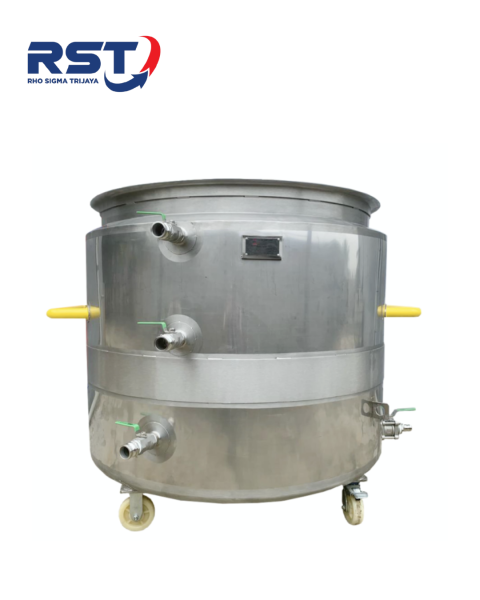
A Double Jacket Tank is an industrial tank designed with an additional outer layer surrounding the main product vessel. The space between the inner vessel and the outer jacket forms a chamber through which a heating or cooling medium can circulate.
Unlike a standard mixing tank, which only provides a vessel for storing and mixing materials, a Double Jacket Tank allows temperature to be controlled during the processing operation.
The heating or cooling medium flows through the jacket without directly mixing with the product inside the tank.
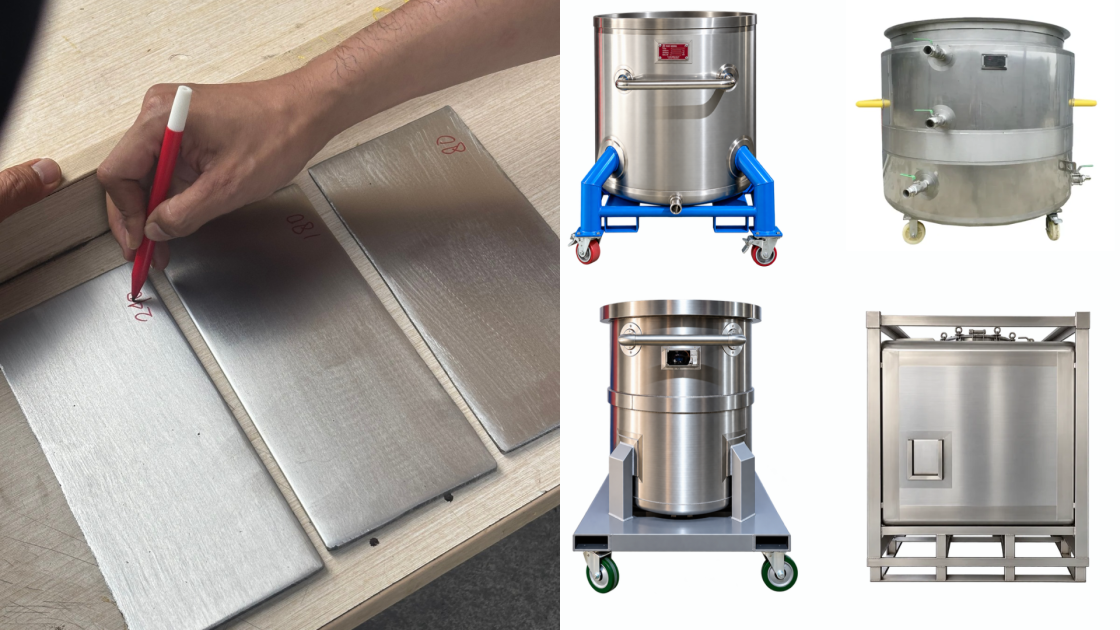
Common materials used for Double Jacket Tanks include Stainless Steel SUS304 and SUS316, depending on the product characteristics and process requirements.
2. How Does a Double Jacket Tank Work?
The working principle of a Double Jacket Tank is based on indirect heat transfer.
A heating or cooling medium circulates through the jacket surrounding the inner tank wall. Heat is transferred through the metal wall between the jacket and the product.
The basic operating process is:
The product is loaded into the inner tank.
A heating or cooling medium enters the jacket through an inlet connection.
The medium circulates through the jacket and transfers heat to or from the product.
The temperature of the product gradually changes.
The medium exits through the outlet connection and returns to the heating or cooling system.
When heating is required, hot water, thermal oil, or steam may be used.
When cooling is required, chilled water or cooling water can circulate through the jacket.
The actual heating or cooling performance depends on the jacket design, heat transfer area, medium temperature, flow rate, product properties, and mixing conditions.
3. Main Functions of a Double Jacket Tank
A Double Jacket Tank is primarily used to provide controlled heating or cooling during industrial processing.
A. Product Heating
Heating is required in many manufacturing processes to reduce material viscosity, improve dissolution, and support certain chemical or physical reactions.
For example:
Heating resin and adhesive materials.
Melting waxes and other solid ingredients.
Heating oils and liquid chemical products.
Supporting temperature-dependent mixing processes.
B. Product Cooling
Some products need to be cooled after heating or during processing to maintain their quality and stability.
Typical applications include:
Cooling cosmetic creams and lotions.
Cooling chemical formulations.
Controlling product temperature after processing.
Preventing excessive temperature increases during mixing.
C. Maintaining Product Temperature
In certain manufacturing processes, maintaining a consistent temperature is important for product quality.
A jacketed tank can help maintain the desired operating temperature by continuously circulating a suitable heating or cooling medium.
This is particularly useful when processing materials that are sensitive to temperature changes.
4. Common Heating and Cooling Media
The selection of heating or cooling media depends on the required operating temperature, process conditions, and equipment design.
| Medium | Typical Application |
|---|---|
| Hot Water | Moderate-temperature heating |
| Steam | Industrial heating |
| Thermal Oil | Higher-temperature heating |
| Chilled Water | Product cooling |
| Cooling Water | General-purpose cooling |
The operating temperature and pressure must be considered when designing the jacket, including the tank wall thickness, jacket construction, connections, and pressure rating.
5. Common Applications of Double Jacket Tanks
Double Jacket Tanks are used across various industries where temperature control is part of the manufacturing process.
Chemical Industry
Used for heating, cooling, and processing chemical formulations, resins, and other liquid materials.
Paint and Coating Industry
Used in processes where temperature control helps maintain material viscosity and supports consistent product processing.
Food and Beverage Industry
Used for heating and cooling ingredients, sauces, syrups, and other food products, subject to appropriate hygienic design requirements.
Cosmetic Industry
Used for manufacturing creams, lotions, gels, and other cosmetic formulations that require controlled heating and cooling.
Adhesive Industry
Used for processing adhesives and other materials where temperature affects viscosity, flow characteristics, and mixing performance.
6. Double Jacket Tank vs. Standard Mixing Tank
The main difference between a standard mixing tank and a Double Jacket Tank is the ability to provide indirect temperature control.
| Feature | Standard Mixing Tank | Double Jacket Tank |
|---|---|---|
| Product mixing | Yes, if equipped with a mixer | Yes, if equipped with a mixer |
| Heating capability | Not inherently provided | Yes |
| Cooling capability | Not inherently provided | Yes |
| Temperature control | Requires external arrangement | Integrated jacket arrangement |
| Construction | Single product vessel wall | Inner vessel and outer jacket |
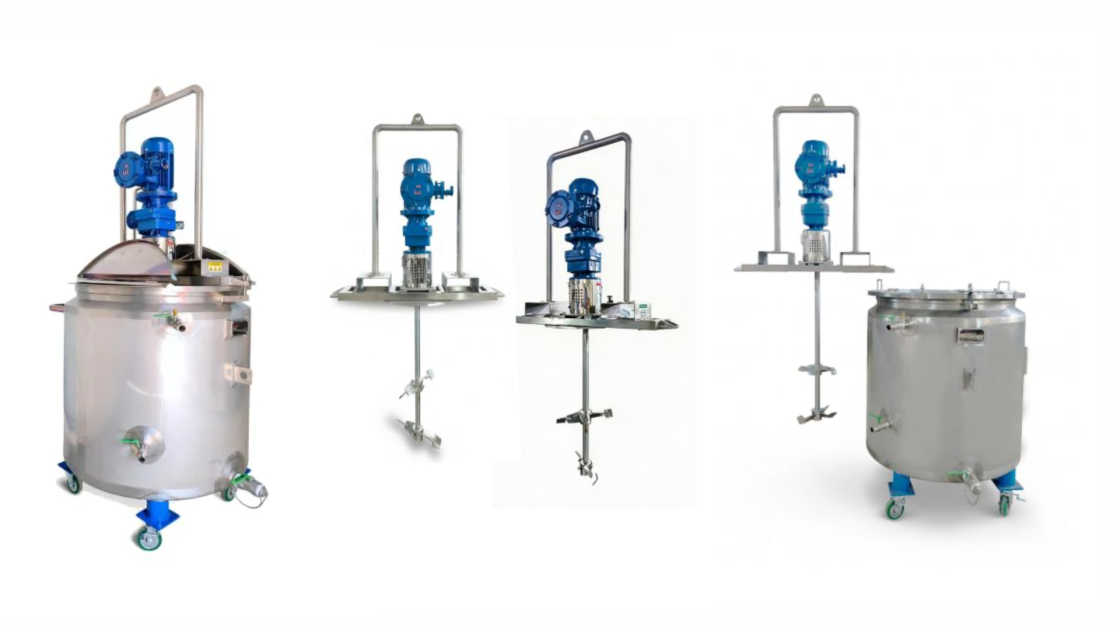
A Double Jacket Tank can also be equipped with an agitator, anchor mixer, or other mixing system depending on the product viscosity and process requirements.
This makes it suitable for processes that require both material mixing and temperature control.
7. Important Considerations When Selecting a Double Jacket Tank
Selecting the right Double Jacket Tank requires more than determining the tank capacity. Several engineering factors should be evaluated.
1. Product Characteristics
Product viscosity, density, chemical compatibility, and temperature sensitivity influence the tank design and mixing requirements.
2. Working Capacity
The tank capacity should be selected based on the actual batch volume, required operating space, and product expansion during heating.
3. Heating or Cooling Requirements
The required operating temperature, heating time, cooling time, and temperature difference determine the necessary heat transfer capacity.
4. Jacket Design
The jacket construction must be suitable for the selected heating or cooling medium and its operating pressure. Jacket configurations may include conventional full jackets, dimple jackets, or other engineered designs.
5. Material Selection
SUS304 and SUS316 stainless steel are commonly considered for industrial tank construction. The appropriate grade depends on product compatibility, corrosion resistance, and cleaning requirements.
6. Mixing System
If the process requires mixing, the agitator type, motor power, rotational speed, and impeller design should be selected according to product properties and process objectives.
8. Frequently Asked Questions (FAQ)
Q1. What is the main purpose of a Double Jacket Tank?
The main purpose is to provide indirect heating or cooling of materials inside the tank through a circulating medium in the surrounding jacket.
Q2. Can a Double Jacket Tank be used for both heating and cooling?
Yes. The same jacket can generally be used for both heating and cooling, provided the design and operating conditions are suitable for both applications.
Q3. What is the difference between a Double Jacket Tank and a mixing tank?
A standard mixing tank is primarily designed for material mixing or storage. A Double Jacket Tank has an additional outer chamber that allows heating or cooling during processing. A Double Jacket Tank can also be equipped with a mixing system.
Q4. What materials are commonly used for Double Jacket Tanks?
SUS304 and SUS316 stainless steel are commonly used, depending on the product being processed and the required corrosion resistance.
Q5. Does a Double Jacket Tank require an agitator?
Not necessarily. A Double Jacket Tank can be designed without an agitator if it is only used for heating, cooling, or storage. However, an agitator is often installed when the process requires uniform mixing and better temperature distribution.
Conclusion
A Double Jacket Tank is an important piece of equipment for industrial processes that require both product containment and temperature control.
By circulating a heating or cooling medium through the surrounding jacket, the tank allows materials to be heated, cooled, or maintained at a desired temperature without direct contact with the temperature-control medium.
When combined with a suitable mixing system, it can support a wide range of manufacturing applications across the chemical, paint, food, cosmetic, and adhesive industries.
Understanding the product characteristics, temperature requirements, jacket construction, and mixing objectives is essential when selecting the right Double Jacket Tank for an industrial process.
PT Rho Sigma Trijaya (RST) provides custom-engineered industrial mixing equipment and stainless steel tanks designed to meet different manufacturing and process requirements.
Visit www.rhosigmatrijaya.co.id to learn more about our industrial mixing solutions.