What Is a Double Jacket Tank and What Is It Used For?
Learn what a Double Jacket Tank is, how it works, and its uses for heating, cooling, mixing, and temperature-controlled processing in various industries.
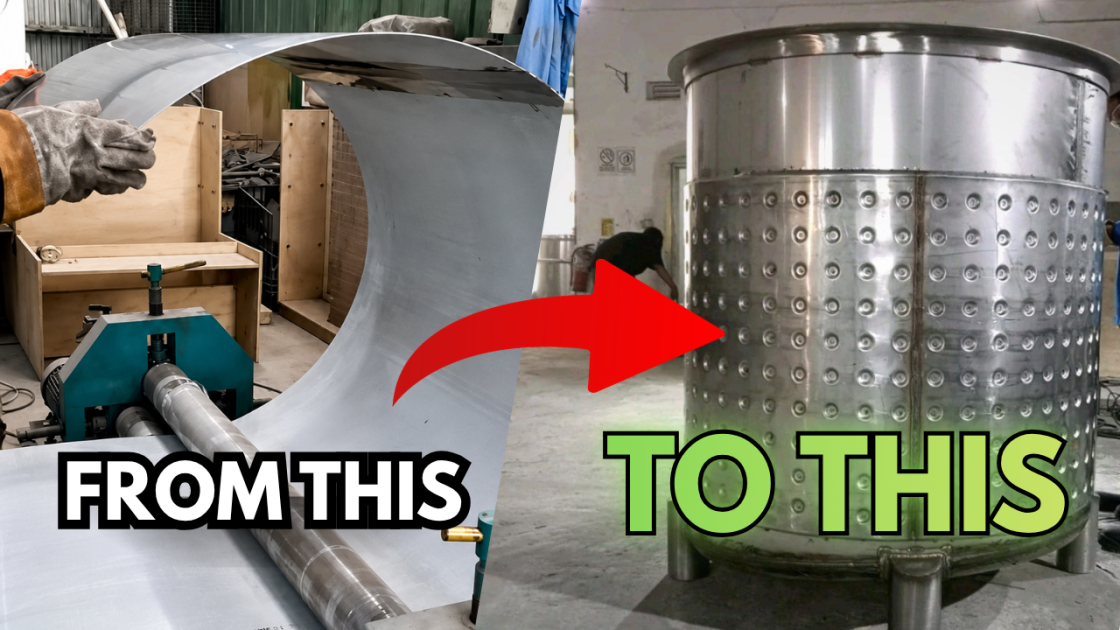
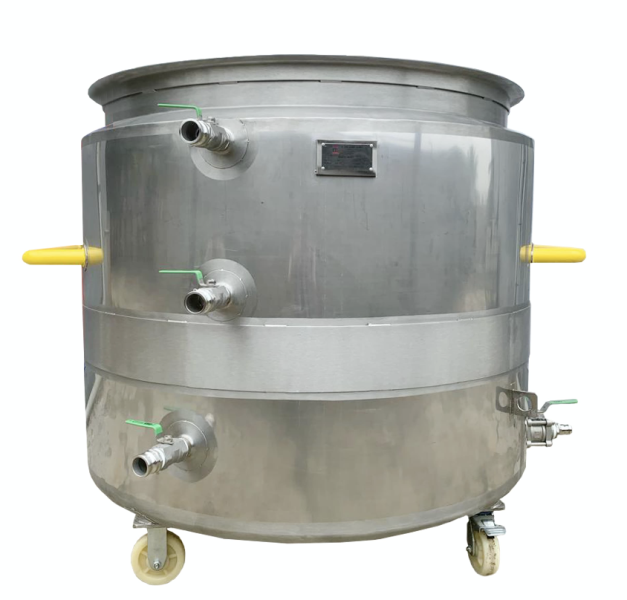
A Double Jacket Tank is a process tank designed with an additional outer layer, or jacket, around the product vessel. A heating or cooling medium such as steam, hot water, thermal oil, chilled water, or glycol circulates through the jacket to control the temperature of the product inside the tank. When combined with an agitator or mixer, a Double Jacket Mixing Tank can perform mixing and temperature control in the same vessel. This makes it suitable for industrial processes where product temperature affects viscosity, dissolution, reaction, blending, or final product quality. Double Jacket Tanks are commonly used in the chemical, paint, adhesive, food and beverage, pharmaceutical, cosmetic, and other process industries.
What Is a Double Jacket Tank?
A Double Jacket Tank is essentially a process vessel with two functional zones:
Inner vessel – contains the product being processed.
Jacket – the space surrounding the inner vessel through which a heating or cooling medium circulates.
The jacket allows heat to be transferred indirectly through the tank wall. The heating or cooling fluid does not come into direct contact with the product.
This configuration is also commonly called a:
Jacketed Tank
Jacketed Mixing Tank
Double Jacket Mixing Tank
Jacketed Vessel
Heating and Cooling Tank
Temperature-Controlled Mixing Tank
The basic principle is simple: the product stays inside the inner vessel while the thermal fluid circulates through the jacket to add or remove heat.
How Does a Double Jacket Tank Work?
The operating principle depends on whether the process requires heating, cooling, or temperature maintenance.
1. Heating
For a heating process, a hot medium is circulated through the jacket.
Typical heating media include:
Steam
Hot water
Thermal oil
Electric heating system through a thermal-fluid loop
Heat moves from the heating medium through the jacket wall and tank wall into the product.
For example, a manufacturer may use a Double Jacket Tank to heat a high-viscosity adhesive before mixing. Increasing the product temperature can reduce viscosity and make the material easier to process.
2. Cooling
For cooling, a cold medium is circulated through the jacket.
Typical cooling media include:
Chilled water
Cooling water
Glycol-water mixture
Other engineered cooling fluids
The jacket removes heat from the product through the tank wall.
This is useful when a process requires the product to be cooled after heating, reaction, dissolution, or mixing.
3. Maintaining Product Temperature
A Double Jacket Tank can also be used simply to maintain a specific product temperature.
This is important when temperature changes can affect:
Product viscosity
Mixing performance
Reaction rate
Product stability
Dissolution
Texture
Final product consistency
A temperature-control system can be connected to sensors and a control system to regulate the jacket temperature according to the process requirement.
What Is the Difference Between a Normal Tank and a Double Jacket Tank?
The main difference is temperature control. A conventional tank primarily provides a vessel for storing or processing a product. A Double Jacket Tank adds a thermal-control function around the vessel.
| Feature | Standard Tank | Double Jacket Tank |
|---|---|---|
| Product containment | ✓ | ✓ |
| Storage | ✓ | ✓ |
| Mixing | Optional | Optional |
| Heating | External system required | Integrated jacket |
| Cooling | External system required | Integrated jacket |
| Temperature maintenance | Limited | ✓ |
| Controlled thermal processing | Limited | ✓ |
Therefore, if the production process requires the product to be heated, cooled, or maintained at a controlled temperature, a jacketed tank can provide a more integrated process solution.
What Is a Double Jacket Mixing Tank?
A Double Jacket Mixing Tank combines two functions:
Mixing + Temperature Control
The tank is equipped with an internal agitator or mixer while the surrounding jacket provides heating or cooling.
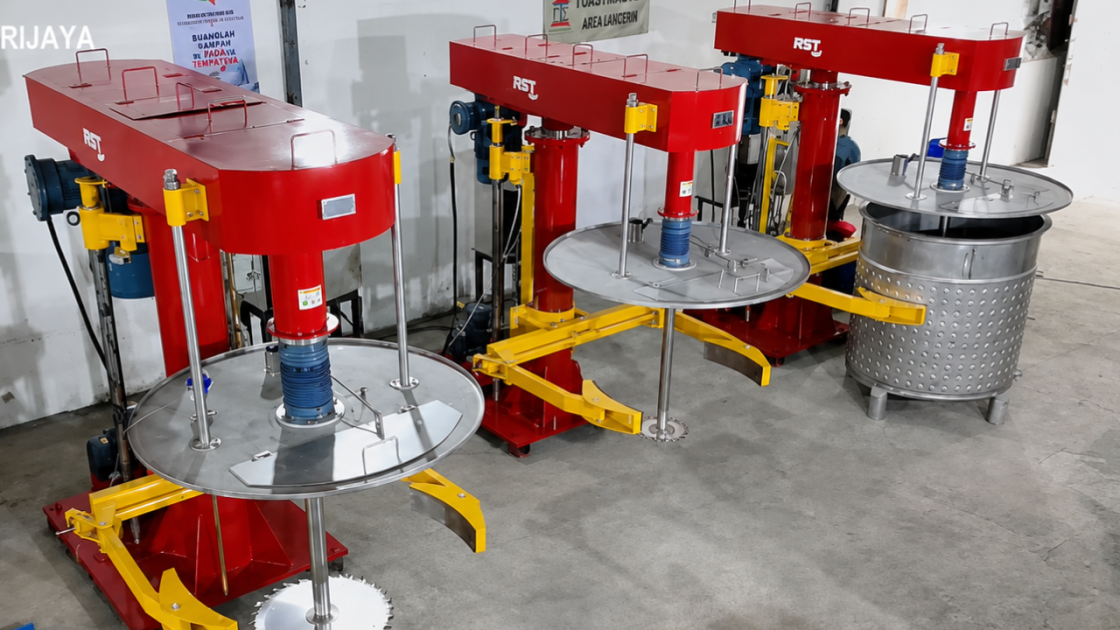
Depending on the product, the agitator can be configured with different impeller types. The correct agitator depends on factors such as product viscosity, density, solids content, batch size, required mixing time, and process objective.
A jacketed agitated tank is particularly useful when both mixing and heat transfer are important to the process.
What Are Double Jacket Tanks Used For?
Double Jacket Tanks are used in processes where temperature control is part of the manufacturing process.
1. Chemical Processing
Chemical manufacturers may use jacketed tanks for:
Chemical blending
Controlled reactions
Dissolution
Temperature-sensitive formulations
Viscosity control
Heating or cooling during processing
In some chemical processes, temperature must be controlled because the reaction itself can generate or absorb heat.
A jacket can help remove or supply heat during the process.
2. Paint and Coating Manufacturing
In paint and coating production, temperature can affect viscosity and mixing behavior.
A Double Jacket Mixing Tank may be used for:
Resin blending
Additive mixing
Temperature-controlled formulation
Intermediate holding
Heating high-viscosity materials
For applications involving pigments or high-viscosity materials, the tank may also be combined with an appropriate agitator or high-shear mixer.
3. Adhesive Manufacturing
Adhesives can become significantly more viscous at lower temperatures.
A jacketed tank can be used to:
Heat adhesive formulations
Maintain processing temperature
Improve flow characteristics
Support uniform mixing
Reduce viscosity during processing
For high-viscosity adhesive applications, an anchor agitator or anchor with scraper may be considered depending on the formulation.
4. Food and Beverage Processing
Jacketed tanks are widely used in food and beverage processing where controlled heating, cooling, or mixing is required.
Applications can include:
Sauce
Syrup
Chocolate
Cream
Beverage ingredients
Dairy products
Food formulations
The jacket provides indirect heating or cooling, while the agitator can maintain product uniformity.
For hygienic applications, the tank design may require sanitary stainless steel construction, suitable surface finishing, hygienic connections, and cleanability requirements.
5. Pharmaceutical Manufacturing
Temperature control is often an important part of pharmaceutical processing.
Jacketed mixing tanks may be used for:
Liquid formulations
Solution preparation
Creams and ointments
Controlled-temperature blending
Process holding
Depending on the application, pharmaceutical tanks may require specific hygienic design, material selection, surface finish, cleaning, and validation requirements.
6. Cosmetic and Personal Care Products
Double Jacket Mixing Tanks are commonly suitable for products such as:
Lotion
Cream
Shampoo
Liquid soap
Cosmetic formulations
Personal care products
Heating can help melt or dissolve certain ingredients, while controlled cooling can help bring the formulation to the required processing or filling temperature.
Why Use a Double Jacket Tank?
The main reason to use a Double Jacket Tank is to control product temperature without directly contacting the product with the heating or cooling medium.
Key benefits include:
1. Controlled Heating
The product can be heated through the tank wall rather than through direct contact with a heating element.
2. Controlled Cooling
The same jacket can be used to remove heat when a cooling medium is circulated.
3. Better Process Consistency
Maintaining a controlled process temperature can help reduce batch-to-batch variation when temperature is an important process parameter.
4. Improved Processing of High-Viscosity Products
Some products become easier to mix or transfer when their temperature is increased.
5. Combination of Mixing and Temperature Control
With an integrated agitator, one vessel can perform both mixing and thermal processing.
6. Flexible Process Configuration
The tank can be customized according to the application, including:
Tank capacity
Material
Jacket type
Heating medium
Cooling medium
Agitator type
Motor power
VFD speed control
Insulation
Temperature sensors
Bottom outlet
CIP system
Load cells
Vacuum or pressure configuration
What Heating or Cooling Medium Is Used in a Double Jacket Tank?
The choice of thermal medium depends on the required temperature, heat-transfer performance, available utilities, and tank design.
Common options include:
| Medium | Typical Application |
|---|---|
| Steam | Fast industrial heating |
| Hot Water | Moderate-temperature heating |
| Thermal Oil | Higher-temperature heating |
| Cooling Water | General cooling |
| Chilled Water | Lower-temperature cooling |
| Glycol-Water | Low-temperature cooling |
The jacket itself can also be designed in different configurations, including conventional jackets, half-pipe coils, or dimple/pillow-plate style designs. The appropriate configuration depends on heat-transfer requirements, pressure, fabrication constraints, and the process duty.
What Materials Are Used for Double Jacket Tanks?
The material of construction depends on the product and process requirements.
Common materials include:
SUS 304
SUS304 stainless steel is commonly used for general industrial, food, beverage, and selected chemical applications.
SUS 316L
SUS316L may be selected when higher corrosion resistance or more demanding hygienic/process requirements are involved.
For industrial applications, the tank can be designed with different materials for the:
Product-contact surface
Jacket
External shell
Support frame
Piping
Agitator
Shaft
Impeller
Material selection should be based on the actual product chemistry rather than simply choosing a stainless-steel grade by default.
What Should Be Considered When Designing a Double Jacket Tank?
A Double Jacket Tank should not be selected based only on tank volume.
The process data is equally important.
Important design parameters include:
Product Information
Product name
Density
Viscosity
Operating temperature
Maximum temperature
Minimum temperature
Corrosiveness
Solids content
Particle size
Process Information
Batch size
Working volume
Gross volume
Heating time
Cooling time
Required temperature
Mixing time
Mixing speed
Required degree of homogenization
Equipment Information
Tank diameter
Tank height
Jacket area
Jacket pressure
Agitator type
Motor power
Gearbox
Shaft diameter
Impeller diameter
Material of construction
Insulation requirement
This information allows the tank, jacket, agitator, and thermal system to be designed as one integrated process system.
Double Jacket Tank vs Single Wall Tank
The decision between a standard tank and a Double Jacket Tank depends on the process.
A single-wall tank may be sufficient when the process only requires containment, storage, or simple mixing at ambient temperature.
A Double Jacket Tank becomes more relevant when the process requires:
Heating
Cooling
Temperature maintenance
Controlled reaction temperature
Viscosity control
Temperature-sensitive mixing
Heating followed by cooling
In other words:
If temperature is part of the process, consider a jacketed tank.
Double Jacket Tank vs Heating Element Inside the Tank
One important advantage of a jacketed system is that the heating medium or thermal system can remain separated from the product.
Instead of placing a heating element directly inside the product, heat is transferred indirectly through the vessel wall.
This can be advantageous when product contamination, cleaning, product compatibility, or temperature uniformity are important considerations.
However, the best heating method depends on the process. A direct electric heater, external heat exchanger, jacket, or combination system may be appropriate depending on the application.
How Do You Choose the Right Double Jacket Tank?
There is no single Double Jacket Tank specification that is suitable for every application. The tank should be designed based on the process.
For example:
Low-viscosity liquid + simple heating
→ A standard agitator and conventional jacket may be sufficient.
High-viscosity adhesive
→ A larger agitator, anchor-type mixing system, scraper, and suitable jacket design may be required.
Food product requiring hygienic processing
→ Sanitary construction, appropriate surface finish, hygienic fittings, and cleanability become important.
Chemical reaction
→ Temperature control, heat-transfer duty, agitation, pressure/vacuum conditions, and material compatibility must be evaluated together.
Custom Double Jacket Tank for Industrial Applications
PT. Rho Sigma Trijaya provides custom Double Jacket Tank design and fabrication for industrial applications.
Our Double Jacket Tanks can be designed according to the customer's process requirements, including:
SUS304 or SUS316L construction
Custom tank capacity
Heating and cooling jacket
Steam, hot water, or thermal oil heating
Cooling water or chilled-water systems
Thermal insulation
Anchor, paddle, or other agitator configurations
VFD speed control
Temperature sensors
Custom inlet and outlet
Industrial or sanitary design
Optional mixing system
RST currently offers custom Double Jacket Tank solutions for applications in chemical, paint, adhesive, food and beverage, pharmaceutical, cosmetic, and related industries.
Frequently Asked Questions About Double Jacket Tanks
What is a Double Jacket Tank?
A Double Jacket Tank is a process vessel with an outer jacket surrounding the product vessel. Heating or cooling fluid circulates through the jacket to control the temperature of the product.
What is the difference between a Double Jacket Tank and a Jacketed Tank?
In industrial equipment terminology, Double Jacket Tank and Jacketed Tank are often used to describe the same basic concept: a tank with an external thermal jacket for heating or cooling.
Can a Double Jacket Tank heat and cool?
Yes. The same jacket can generally be used for heating or cooling, provided the jacket, piping, valves, and thermal system are designed for the required operating conditions.
Can a Double Jacket Tank have a mixer?
Yes. A Double Jacket Tank can be equipped with an agitator or mixer. This configuration is commonly called a Double Jacket Mixing Tank or Jacketed Mixing Tank.
What products can be processed in a Double Jacket Tank?
Applications include chemical formulations, paints, coatings, adhesives, food products, beverages, cosmetics, pharmaceuticals, and other products where controlled temperature processing is required.
What is the best agitator for a Double Jacket Tank?
There is no universal agitator. The appropriate agitator depends on viscosity, density, solids content, batch size, mixing objective, and required mixing time. Anchor agitators are commonly considered for higher-viscosity products, while other impeller types may be more suitable for lower-viscosity liquids.
What information is required to design a Double Jacket Tank?
The most useful information includes product name, density, viscosity, batch size, operating temperature, heating/cooling requirement, required heating or cooling time, mixing objective, and available utilities such as steam, hot water, cooling water, or thermal oil.
Conclusion
A Double Jacket Tank is more than a storage tank with an additional layer. It is a temperature-controlled process vessel designed to heat, cool, or maintain the temperature of a product while it is being processed. When combined with the right agitator, the equipment can provide both mixing and temperature control in a single process vessel.
The key to a successful Double Jacket Tank design is matching the tank geometry, jacket design, heat-transfer system, agitator, material of construction, and process requirements to the actual product. For manufacturers processing temperature-sensitive, high-viscosity, or heat-dependent products, a properly engineered Double Jacket Mixing Tank can become an important part of the production process.
Looking for a custom Double Jacket Tank?
PT. Rho Sigma Trijaya can design and fabricate custom stainless-steel Double Jacket Tanks according to your process requirements, capacity, material, heating/cooling system, and mixing application.